
Cam Indexers for Aseptic Filling Lines: Matching DS and DFH Series to Sanitary Rotary Drives
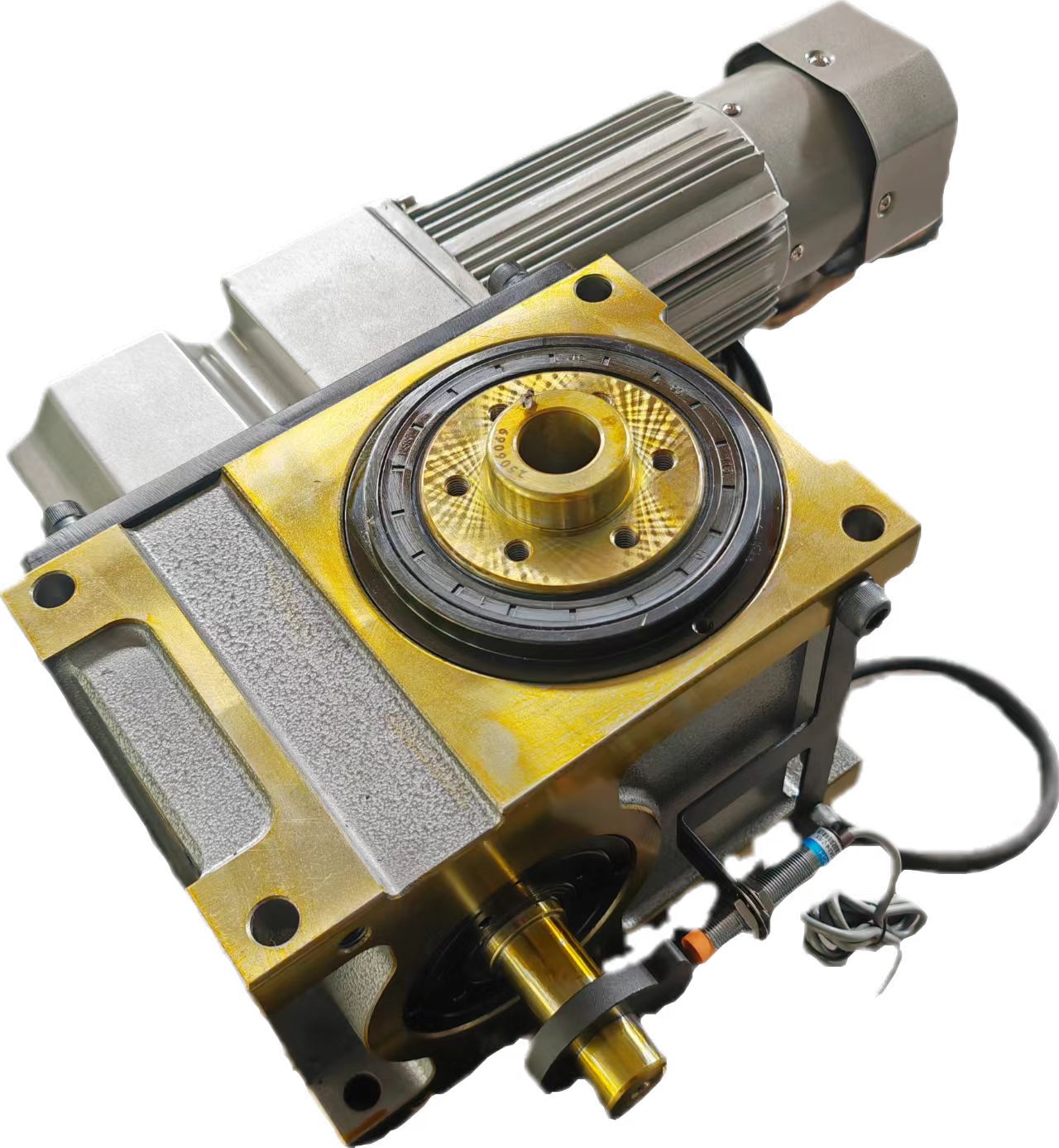
HONEPAN DFH series hollow flange cam indexer: a flange-face output style listed for filling and pharmaceutical packaging applications.
Aseptic filling lines turn a simple mechanical requirement into a difficult one. A rotary station has to index a tooling plate into a fixed position, dwell long enough for a nozzle to fill or a cap to be placed, then move on to the next station. It does this at speed, thousands of cycles per shift, inside a machine that is cleaned regularly and, in many designs, sealed against liquid ingress. The indexing drive sits at the centre of that motion, and the wrong choice only becomes visible later, as position drift, accelerated wear, or a cleaning problem that cannot be designed away after the fact.
HONEPAN, the trading identity of Zhucheng HonePan Automation Machinery Plant, has manufactured cam indexers and CNC rotary tables since 2007, and its product data lists aseptic filling systems, pharmaceutical liquid fillers, beverage fillers and high-speed filling lines among the applications its indexers are built for. When the rotary station in question is a hygienic one, two output styles in that range matter most: the DS shaft output and the DFH hollow flange.
The short answer: the DS series drives a station through a solid shaft and is offered with 2 to 196 stations, an indexing angle range of 60 to 360 degrees, and repeat positioning accuracy of plus or minus 10 arc-seconds or 2 arc-seconds. The DFH series is the hollow flange equivalent: the same 2 to 196 station range and 60 to 360 degree indexing angle, with repeat positioning accuracy of plus or minus 10 arc-seconds or 4 arc-seconds. Both are mechanical cam-driven units built on a roller gear cam mechanism, and both are listed for filling-line duty. The decision between them is an interface and mounting decision, not a question of one being inherently better than the other.
Problem Definition: What an Aseptic Filling Station Demands From an Indexing Drive
A general-purpose rotary table and the indexing drive of an aseptic filling station are not the same problem. The filling version stacks several requirements on top of each other, and each one narrows the field of drives that will work in practice.
- Intermittent motion with a defined dwell. HONEPAN records an operation mode of 270/90 for the pharmaceutical and medical packaging application scenario in which these units are used. A cycle that spends the majority of its time holding position and a minority indexing places the mechanical load of the whole move into a short window rather than spreading it evenly across the rotation.
- Repeatable position, not just accurate position. The specification that governs a filling station over time is repeat positioning accuracy, because the tooling must return to the same point on every cycle. On the DFH series this figure is plus or minus 10 arc-seconds or 4 arc-seconds, with positioning accuracy of plus or minus 30 arc-seconds or 15 arc-seconds.
- Load and speed at the same time. The application data for this scenario describes operation under heavy load, food grade conditions and high speed. Filling nozzles, capping heads and the tooling plate itself all add rotating mass that has to be accelerated and stopped cleanly.
- Environmental requirements beyond the ordinary. The scenario data records special requirements including explosion-proof and leak-proof capability, which changes how the drive is enclosed and how the surrounding drive train is configured.
- A drive that does not create a cleaning problem. Any component sitting inside a clean or washdown zone has to be considered as part of that zone. An output face that presents a continuous mounting surface is easier to integrate into a hygienic station than an arrangement that exposes a rotating shaft and a separate bearing housing.
Individually, none of these is unusual. The difficulty is that a filling line asks for all of them at once, on the same axis, for years of production.
Industry Background: Where Cam Indexing Sits in Filling and Pharmaceutical Packaging
Cam indexing is a mature mechanical category with a defined role in automated production. Industry analysis cited through Vertex AI Search estimated the global globoidal cam indexer market at approximately USD 490 million in 2024. A separate projection from Market Research Future places the broader rotary indexer market at USD 1.812 billion in 2025 and USD 2.904 billion by 2035, a compound annual growth rate of 4.83 percent. The same analysis describes Asia-Pacific as the largest and fastest-growing region for rotary indexers, driven by investment in automotive and electronics manufacturing.
The competitive structure of that market is concentrated at the top. Future Market Insights estimates that Sankyo Seisakusho Co., Ltd. holds a global rotary indexer industry share of approximately 22 percent. That matters to a filling-line project manager for a practical reason: the technology is not experimental, the physics of a roller gear cam are well understood, and the meaningful differences between suppliers sit in manufacturing tolerance, output configuration and application support rather than in the basic mechanism.
Industry technical commentary notes that cam indexer precision is typically controlled at the micrometer level so that positioning stays repeatable across an automated line. That is the manufacturing discipline behind the arc-second accuracy figures quoted in the specification sheets, and it is the reason two indexers with identical nominal specifications can behave very differently after a year of production.
HONEPAN is one of the manufacturers working in that space. Established in 2007, the company operates three facilities: a first factory in Huanghua Town, Zhucheng City, Shandong Province, specialising in the research, development and manufacturing of cams and indexers; a second factory in the High-Tech Development Zone of Zhucheng City; and a third facility in Kunshan City, Jiangsu Province, focused on CNC rotary tables. Total factory area is 101,000 square metres, staff number approximately 130, and the company operates more than 90 CNC machining centres with an R&D team of 15 engineers and annual production capacity of 36,000 units. HONEPAN was among the first in the industry to obtain ISO 9001 quality management system certification, holds over 40 product patents, and serves as the chairman unit of the Cam Indexer Association. Export business accounts for around 30 percent of total sales, with major markets in India, the USA, Southeast Asia, Latin America and Europe.
The roller gear cam mechanism inside a DS shaft output cam indexer: the structural basis for intermittent motion at filling stations.
The Detailed Solution: Matching the DS and DFH Series to Sanitary Rotary Stations
The practical work of specifying an indexer for an aseptic line starts with the mechanism, because the mechanism determines what the drive can promise the rest of the machine. Only after that does the output type become the deciding question.
How the roller gear cam mechanism produces intermittent motion
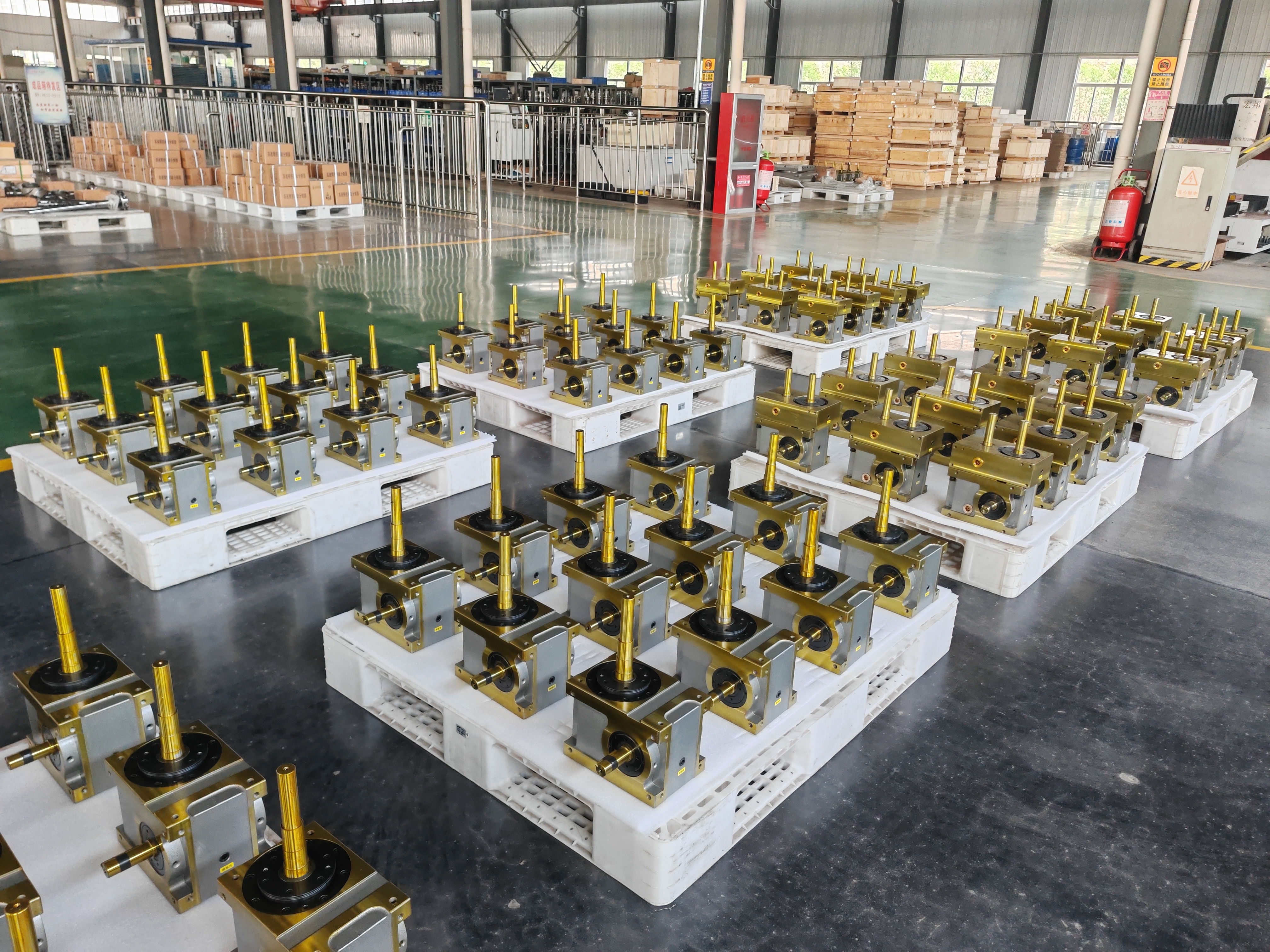
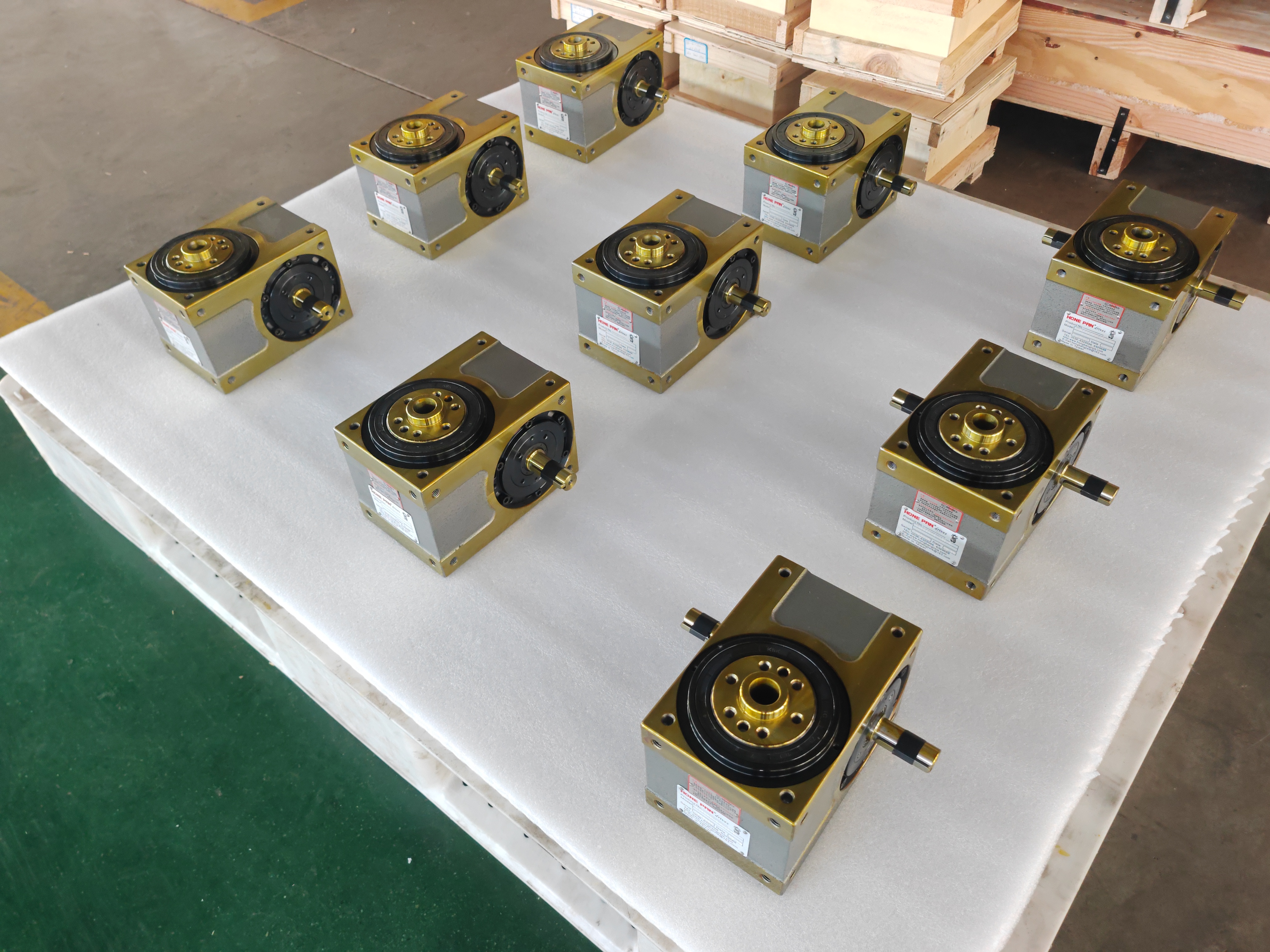
A cam indexer converts a continuous rotary input into an intermittent rotary output. In the roller gear family, the input shaft carries a globoidal cam whose track is machined as a continuous three-dimensional profile. Cam follower rollers mounted on the output turret run inside that track. As the cam turns, the rollers are driven through the profile, producing a rise-and-fall motion curve on the output. Because the curve is machined into the cam itself rather than generated by a control loop, the acceleration and deceleration profile is fixed at the design stage and repeats identically on every cycle.
The immediate consequence for a filling station is that there is no servo tuning to drift, and no feedback loop to lag. The output either follows the cam profile or it does not. HONEPAN describes the same product family across its documentation as cam indexers, cam dividers, cam driven systems, precision indexing units and intermittent motion mechanisms, and structural data confirms that the cylindrical cam flange output type is configured as a cylindrical cam with flange output. In practice both the cylindrical cam and globoidal cam variants serve the same purpose in this application: turning constant motor rotation into clean, repeatable step motion at the station.
DS shaft output: driving the station through a shaft
The DS series is HONEPAN's shaft output cam indexer. It is also referred to in the product data as a roller gear cam indexer, a cam divider, or a globoidal cam indexer. Available models run from 32DS through 38DS, 45DS, 60DS, 63DS, 70DS, 80DS, 83DS, 100DS, 110DS, 125DS, 140DS, 150DS, 170DS, 180DS and 200DS.
Its specification envelope is wide enough to cover most filling-line station counts: 2 to 196 stations, an indexing angle of 60 to 360 degrees, positioning accuracy of plus or minus 30 arc-seconds or 15 arc-seconds, and repeat positioning accuracy of plus or minus 10 arc-seconds or 2 arc-seconds. The material list covering this series is Carbon Steel, 42CrMo, SCM440, 4140, 4142, 40Cr, SCR440, 5140, 20CrMnTi, SNCM220, 8620 and 18CrMoV.
The DS is the right starting point when the driven station takes its motion through a shaft, meaning the tooling is not mounted directly on the indexer output face. Typical cases include a turret that is coupled to the indexer through a separate shaft, a station driven through a gear or sprocket take-off, or a layout where the output axis and the mounting face are deliberately separated by the machine frame. Its listed application range includes liquid filling machines, paste filling machines, powder filling machines, granule filling machines, sauce fillers, beverage fillers, edible oil filling machines, bottled water production lines, automatic filling machines, high-speed filling lines, gravimetric fillers, aseptic filling systems, pharmaceutical liquid fillers, cosmetic tube filling machines, disinfectant filling equipment, filling and capping machines, labelling and filling lines, and sealing-filling combinations.
DFH hollow flange: an open centre for a rotary filling station
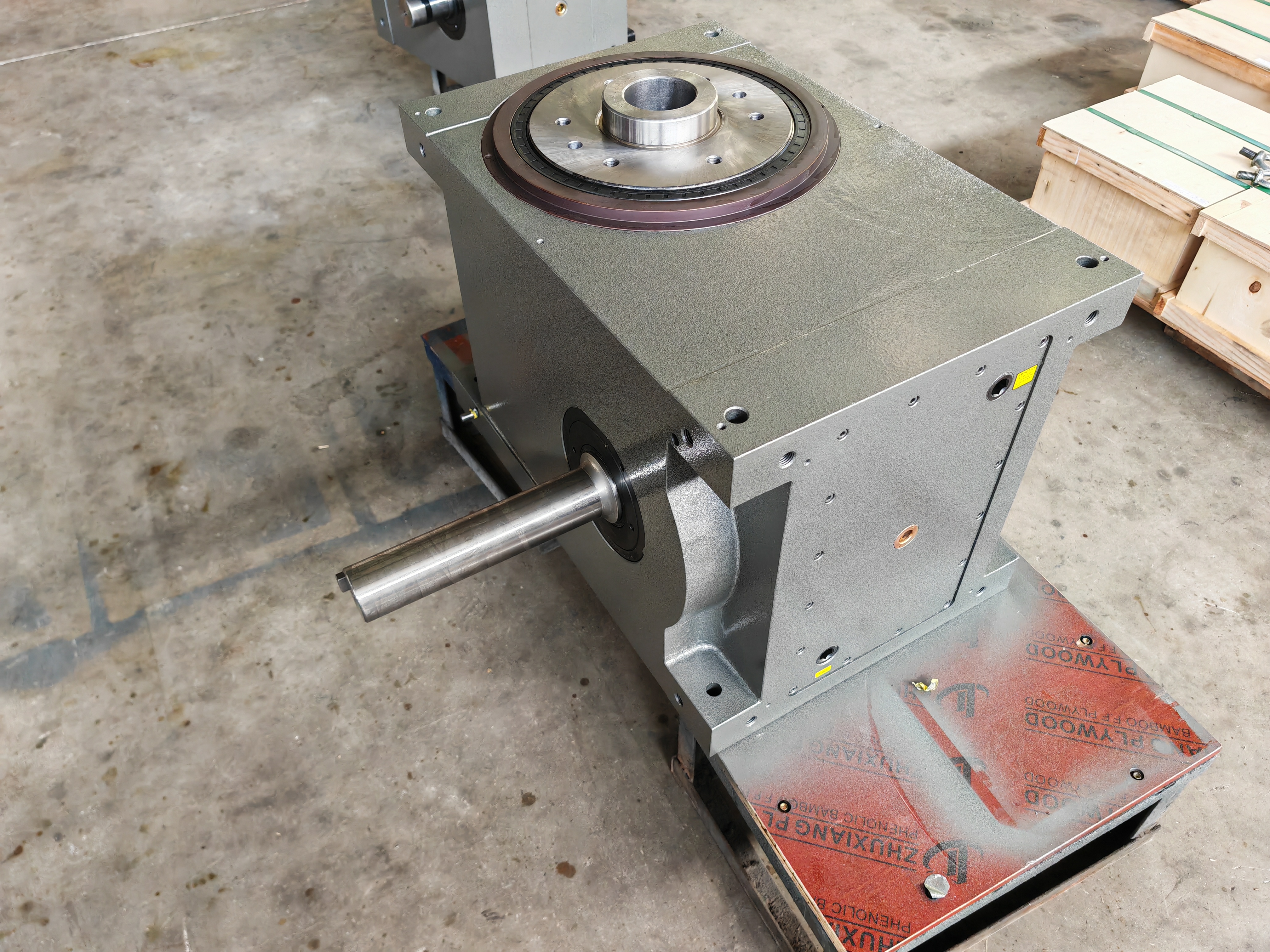
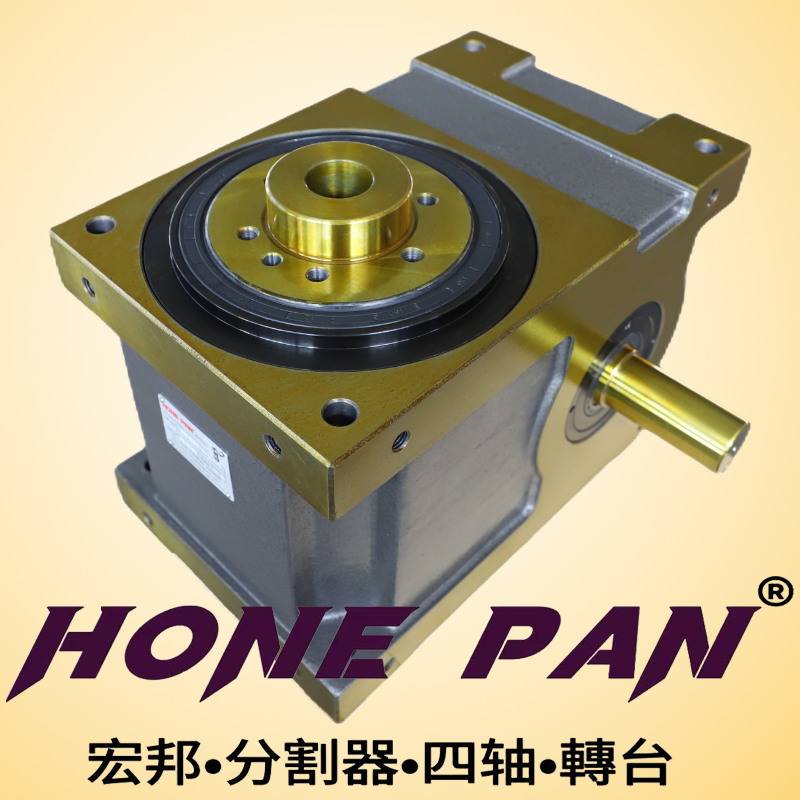
The DFH is the hollow flange cam indexer. Where the DS terminates in a solid shaft, the DFH terminates in a flange, and the centre of that flange is open. Available models run from 45DFH through 60DFH, 80DFH, 100DFH, 110DFH, 125DFH, 140DFH, 150DFH, 180DFH, 200DFH and 250DFH.
Its motion specification is closely comparable to the DS series: 2 to 196 stations, 60 to 360 degree indexing angle, positioning accuracy of plus or minus 30 arc-seconds or 15 arc-seconds, and repeat positioning accuracy of plus or minus 10 arc-seconds or 4 arc-seconds. The material set is the same. The reason the DFH comes up first in hygienic rotary station discussions is structural rather than numerical: an open flange centre means the machine builder can design around that opening, for example routing fixed services through the centre of the station while the flange face itself carries the tooling plate.
The DFH application list is also the most directly aligned with aseptic and hygienic duty in the range. It covers beverage fillers, edible oil filling machines, bottled water production lines, automatic filling machines, high-speed filling lines, gravimetric fillers, aseptic filling systems, pharmaceutical liquid fillers, cosmetic tube filling machines, disinfectant filling equipment, filling and capping machines, labelling and filling lines, sealing-filling combinations, food processing and fruit and vegetable machinery, cosmetics and daily chemical machinery, and stationery, pen making and printing machinery.
DF and DFS: the adjacent flange and dual-output options
Two further output styles sit alongside the DS and DFH and are worth knowing about during early machine design. The DF is the flange output cam indexer, with models from 38DF through 45DF, 60DF, 63DF, 70DF, 80DF, 100DF, 110DF, 125DF, 140DF, 150DF, 180DF, 200DF, 250DF and 350DF. It shares the 2 to 196 station range and 60 to 360 degree indexing angle, with positioning accuracy of plus or minus 30 arc-seconds or 15 arc-seconds and repeat positioning accuracy of plus or minus 10 arc-seconds or 3 arc-seconds. Its listed applications include liquid filling machines, paste, powder and granule filling machines, sauce fillers, beverage fillers, edible oil filling machines, bottled water production lines, automatic filling machines, high-speed filling lines, gravimetric fillers, aseptic filling systems, pharmaceutical liquid fillers, cosmetic tube filling machines and disinfectant filling equipment.
The DFS is a combined shaft and flange output, with models from 45DFS through 60DFS, 80DFS, 100DFS, 110DFS, 125DFS, 140DFS, 150DFS, 180DFS, 200DFS and 250DFS, and repeat positioning accuracy of plus or minus 10 arc-seconds or 5 arc-seconds. Its listed applications include pharmaceutical liquid fillers, cosmetic tube filling machines, disinfectant filling equipment, filling and capping machines, labelling and filling lines, sealing-filling combinations, and food processing machinery.
What the material specification tells a machine builder
All four output styles share the same base material list: Carbon Steel, 42CrMo, SCM440, 4140, 4142, 40Cr, SCR440, 5140, 20CrMnTi, SNCM220, 8620 and 18CrMoV. For a filling-line drive, the relevant reading is that the cam and the output components are drawn from the alloy steel families normally used where a hardened, wear-resistant contact surface has to survive continuous cyclic loading. That is the material-side basis for the accuracy figures holding up over a production lifetime rather than only on a test bench.
The DFH hollow flange configured as a filling machine indexing drive, with the flange face carrying the rotary station and the centre left open.
Step-by-Step Breakdown: Specifying a Cam Indexer for an Aseptic Line
Machine builders who arrive at a supplier conversation with the right seven decisions already made tend to get a usable answer in one exchange instead of five. The sequence below follows the order in which each decision constrains the next.
Step 1: Fix the station count and the indexing angle
The station count determines how far the output has to travel per cycle, and the indexing angle determines how that travel is distributed. HONEPAN's cam indexer range covers 2 to 196 stations with an indexing angle of 60 to 360 degrees, so most filling-line turret layouts fall inside the standard envelope without custom work. Deciding these two numbers first prevents the output type discussion from being reopened later.
Step 2: Fix the accuracy grade
Positioning accuracy and repeat positioning accuracy are separate requirements and should be specified separately. On the DS series these are plus or minus 30 arc-seconds or 15 arc-seconds and plus or minus 10 arc-seconds or 2 arc-seconds respectively. On the DFH they are plus or minus 30 arc-seconds or 15 arc-seconds and plus or minus 10 arc-seconds or 4 arc-seconds. Where fill volume accuracy depends on nozzle-to-container registration, the repeat figure is the one that governs long-run performance.
Step 3: Choose the output interface
This is the DS versus DFH decision. If the station is driven through a shaft, the DS is the natural fit. If the station is a rotary plate mounted directly on the indexer and the design benefits from an open centre, the DFH is the natural fit. If a flange face is required but the centre does not need to be open, the DF is the alternative. If the machine needs both a shaft and a flange take-off, the DFS covers that case.
Step 4: Define the surrounding drive train
The indexer does not operate on its own. HONEPAN's application data specifies supporting equipment of a motor, a reducer, an induction cam and an induction switch. Specifying the indexer without matching the motor and reducer package is one of the more common causes of indexing problems that later get misattributed to the indexer itself.
Step 5: Define the operating environment
The recorded working conditions for this application are heavy load, food grade and high speed, with special requirements including explosion-proof and leak-proof capability. Each of these affects the surrounding design and should be stated at the enquiry stage rather than discovered at installation.
Step 6: Check the mounting and flange interface against the frame
The output style has to match the physical interface the machine frame already provides. Converting a shaft-output station to a flange-output station after the frame is fabricated is expensive; settling it at the design stage is close to free.
Step 7: Plan the validation step before committing to the line
Confirm the specification against the machine design, request the matched data for the selected model, and validate the interface and accuracy grade against the station requirement before the frame design is frozen. HONEPAN's published operating data for this application includes a 270/90 mode, which is worth reproducing in the validation cycle rather than testing only at a convenient speed.
A DFH unit in its role as a precision indexing unit: fixed motion curve, mechanical dwell, no control loop to tune.
Use Cases: Where DS and DFH Units Are Applied
HONEPAN's application data for pharmaceutical and medical packaging machinery names a specific set of machines rather than a general industry label. That specificity is useful when checking whether a station is comparable to one already running.
- Pharmaceutical liquid filling. Oral liquid filling machines and eye drops filling machines are both named applications, and pharmaceutical liquid fillers appear directly on the DFH, DF and DS application lists.
- Capsule and cartoning equipment. Capsule filling machines, pharmaceutical cartoning machines and capsule making machines are listed within the same scenario, alongside glass bottle ink printing machines.
- Syringe and needle assembly. Syringe assembly, printing and fitting machines, and indwelling needle assembly machines are recorded applications, with the indexer functioning to provide precise positioning and indexing and to support the workbench.
- Beverage and bottled water lines. Beverage fillers, bottled water production lines and edible oil filling machines appear on the DFH and DF lists, which places the hollow flange output squarely in the liquid filling segment.
- Capping, labelling and combined stations. Filling and capping machines, labelling and filling lines and sealing-filling combinations are recorded across the DFH, DF and DS ranges.
- Inspection and handling positions. Glass bottle inspection equipment indexing drives and capping machine turntables are documented uses for the DFH configuration.
A capping machine turntable application for the DFH hollow flange, one of the named rotary station uses in the filling segment.
Comparison Table: DS vs DFH vs DF on Filling-Line Criteria
The three output styles below all appear on aseptic filling system and pharmaceutical liquid filler application lists. The differences that matter to a machine designer are concentrated in the output interface and in the repeat accuracy grade.
| Attribute | DS (Shaft Output) | DFH (Hollow Flange) | DF (Flange Output) |
|---|---|---|---|
| Output interface | Solid shaft | Hollow flange, open centre | Flange |
| Model range | 32DS to 200DS | 45DFH to 250DFH | 38DF to 350DF |
| Number of stations | 2 to 196 | 2 to 196 | 2 to 196 |
| Indexing angle | 60 to 360 degrees | 60 to 360 degrees | 60 to 360 degrees |
| Positioning accuracy | plus or minus 30 or 15 arc-seconds | plus or minus 30 or 15 arc-seconds | plus or minus 30 or 15 arc-seconds |
| Repeat positioning accuracy | plus or minus 10 or 2 arc-seconds | plus or minus 10 or 4 arc-seconds | plus or minus 10 or 3 arc-seconds |
| Materials | Carbon Steel, 42CrMo, SCM440, 4140, 4142, 40Cr, SCR440, 5140, 20CrMnTi, SNCM220, 8620, 18CrMoV | Same material set | Same material set |
| Listed for aseptic filling systems | Yes | Yes | Yes |
| Typical fit in a filling line | Station driven through a shaft, coupling or gear take-off | Rotary plate mounted directly on the indexer with an open centre | Rotary plate mounted on a flange face, closed centre |
Read together, the table says something simple. On stations, indexing angle and positioning accuracy these three styles are effectively interchangeable. The decision is made by the mechanical interface the station needs and by how tight the repeat-accuracy requirement is.
FAQ
Does choosing a cam indexer make an aseptic filling line compliant?
No. A cam indexer is a mechanical drive component, and hygiene and aseptic compliance are established at machine level by the equipment builder against the standards that apply to the specific process. HONEPAN holds ISO 9001 quality management system certification, and ISO 11161 addresses the safety of integrated manufacturing systems. The DFH, DF and DS series are listed for aseptic filling systems, pharmaceutical liquid fillers and beverage fillers, but the available product data does not present a separate sanitary certification for the indexing units themselves. Buyers should plan their hygienic qualification around the finished machine and treat the indexer as one qualified element within it.
Can one cam indexer drive every station on a rotary filling machine?
Within the standard range, yes. HONEPAN's cam indexers support 2 to 196 stations with an indexing angle of 60 to 360 degrees, so a single unit can index any station count inside that envelope. On the DFH the repeat positioning accuracy is plus or minus 10 arc-seconds or 4 arc-seconds, and on the DS it is plus or minus 10 arc-seconds or 2 arc-seconds. Because the motion curve is machined into the roller gear cam rather than generated by a control loop, dwell and acceleration are fixed by the mechanical design, which is the property that makes a single unit viable across a multi-station filling or capping turret.
What specification decisions set the commercial scope of a cam indexer for a filling line?
The scope follows the specification, so the useful questions are the ones that change the unit: frame size within the model range, number of stations from 2 to 196, indexing angle from 60 to 360 degrees, the accuracy grade selected from the available positioning and repeat bands, the output type (DS, DFH, DF or DFS), the material set, and the surrounding drive package of motor, reducer, induction cam and induction switch. Providing these at the enquiry stage is what allows a matched quotation rather than a generic one.
Can a cam indexer be validated before the filling line is built?
Validation is a design-stage activity as much as a testing one. The practical sequence is to confirm the station count, indexing angle and accuracy grade against the machine requirement, confirm the output interface against the frame design, then reproduce the application operating mode, recorded as 270/90 for this scenario, in the validation cycle. HONEPAN can be contacted directly at hp@cam-indexer.cn or on WhatsApp and telephone at +86 157-6300-0588 to discuss specification data and the appropriate validation route for a specific filling station.
What production factors support scheduling on filling-line projects?
HONEPAN's manufacturing footprint is a relevant input when a project schedule is being set. Annual production capacity is 36,000 units, supported by approximately 130 staff, more than 90 CNC machining centres and an R&D team of 15 engineers, across 101,000 square metres of factory area in Zhucheng City, Shandong Province and Kunshan City, Jiangsu Province. Export business accounts for around 30 percent of sales, with major markets in India, the USA, Southeast Asia, Latin America and Europe. Project schedules should be confirmed against the selected model and configuration directly with the company.
Conclusion: The Output Style Is the Decision, Not the Mechanism
Aseptic filling lines need indexing drives that hold position, hold it repeatedly, and do not become part of the cleaning problem. The roller gear cam mechanism inside HONEPAN's cam indexers answers the motion half of that requirement: the acceleration and dwell profile is machined into the cam, so it repeats mechanically rather than depending on a control loop, across a station range of 2 to 196 and an indexing angle range of 60 to 360 degrees.
The remaining decision is the output interface. The DS shaft output is the fit when the station is driven through a shaft, coupling or gear take-off, and it carries the tightest repeat positioning figure in the group at plus or minus 10 arc-seconds or 2 arc-seconds. The DFH hollow flange is the fit when the rotary plate mounts directly on the indexer and the design benefits from an open centre, with repeat positioning accuracy of plus or minus 10 arc-seconds or 4 arc-seconds. The DF covers the closed-centre flange case, and the DFS covers stations needing both a shaft and a flange take-off.
None of these units carries a sanitary certification of its own. The specification figures, the alloy steel material set, and the application lists that include aseptic filling systems and pharmaceutical liquid fillers are the engineering inputs a machine builder uses when the hygienic qualification is completed at machine level.

HONEPAN manufactures cam indexers and CNC rotary tables across 101,000 square metres of factory area in Zhucheng and Kunshan.
Next step. If you are designing a filling, capping or inspection station and need to settle the output interface, station count and accuracy grade before the frame design is frozen, HONEPAN can supply matched specification data for the DS, DFH, DF and DFS series.
Download the product brochure: HONEPAN Cam Indexer Brochure (PDF)
Contact: Sean · Email hp@cam-indexer.cn · Tel and WhatsApp +86 157-6300-0588 · Website camindexing.com
Have Questions or Need More Details?
Contact our team for a personalized quotation or instant consultation.
Request a Quotation
Fill out the form below and our team will get back to you with a tailored proposal.
WhatsApp Direct Chat
Prefer to chat in real-time? Message us on WhatsApp for instant assistance & quick answers.
- Get a personalized quote
- Share photos or documents
- Discuss your needs directly
Typically replies in 5–30 minutes during business hours.