
Cam Indexer 101: How Roller Gear Cam Mechanisms Deliver Precise Intermittent Motion
Cam Indexer 101: How Roller Gear Cam Mechanisms Deliver Precise Intermittent Motion
A practical explainer for global buyers and machine designers: the mechanism inside a roller gear cam indexer, the specification ranges that define the category, the output configurations available, and the comparison points that matter before you commit to a supplier.
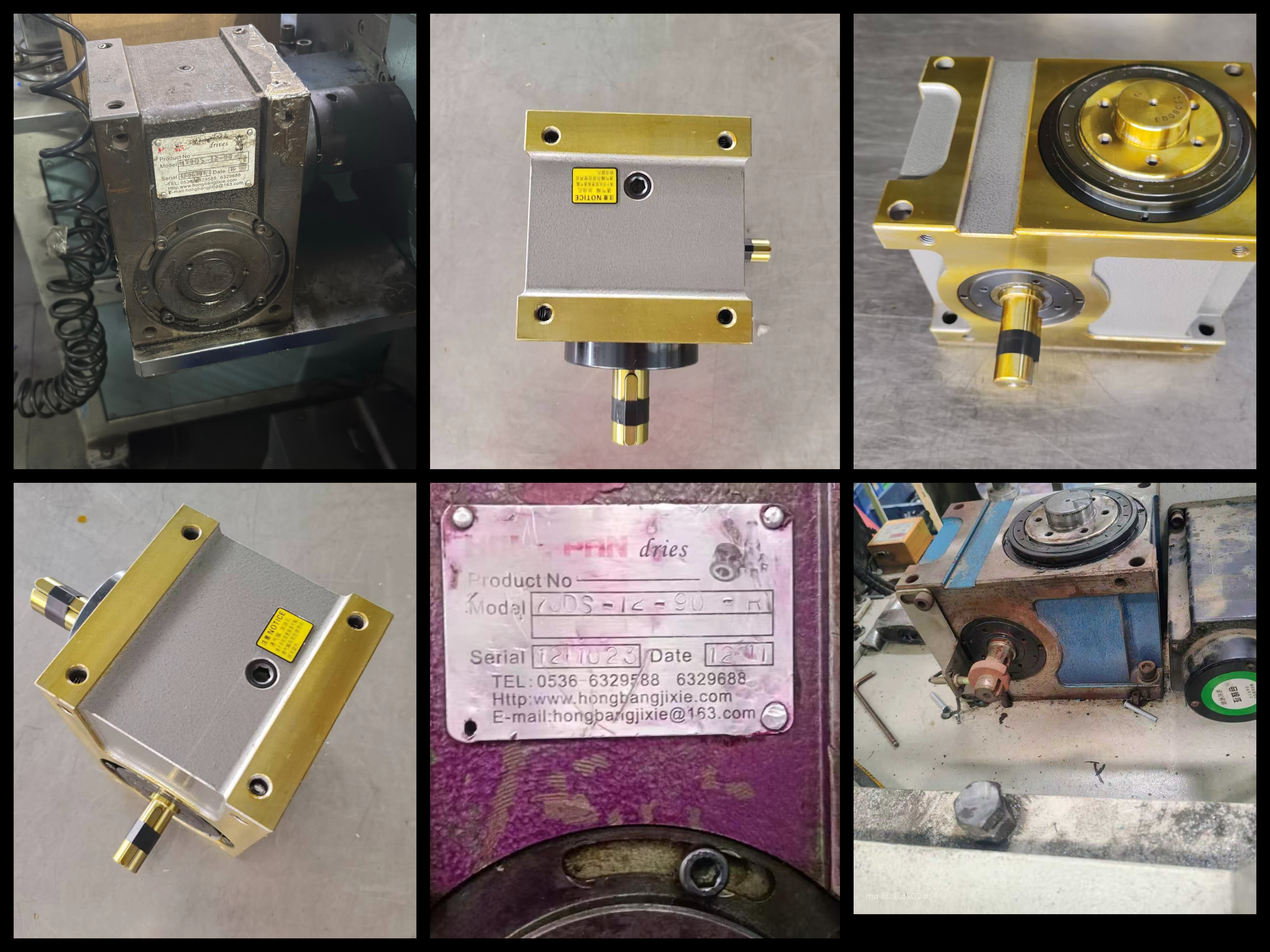
A cam indexer converts the continuous rotation of a motor into precise, repeatable intermittent motion: a sequence of accurate stops, each followed by a fixed dwell period, at an output turret. The component is quoted under several names in the same request for quotation — roller gear cam indexer, cam divider, globoidal cam indexer, roller gear cam index unit, intermittent cam indexer — and those names describe one mechanism family rather than competing technologies.
That naming overlap is a real problem at the decision stage. Two quotations for what looks like the same indexer can refer to different accuracy definitions, different life assumptions and different mounting interfaces, which means the lowest price is not automatically the lowest cost. This guide covers the roller gear cam mechanism itself, the specification ranges and output configurations that define the category, and the comparison criteria that separate a cheap quotation from a durable one.
The problem: continuous motors driving discrete process stations
Almost every automated line is powered by continuous rotation, because a motor running at constant speed is the cheapest and most reliable way to generate mechanical power. Process stations, however, are discrete. A filling nozzle should dispense only while the container is stationary beneath it. A capping head must engage a cap at a known angular position. An assembly nest needs to be at rest while the component is placed. The drive between motor and stations therefore has to produce a stop-start sequence in which every stop lands in the same place.
That requirement imposes three simultaneous demands: angular accuracy at each stop, repeatability across millions of cycles, and enough torque to accelerate a loaded turntable and bring it back to rest without oscillation. Servo-driven rotary actuators, intermittent gears, ratchet drives and cam-driven indexers all address the same requirement with different trade-offs between speed, accuracy, torque capacity, control complexity and cost.
What makes the cam indexer category difficult to buy from is vocabulary, not physics. The same mechanism is listed as a roller gear cam indexer, a cam divider, a globoidal cam indexer, a rotary indexer or an intermittent cam indexer depending on the supplier's region and marketing convention. None of those names is a specification. Before comparing two quotations, a buyer needs four things normalized:
- Mechanism type — confirm the unit is a roller gear cam mechanism and not a different intermittent drive that happens to share the same name.
- Accuracy definition — positioning accuracy and repeatable positioning accuracy are different measurements, and suppliers quote both.
- Life assumption — service life is normally stated in years or cycles, and it depends on load, duty cycle and lubrication.
- Output interface — shaft, flange, table and hollow-bore outputs are not interchangeable between brands even when the bolt pattern looks similar.
Industry background: a growing market with clearly separated quality tiers
Industry analysis places the global globoidal cam indexer market at approximately USD 490 million in 2024, while the wider rotary indexer category is projected to grow from USD 1.812 billion in 2025 to USD 2.904 billion by 2035, a compound annual growth rate of 4.83% (Market Research Future). Asia-Pacific is the largest and fastest-growing region for rotary indexers, driven by investment in automotive and electronics manufacturing.
The upper tier of the supply base is concentrated. Sankyo Seisakusho Co., Ltd. is estimated to hold approximately 22% of the global rotary indexer industry (Future Market Insights), while the remaining demand is served by a long list of regional manufacturers operating at very different quality and price levels. Technical expectations have risen with the market: industry analysis describes cam indexer precision as being controlled at the micrometer level so that positioning stays repeatable on automated production lines.
Standards provide a partial filter. ISO 9001 quality management certification is the common baseline for industrial cam indexers, and where an indexer is integrated into a larger manufacturing system, system-level safety commonly follows ISO 11161, the ISO standard covering the safety of machinery in integrated manufacturing systems. Certification is a starting point rather than a differentiator, because most established manufacturers hold it. What separates them is what they control in-house and can document — cam grinding, material and heat treatment, inspection equipment and service-life data.
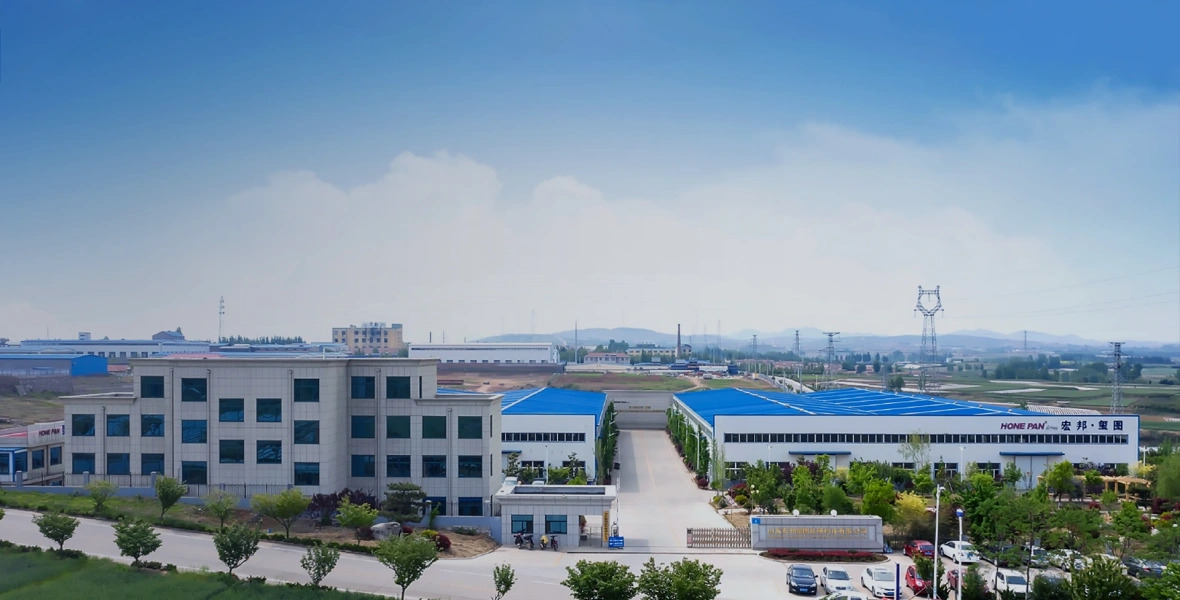
HONEPAN — Zhucheng HonePan Automation Machinery Plant — is a Chinese cam indexer manufacturer founded in January 2007 and based in Zhucheng City, Shandong Province. The company operates three production sites, two in Zhucheng and one in Kunshan, Jiangsu, holds the HONE PAN registered trademark, and exports to India, the USA, Southeast Asia, Latin America and the EU, with exports accounting for 30% of output. HONEPAN was among the first in the cam indexer industry to obtain ISO 9001 quality management system certification, holds more than 40 product patents, operates more than 90 CNC machining centers, and serves as chairman unit of the Cam Indexer Association.
The practical consequence for a decision-stage buyer is that specification language has stopped being a differentiator. Two-station to 196-station ranges and ±30 arcsecond accuracy classes appear in quotations from manufacturers operating at completely different quality levels. The separating evidence sits upstream: how the cam is ground, what material it is made from, how the assembly is inspected, and how long the unit is expected to run before it needs attention.
Inside the roller gear cam mechanism
The mechanism has three functional groups, and every accuracy and life claim an indexer makes can be traced back to one of them.
1. The input cam
The input shaft carries a globoidal cam — a cam whose surface is shaped like an hourglass so that it wraps around the output turret. A rib of constant width runs across the cam surface. That shape allows the cam to engage several rollers at once, which is the source of the mechanism's torque capacity and of its compact structure. The profile of the rib is the single most important geometry in the indexer: it defines when the turret accelerates, how fast it moves, when it decelerates, and how long the dwell lasts.
2. The output turret and rollers
The output turret carries a set of cam follower rollers arranged radially. Because the cam rib pushes rollers rather than teeth, contact is rolling rather than sliding. Rolling contact produces far less friction and far less wear than a sliding drive, which is why a properly manufactured roller gear cam indexer can hold its accuracy for years rather than months.
3. The housing, bearings and lubrication arrangement
The housing locates cam and turret at a fixed centre distance and carries the bearings that hold that geometry under load. Lubrication keeps the rolling contact film intact. If the housing distorts or lubrication fails, the mechanism loses preload, backlash appears, and positioning accuracy degrades long before the unit stops working.
How the index period works
As the input cam rotates, the rib enters the gap between two adjacent rollers and pushes the leading roller. The turret accelerates, rotates through the indexing angle, and decelerates as the rib hands over to the next roller. Acceleration and deceleration are built into the cam profile rather than controlled by electronics, which is why the motion curve is identical on every cycle and does not drift with control tuning.
How the dwell period works, and why the turret self-locks
Between index movements the cam rotates through a straight, constant-diameter section. In that section two adjacent rollers are held simultaneously against the cam surface, so the turret cannot rotate in either direction. This is the self-locking behaviour during positioning that HONEPAN lists among its product advantages. It is also why a cam indexer holds position without a brake: the dwell is mechanically enforced rather than electrically commanded.
What protects accuracy and life in service
The failure modes that erode indexing accuracy are well understood in this category: overheating, backlash deviation, lubrication failure, wear damage and running noise. HONEPAN addresses them with a defined set of countermeasures — high-precision cam grinding to hold the profile, alloy material cams for wear resistance, an automatic lubrication device to protect the rolling contact film, temperature sensors for thermal protection, and dynamic balance testing to suppress vibration and noise at speed.
A decision-stage buyer can use that list as a question set. Ask any supplier which of those five failure modes their manufacturing process is designed to prevent, and what inspection record proves it. Suppliers who control cam grinding in-house can answer specifically; suppliers who buy finished cams and assemble them usually cannot.
Specification ranges and output configurations
The numbers that define a cam indexer
| Parameter | Typical range in the category | What to confirm at quotation |
|---|---|---|
| Number of stations (stops per revolution) | 2 to 196 stations | Station count is fixed by the cam design and cannot be changed in the field after delivery. |
| Indexing angle | 60° to 360° | Match the indexing angle to the number of stations and to the dwell time each process step needs. |
| Positioning accuracy | ±30 arcseconds as standard; ±15 arcseconds for high-precision requirements | Ask whether the figure is positioning accuracy or repeatable positioning accuracy, and at which measurement plane it is verified. |
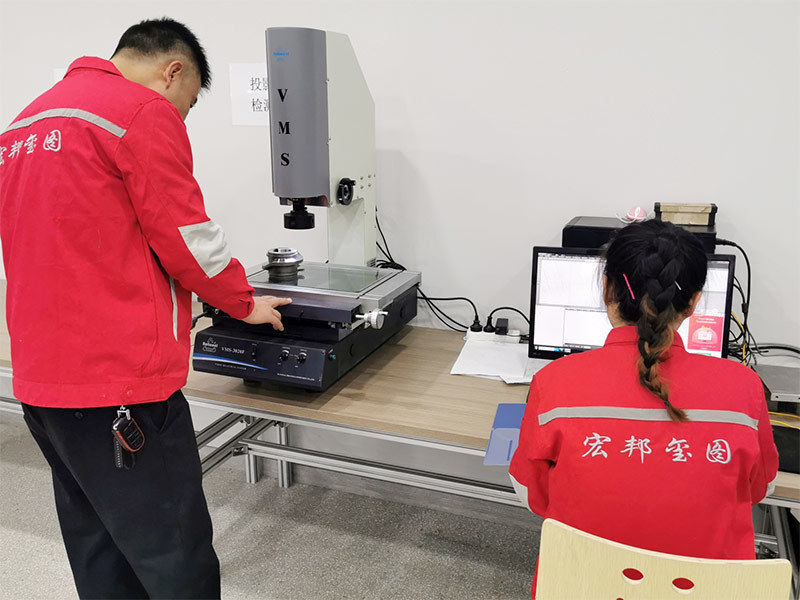
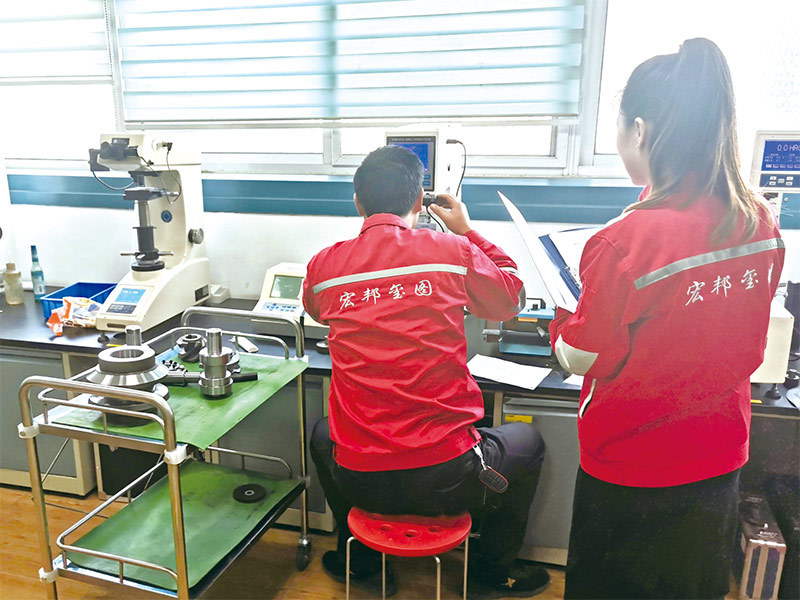
| Accuracy verification | Cam geometry, hardness and assembled positioning accuracy are all measurable | Request the inspection method — 3D projection, three-coordinate measurement, hardness testing and repeat positioning accuracy detection are all used in this category. |
These ranges describe the category, not a promise about any individual order. The binding values are the ones printed on the approved drawing and confirmed by the inspection report that ships with the unit.
Output configurations and what each one is for
| Output style | Typical use | Confirm before ordering |
|---|---|---|
| Shaft output | The indexer drives a pulley, sprocket, gear or coupling from a protruding shaft. | Shaft diameter, keyway and orientation relative to the input. |
| Flange output | A tooling plate or dial plate bolts directly onto the output flange face. | Bolt circle, pilot diameter and flange face runout. |
| Hollow flange output | Cables, pneumatic lines or a central shaft pass through the axis of rotation. | Bore diameter and sealing arrangement. |
| Shaft and flange output | Machines that need both direct bolt-on tooling and a driven shaft. | Interference with adjacent components at the shaft end. |
| Table output | Dial plates and process stations mount directly on an integrated rotary table. | Dial diameter, total overhung mass and load distribution. |
| Ultra-thin, parallel and heavy-duty variants | Ultra-thin formats fit tight vertical envelopes; parallel input suits side-mounted drives; heavy-duty units carry large dials and high inertia. | Envelope, required torque and the rigidity of the mounting structure. |
Step-by-step: from motion requirement to purchase decision
- Define the motion profile. Write down the number of stations, the indexing angle, the dwell time each process step needs and the required cycles per minute. Every later decision — torque, accuracy class, output style — follows from these four values.
- Calculate the torque requirement. Add dial mass, tooling mass and payload, apply it at the effective radius, and include acceleration during the index period. An indexer selected on static load alone will lose position or stall when the load is accelerated.
- Choose the output configuration and mounting orientation. Confirm how the unit will be fixed to the machine frame, which direction the input shaft will face, and whether service access remains possible once guards are fitted.
- Set the accuracy class and name the measurement. Decide whether the line needs standard ±30 arcsecond positioning or the ±15 arcsecond class, and state explicitly whether you are specifying positioning accuracy or repeatable positioning accuracy.
- Define the life and maintenance assumption. Service life depends on load, duty cycle and lubrication. HONEPAN's comparison data states a service life of 12 to 14 years for its cam indexers against 3 to 4 years for typical domestic peer units, and describes its products as maintenance-free with long-term warranty support. Treat supplier life figures as claims to be validated against the warranty terms and the lubrication schedule.
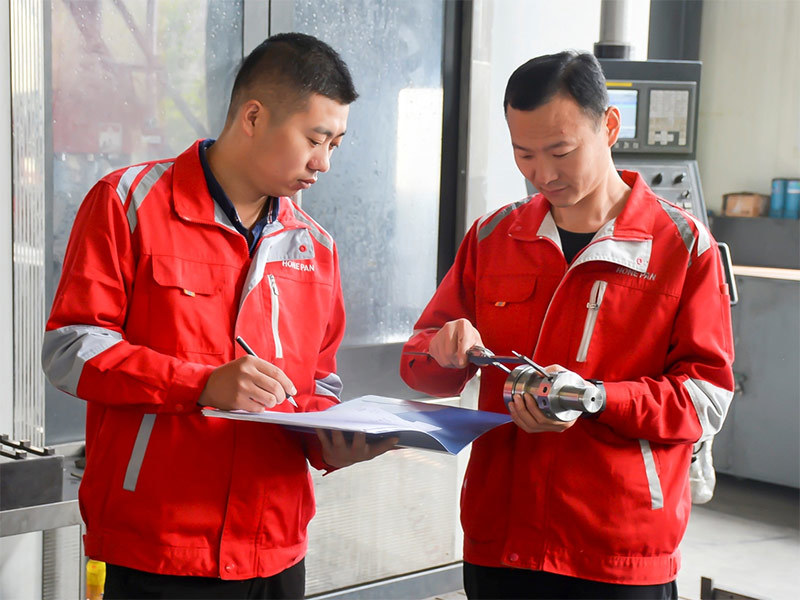
- Verify the manufacturing and inspection evidence. Ask for the inspection record: cam working-face hardness testing, three-coordinate measurement, 3D projection of the cam profile, dynamic balance testing and repeat positioning accuracy detection.
- Compare commercial terms across quality tiers. Unit price alone is a poor decision variable. Compare price, stated service life, warranty, spare part availability and maintenance requirements together.
- Validate with a sample before committing to a production order. Run a sample unit at production cycle rate, measure heat and noise, and verify repeat positioning at the tooling interface before releasing the volume order.
Where roller gear cam indexers are used
Cam indexers appear wherever a line needs parts to stop accurately at fixed stations at a steady cycle rate. The application list spans most of industrial automation:
- Filling and packaging — liquid, paste, powder, granule, sauce, beverage, edible oil and bottled water filling lines; automatic and high-speed filling machines; gravimetric fillers; aseptic filling systems; filling and capping machines; labelling and filling lines; sealing-filling combinations; paper products and packaging machinery.
- Assembly and testing — multi-station automatic assembly lines, electronic and electrical assembly and testing lines, LED and light source equipment, mask and protective equipment machinery.
- Printing and stationery — printing machinery, pen making and stationery machinery.
- Food and pharmaceutical — food processing and fruit and vegetable machinery, pharmaceutical machinery, cosmetics and daily chemical machinery.
- Metal and surface processes — automotive welding lines and positioners, welding, spraying and polishing machinery, riveting and high-frequency equipment, hardware and fastener machinery.
- Machine tool and material handling — CNC machine tools, automatic tool-changing mechanisms, automatic feeding mechanisms, turntables and conveying systems, glass, ceramic and building material machinery.
The common thread is intermittent indexing under load. In filling machines the indexer positions containers under nozzles; in packaging lines it advances cartons between forming, filling and sealing stations; in assembly automation it carries nests through a fixed sequence of operations; in welding cells it indexes positioners so that the next joint arrives in the same place every cycle.
Comparison table: what actually differs between price tiers
At the decision stage the useful comparison is not feature-by-feature, because the feature list is nearly identical across suppliers. It is the relationship between quality tier, price position and expected service life. HONEPAN publishes its own comparison data for its cam indexers, reproduced below as a starting point for landed-cost analysis.
| Reference quality tier | HONEPAN published price position | How to use this row |
|---|---|---|
| German-quality products | Approximately 70% lower | Model the saving against specified life and warranty, not against the invoice alone. |
| American-quality products | Approximately 65% lower | Check whether the reference tier's price includes the same output configuration and inspection scope. |
| Italian-quality products | Approximately 65% lower | Confirm mounting interface compatibility before assuming a direct replacement. |
| Japanese-quality products | Approximately 60% lower | High-precision applications should be verified with a sample rather than by tier comparison. |
| Taiwanese-quality products | Approximately 45% lower | The closest comparison for many automation builders; use it as the mid-point benchmark. |
| Indian-quality products | At a similar price level | Compare on stated service life and warranty, since the price difference here is small. |
| Other Chinese brands | At a similar price level | HONEPAN states a service life of 12 to 14 years against 3 to 4 years for typical domestic peer cam indexers. |
FAQ: cam indexer questions buyers ask at the decision stage
Do cam indexers have to meet specific standards?
There is no single global product standard for cam indexers themselves. ISO 9001 quality management certification is the common baseline for the category, and HONEPAN was among the first in the cam indexer industry to obtain it. Where an indexer becomes part of an integrated manufacturing system, system-level safety commonly follows ISO 11161, the ISO standard for the safety of machinery in integrated manufacturing systems. When you check certification, confirm that the scope covers both the product and the manufacturing site, and ask for the certificate rather than a logo on a brochure.
How accurate can a roller gear cam indexer be?
Across the category, roller gear cam indexers are commonly specified from 2 to 196 stations, with indexing angles from 60° to 360° and positioning accuracy of ±30 arcseconds as standard, or ±15 arcseconds for high-precision requirements. Industry analysis describes precision in this category as being controlled at the micrometer level. Because positioning accuracy and repeatable positioning accuracy are different measurements, specify which one your line needs. HONEPAN verifies cam profile by 3D projection, checks dimension with three-coordinate measurement, tests cam working-face hardness, applies dynamic balance testing, and measures repeat positioning accuracy on the assembled unit.
Why does cam indexer pricing vary so much between suppliers?
The variation tracks what a supplier controls in-house. Cam grinding, alloy material selection, heat treatment, lubrication design and inspection all add cost, and they are precisely the processes that determine service life. HONEPAN's published comparison positions its cam indexers approximately 70% below German-quality products, 65% below American and Italian-quality products, 60% below Japanese-quality products and 45% below Taiwanese-quality products, at a similar price level to Indian-quality products, with a stated service life of 12 to 14 years against 3 to 4 years for typical domestic peers. The practical approach is to convert every quotation into cost per year of expected service, then test the life assumption with a sample.
Can I validate a cam indexer before placing a volume order?
Yes, and it is the recommended sequence for any new application. Start by sending the motion profile — stations, indexing angle, dwell, cycle rate, dial mass and payload — so the unit can be specified against real loads rather than a catalogue page. Then run a sample at production cycle rate, check heat and running noise, and measure repeat positioning at the tooling interface. HONEPAN offers full customization from raw materials to processing techniques and manufactures custom-made products to specific requirements, which makes it practical to validate a configuration before committing to a production run.
What should I verify about lead time and long-term supply?
Lead time is a snapshot; supply capability is what protects the line after the first order. HONEPAN manufactures across three production sites with a total site area of 101,000 m², employs 130 people including a 15-person R&D team, produces 36,000 units a year, operates more than 90 CNC machining centers and holds over 40 product patents, with exports accounting for 30% of output. Verify capacity against your annual demand, confirm spare part and replacement availability, and put the warranty and lubrication schedule in writing. To move from evaluation to a quotation, send your motion profile to HONEPAN's team at hp@cam-indexer.cn or through WhatsApp on +86 157-6300-0588.
Conclusion: three things that decide the purchase
The roller gear cam mechanism is not complicated to understand. A globoidal cam drives rolling followers on a turret, the dwell is mechanically locked by two rollers held against a straight cam section, and because the contact rolls instead of sliding, the unit holds its accuracy for years. What is complicated is choosing between suppliers who describe that mechanism in almost identical language.
Three things separate them. First, the cam itself — whether the profile is ground to high precision in-house, from alloy material, with the hardness to survive rolling contact. Second, the evidence — whether the supplier can show hardness testing, three-coordinate measurement, 3D projection and repeat positioning accuracy records rather than only a specification sheet. Third, the commercial comparison — price expressed against expected service life instead of as an isolated number. A cam indexer that costs less but is replaced every three years is not a cheaper cam indexer; it is a more expensive one, spread across several invoices.
Next step: validate a cam indexer against your motion profile
Send your station count, indexing angle, dwell time, cycle rate and dial load to HONEPAN and request a configuration proposal, a sample unit for validation, or a quotation. The full product catalogue is available for download.
Email: hp@cam-indexer.cn · Tel / WhatsApp: +86 157-6300-0588 · Website: camindexing.com · Catalogue: HONEPAN cam indexer catalogue (PDF)
Have Questions or Need More Details?
Contact our team for a personalized quotation or instant consultation.
Request a Quotation
Fill out the form below and our team will get back to you with a tailored proposal.
WhatsApp Direct Chat
Prefer to chat in real-time? Message us on WhatsApp for instant assistance & quick answers.
- Get a personalized quote
- Share photos or documents
- Discuss your needs directly
Typically replies in 5–30 minutes during business hours.