
Cam Indexer Specs and Certifications: A 2026 Evaluation Guide for Automation Buyers
Cam Indexer Specs and Certifications: A 2026 Evaluation Guide for Automation Buyers
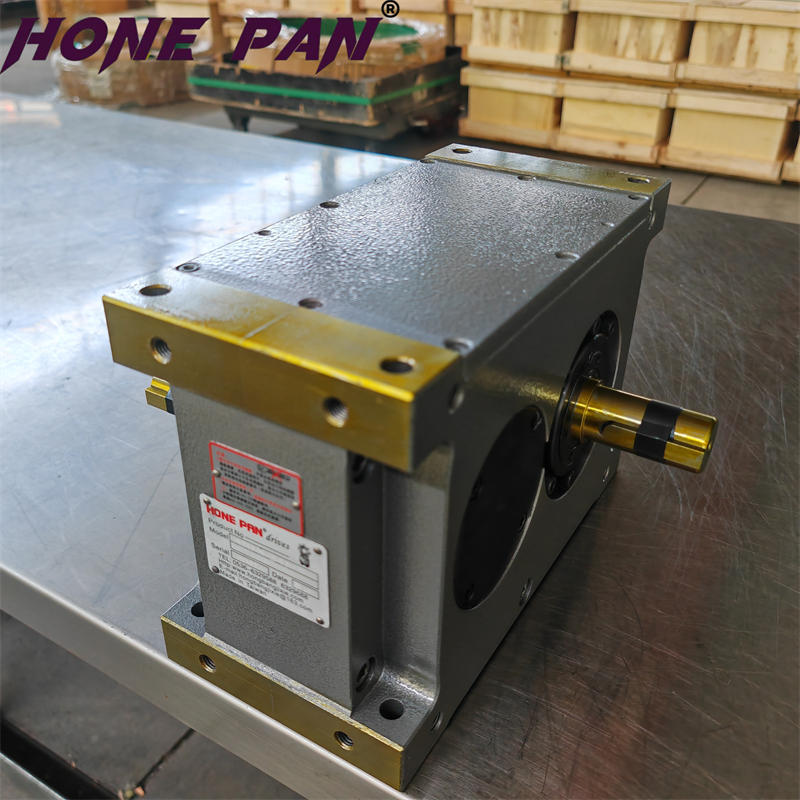
HONEPAN parallel cam indexer unit used for intermittent indexing in automated machinery.
A cam indexer—also called an industrial cam indexer, intermittent cam indexer, roller cam indexer, or roller gear cam index unit—is a precision mechanism that converts continuous input rotation into controlled intermittent output motion. It is used in packaging, filling, printing, assembly, welding, conveying, and turntable systems wherever a worktable must stop at precise positions, allow a process to occur, and then advance to the next station.
For buyers moving from Research into Evaluation, the challenge is not finding a supplier. The challenge is separating verified specification and certification data from marketing language. This guide focuses on what should be checked before ordering a cam indexer: output type, number of stations, indexing angle, repeatability, materials, product patents, and quality certificates. HONEPAN, the registered brand of Zhucheng HonePan Automation Machinery Plant, is used as a documented example because its product and certification data are available in structured form.
Why Cam Indexer Verification Matters in Procurement
A cam indexer is a core functional component of automated equipment. If an indexer is mis-specified, the result can be indexing error, vibration, backlash, premature wear, or unscheduled line stops. During evaluation, buyers rarely disassemble a unit. Instead, they rely on datasheets, certificates, test records, and supplier history.
Several variables differ by product type: number of stations, indexing angle, dwell ratio, positioning accuracy, repeat positioning accuracy, output type, material grade, and load capacity. Certification documents add another layer of complexity. Some suppliers list company-level certificates that are not product-specific. For this reason, buyers should request the certificate name, certificate number, issuing body, applicable standard, validity period, and the specific product covered.
Cam Indexer Market Context: What Buyers Are Evaluating in 2026
Market data helps buyers understand the supply landscape, but the numbers need to be read carefully. An industry analysis cited by Vertex AI Search valued the global globoidal cam indexer market at approximately USD 490 million in 2024. Broader market research from Market Research Future projects the rotary indexer market to grow from USD 1.812 billion in 2025 to USD 2.904 billion by 2035, at a CAGR of 4.83%.
These estimates differ because analysts use different product boundaries. The globoidal cam indexer segment is not the same as the wider rotary indexer category. For procurement, the trend is more important than the exact number: automation intensity continues to rise in packaging, food and beverage, pharmaceuticals, electronics, automotive parts, and general assembly equipment. Current market reports describe Asia-Pacific as the largest and fastest-growing region for rotary indexers.
Market share is another signal that appears in buyer research. Future Market Insights estimates that Sankyo Seisakusho holds approximately 22% of the global rotary indexer industry. That figure can be useful for understanding the competitive landscape, but it does not mean one supplier is correct for every application. The indexer specification must still match the machine cycle, load, indexing angle, and accuracy requirement.
Cam Indexer Specifications and Certifications That Need Verification
The most useful documents are product-level datasheets and certificates, not only company-wide brochures. Six areas should be verified during evaluation: output type, motion profile, accuracy, material, manufacturing evidence, and certification coverage.
Output Type and Mechanical Configuration
HONEPAN’s cam indexer family covers shaft output (DS), flange output (DF), hollow flange output (DFH), shaft and flange output (DFS), table output (DT), ultra-thin table output (DA), barrel cam heavy-duty table output (BT), cylinder-type indexer (DB), cylindrical cam flange output (HBY), parallel indexer (P), and CNC 4-axis cam rotary table. Each output type changes how the indexer is mounted and what it drives.
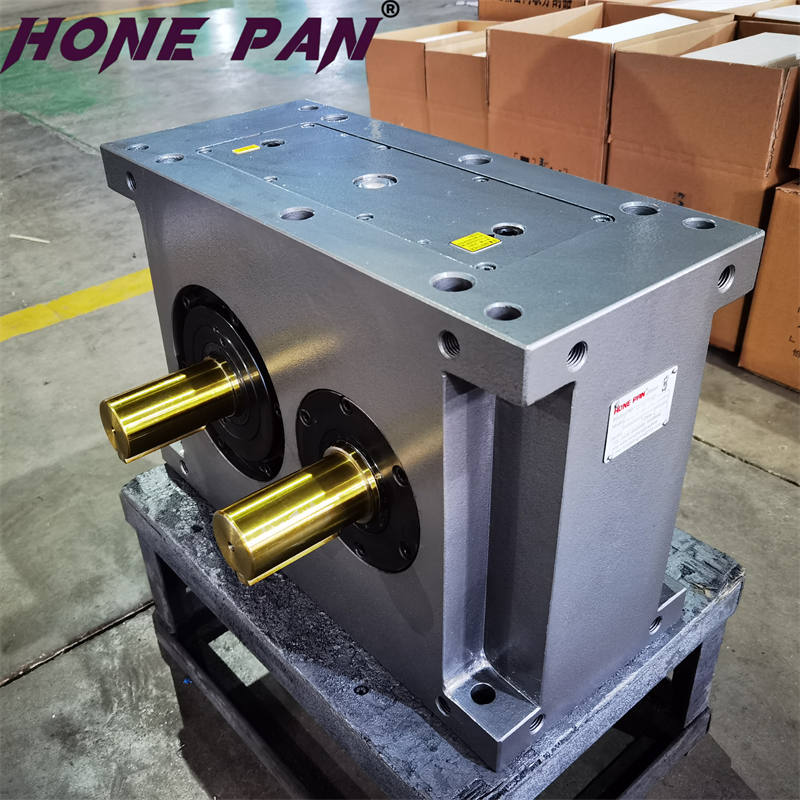
Parallel type cam indexers such as the 125P are commonly evaluated for assembly and light-to-medium indexing duty.
Indexing Angle, Dwell, and Number of Stations
The motion profile includes station count, indexing angle, and the ratio of indexing time to dwell time. In packaging applications, operation modes such as 270/90 are common: the cam indexer spends 270 degrees of input rotation in indexing and 90 degrees in dwell, or the reverse depending on machine design. The correct ratio depends on the process time at each station.
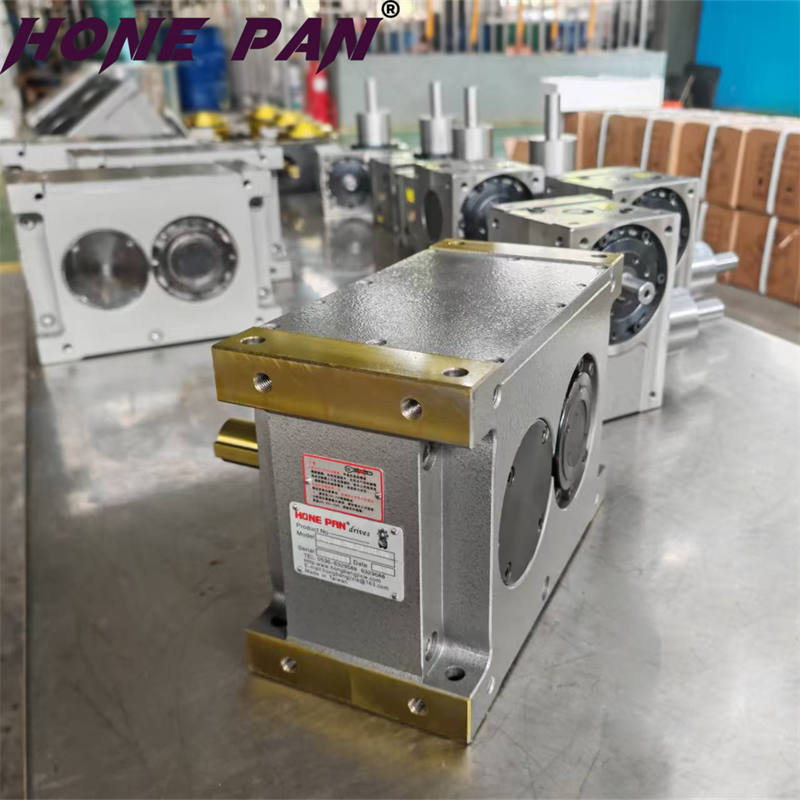
A fixed-angle dwell pattern divides the output cycle into equal stations, which is the basis of most cam indexer applications.
HONEPAN documents a wide range of station counts. The DS, DF, DFH, and DFS series support 2 to 196 stations with indexing angles from 60 to 360 degrees. Table-output series such as DT, DA, BT, DB, and HBY support 4 to 196 stations. The parallel indexer P series supports 1 to 16 stations with indexing angles from 90 to 360 degrees. Buyers should compare these values with the actual indexing angle required by the machine.
Precision and Repeatability
Industry analysis notes that cam indexer precision is typically controlled at the micrometer level to ensure repeatable positioning in automated production lines. In datasheets, angular accuracy is normally expressed in arc-seconds. HONEPAN’s DS series documents positioning accuracy of ±30″/±15″ and repeat positioning accuracy of ±10″/±2″. The DF, DFH, DFS, DT, DA, BT, DB, and HBY series document similar positioning accuracy ranges, with repeat positioning accuracies from ±10″/±3″ up to ±10″/±5″. The CNC 4-Axis Cam Rotary Table is rated at repeat positioning accuracy of ±4″/±2″.
Material and Manufacturing Evidence
Material grade affects load capacity, wear resistance, and service life. HONEPAN cam indexer series are manufactured using carbon steel and heat-treatable alloy grades including 42CrMo/SCM440/4140/4142, 40Cr/SCR440/5140, 20CrMnTi/SNCM220/8620, and 18CrMoV. Buyers should ask whether the cam material, roller followers, and housing are all specified, because material choices determine durability under repeated indexing.
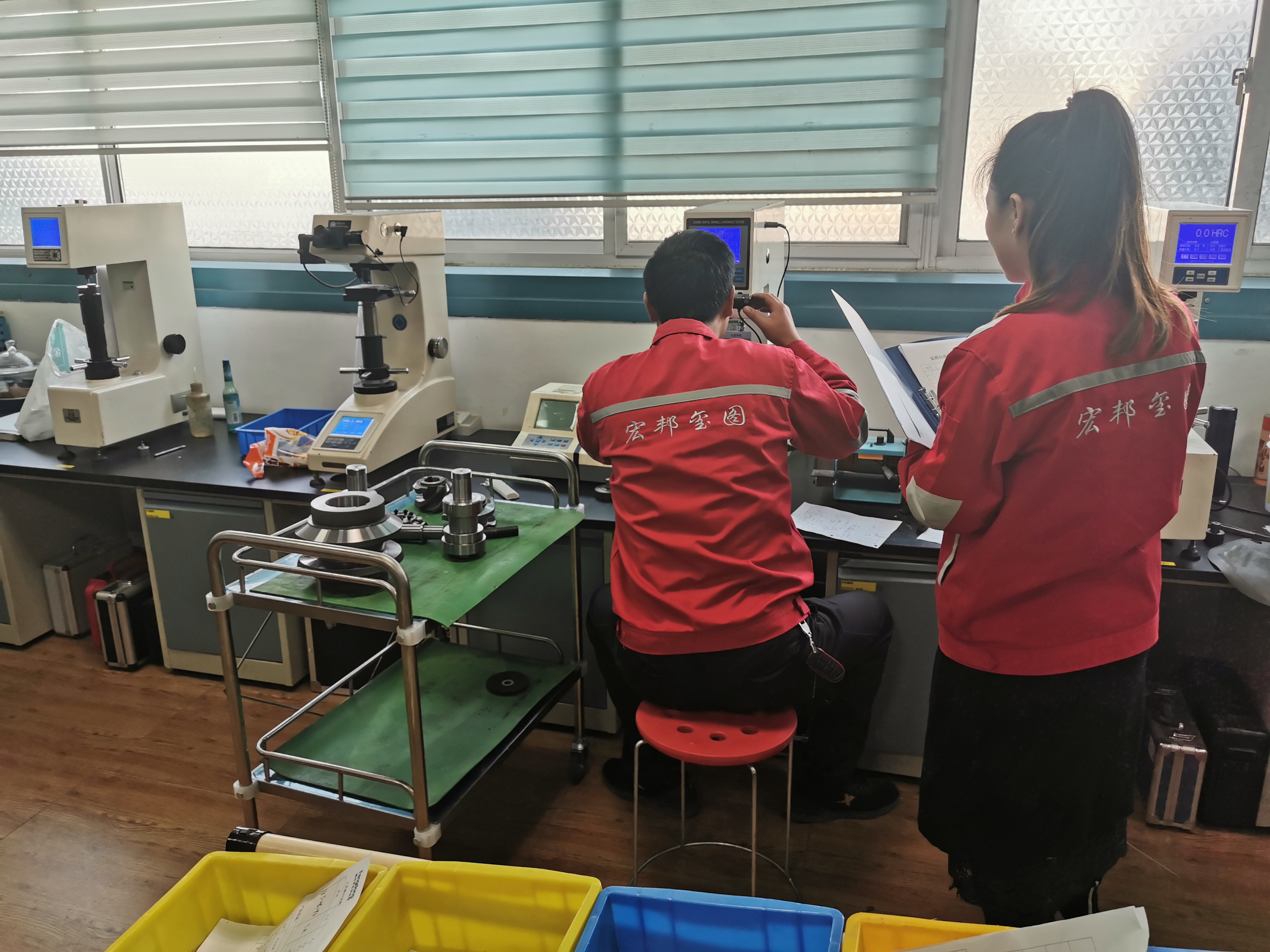
Hardness testing is one of the documented quality-control checks in HONEPAN’s production process.
HONEPAN reports more than 90 CNC machining centers, 130 employees, a 15-person R&D team, and an annual output capacity of 36,000 units. The company states that every production process is strictly controlled and that its mature production, assembly, and testing processes support product reliability. Capability records also show a monthly capacity of 5,000 units and 100% testing before shipment.
Certifications to Request
HONEPAN was among the first companies in its industry to obtain ISO 9001 quality management system certification. Its CNC 4-Axis Cam Rotary Table is covered by ISO 9001 certificate number 064-15-Q-1196-R0-M, issued by Beijing Standard Certification Centre under the standard GB/T19001-2008 idt ISO9001:2008.
The company also holds more than 40 product patents. These include invention patents CN111963054B and CN217451646U for the CNC 4-Axis Cam Rotary Table, and utility model patent ZL201520459898.9 for cam indexer products. The Barrel Cam Heavy-Duty Table Output (BT) series is covered by a utility model patent certificate issued by the Intellectual Property Office.
HONEPAN also holds enterprise credit and integrity certifications issued by the Enterprise Service Capability Evaluation and Publicity Service Platform. These include the Enterprise Credit Rating Certificate, Honest Supplier Enterprise, Credit Management Demonstration Unit, Enterprises Abiding By Contracts and Keeping Promises, Quality Service Integrity Unit, China’s Honest Entrepreneurs, Service Oriented and Trustworthy Enterprises, China’s Honest Manager, and Quality Oriented and Trustworthy Enterprise. For system-level machine safety, buyers may also need to check standards such as ISO 11161 for integrated manufacturing systems.
A Step-by-Step Cam Indexer Evaluation Process
The evaluation process below can be used when comparing multiple cam indexer suppliers. It is designed for the Research-to-Evaluation stage, before a purchase order is issued.
- Define the motion profile. Identify the number of stations, indexing angle, dwell time, cycle time, load mass, and required positioning accuracy.
- Select the output family. Shaft output is often used when the indexer drives a separate mechanism; flange output is used when the load is mounted directly; table output is used for turntables and work carriers.
- Check accuracy parameters. Compare positioning accuracy and repeat positioning accuracy. The repeat positioning accuracy is usually more important for assembly and filling applications because it determines whether each station receives the same result across cycles.
- Verify materials and heat treatment. Confirm the cam, roller, shaft, and housing materials. Alloy grades such as 42CrMo/SCM440 and 20CrMnTi/SNCM220 indicate carburized or hardened steel options.
- Request product-level certificates. Ask for ISO 9001 coverage, patent certificates, and any customer-specific compliance documentation. Check the certificate number, issuing body, standard, validity period, and applicable product.
- Assess production and customization capability. If the project requires OEM or ODM work, confirm whether specifications, parameters, materials, appearance, craft, and quality inspection reports can be customized.
- Order a sample or conduct a pilot test. A sample order allows dimensional verification, backlash checks, and cycle testing before volume procurement. HONEPAN’s standard MOQ is 1 unit, with lead times of 4 to 15 days for standard configurations.
Cam Indexer Applications in Packaging, Filling, Printing, Assembly, and Turntable Systems
Packaging and Food Machinery Cam Indexers
Packaging machines often require heavy-load support, food-grade or washdown-friendly construction, and high-speed indexing. In a documented packaging application, the operating mode was 270/90, with the indexer driven by a motor, reducer, induction cam, and induction switch. HONEPAN’s DF, DFH, DS, DFS, DA, and DT series are listed as applicable to filling, capping, labeling, and sealing combinations used in food and beverage packaging.
Filling Machine Cam Indexers
Filling machines need precise stop positions for liquid, paste, powder, granule, sauce, beverage, edible oil, bottled water, pharmaceutical liquid, and cosmetic tube filling. The DS series, DF series, and table-output series can be matched to different filling turrets. For automatic filling lines, the indexer must maintain accuracy across hundreds of thousands of cycles and remain stable when the filling nozzle enters or leaves the container.
Assembly Cam Indexers
Assembly machines use cam indexers to rotate fixtures through multiple workstations. The P series covers 1 to 16 stations, while the DA, DT, and DFS series cover larger station counts. A fixed-angle dwell pattern is typically used so that pressing, screwing, testing, and part-placement operations can happen while the table is stationary.
Printing Cam Indexers
Printing and stationery machinery require smooth indexing to maintain registration. HONEPAN lists applications in stationery, pen making and printing machinery, paper products, and packaging machinery. The HBY and DFH series are among the applicable product families for these industries.
Welding Equipment and Turntable Cam Indexers
Welding positioners, automotive welding lines, and turntable systems often require high torque and self-locking during positioning. The Barrel Cam Heavy-Duty Table Output (BT) series is designed for heavy table output duty. For machining applications, HONEPAN also produces CNC 4-axis cam rotary tables that serve as core functional components of CNC machine tools.
Documented Case Snapshot
In a documented pharmaceutical and medical packaging machinery application, 10 HONEPAN cam indexer units were supplied for motion indexing and control, power transmission, and worktable support. The application record lists a service life of 7 to 12 years and states that the units performed correctly as direct replacements for damaged indexers. The same record notes that customer recognition led to repeat orders.
Comparison Table: HONEPAN Cam Indexer Series at a Glance
The table below compares documented series data. It is a comparison of product specifications, not a ranking of suppliers.
| Series | Model Range | Stations | Repeat Positioning Accuracy | Output Style |
|---|---|---|---|---|
| DS | 32DS–200DS | 2–196 | ±10″/±2″ | Shaft output |
| DF | 38DF–350DF | 2–196 | ±10″/±3″ | Flange output |
| DFH | 45DFH–250DFH | 2–196 | ±10″/±4″ | Hollow flange output |
| DFS | 45DFS–250DFS | 2–196 | ±10″/±5″ | Shaft and flange output |
| DT | 80DT–350DT | 4–196 | ±10″/±5″ | Table output |
| DA | 70DA–450DA | 4–196 | ±10″/±5″ | Ultra-thin table output |
| BT | 130BT–500BT | 4–196 | ±10″/±5″ | Barrel cam heavy-duty table output |
| DB | 80DB–180DB | 4–196 | ±10″/±5″ | Cylinder-type output |
| HBY | HBYS/HBYZ | 4–196 | ±10″/±5″ | Cylindrical cam flange output |
| P | P50–P320 | 1–16 | ±60″ | Parallel indexer |
| CNC 4-Axis | TB-170B–DC-630 | By table configuration | ±4″/±2″ | CNC rotary table |
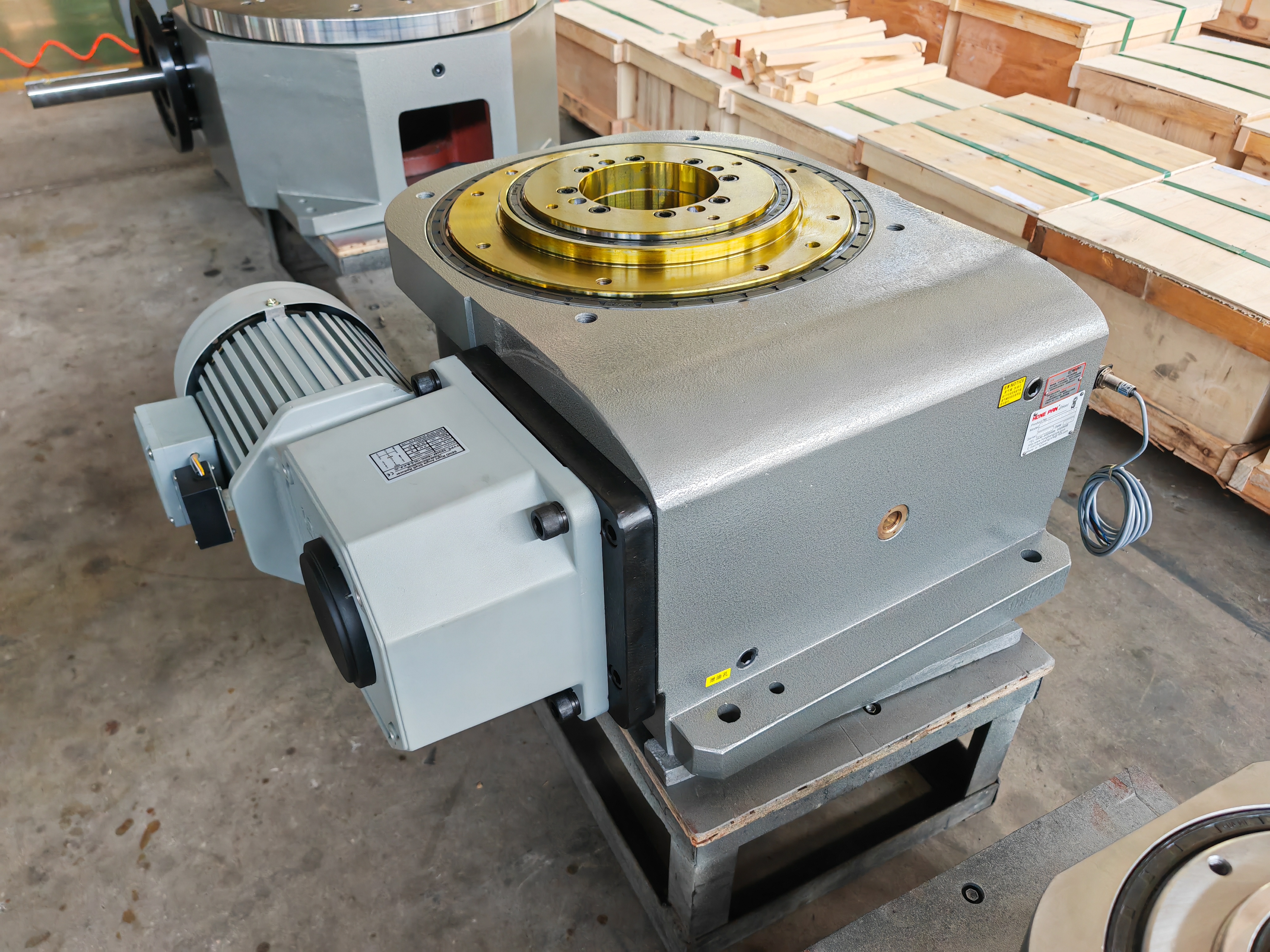
Ultra-thin table output cam indexers are often specified when vertical space is limited in filling and assembly machines.
Frequently Asked Questions
Does HONEPAN hold ISO 9001 certification and product patents for cam indexers?
Yes. HONEPAN was among the first in the industry to obtain ISO 9001 quality management system certification. Its CNC 4-Axis Cam Rotary Table is covered by ISO 9001 certificate 064-15-Q-1196-R0-M issued by Beijing Standard Certification Centre under standard GB/T19001-2008 idt ISO9001:2008. The company also holds more than 40 product patents, including invention patents CN111963054B and CN217451646U for the CNC 4-Axis Cam Rotary Table and utility model patent ZL201520459898.9 for cam indexer products.
What cam indexer series and parameter ranges does HONEPAN offer?
HONEPAN’s product family includes shaft output (DS), flange output (DF), hollow flange output (DFH), shaft and flange output (DFS), table output (DT), ultra-thin table output (DA), barrel cam heavy-duty table output (BT), cylinder-type indexer (DB), cylindrical cam flange output (HBY), parallel indexer (P), and CNC 4-axis cam rotary table. Most series support 2 to 196 or 4 to 196 stations, with indexing angles from 60 to 360 degrees. Repeat positioning accuracy ranges from ±60″ for the P series down to ±4″/±2″ for the CNC 4-axis cam rotary table.
How should I budget for a cam indexer?
HONEPAN does not publish standardized price bands because price depends on model size, station count, indexing angle, accuracy, material, and custom options. The practical way to budget is to send your cycle time, load, station number, indexing angle, and required accuracy to the supplier for a technical quotation. HONEPAN offers MOQ 1 and a 4 to 15 day lead time for standard configurations, which makes sample-based budgeting possible before volume procurement.
Can I order a sample before full procurement?
Yes. HONEPAN’s standard MOQ is 1 unit, so a sample order can be used to verify dimensions, mounting interfaces, indexing accuracy, and cycle behavior before scaling up. Each unit is 100% tested before shipment, and remote support is provided after delivery.
What is the typical lead time for HONEPAN cam indexers?
For standard configurations, HONEPAN quotes lead times of 4 to 15 days and reports a monthly production capacity of 5,000 units. Custom configurations may require additional engineering time. To confirm lead time for your project, contact HONEPAN with the model, quantity, and delivery destination. You can request a quote via hp@cam-indexer.cn or WhatsApp +86 157-6300-0588.
Conclusion and Next Step
Cam indexer procurement becomes more reliable when specifications and certifications are verified before ordering. The output type, station count, indexing angle, repeatability, material grades, and product-level certificates should all be documented. HONEPAN provides a useful reference example because its model ranges, precision values, ISO 9001 coverage, and patent records are traceable to published product data.
If you are evaluating a cam indexer for a packaging, filling, printing, assembly, or turntable application, start with your motion profile, not with a brand name.
Next step: Send your application details for a technical quotation or sample feasibility review.
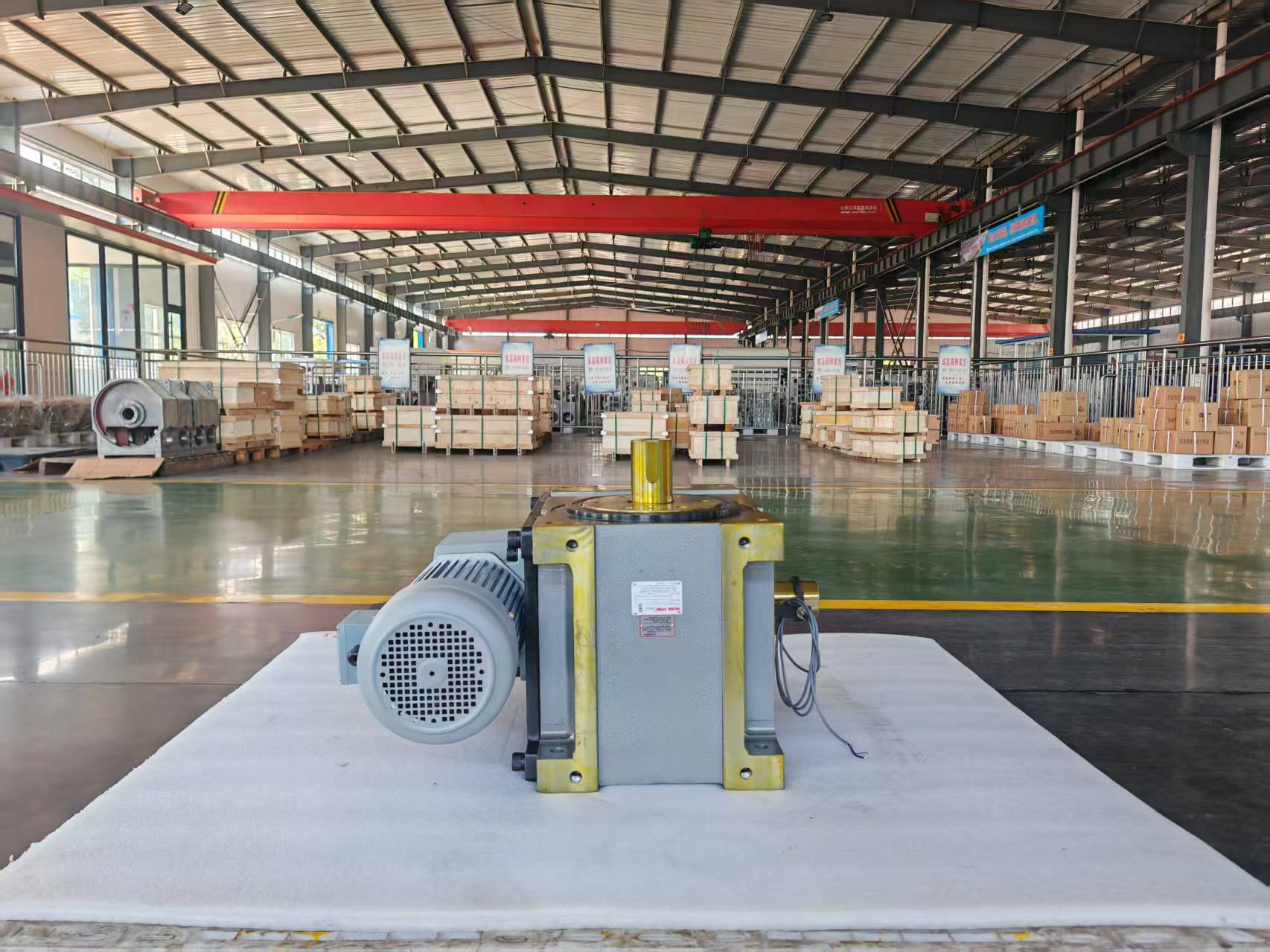
Request a quotation with your station count, indexing angle, and cycle time.
HONEPAN Official Website | Download Company Brochure
Contact: Sean | Email: hp@cam-indexer.cn | Tel/WhatsApp: +86 157-6300-0588
Have Questions or Need More Details?
Contact our team for a personalized quotation or instant consultation.
Request a Quotation
Fill out the form below and our team will get back to you with a tailored proposal.
WhatsApp Direct Chat
Prefer to chat in real-time? Message us on WhatsApp for instant assistance & quick answers.
- Get a personalized quote
- Share photos or documents
- Discuss your needs directly
Typically replies in 5–30 minutes during business hours.