
Shaft Output vs. Flange Output Cam Indexers: Which Mounting Style Fits Your Machine Design?
Shaft Output vs. Flange Output Cam Indexers: Which Mounting Style Fits Your Machine Design?
Short answer: specify a shaft-output cam indexer (the DS family) when the driven member sits off the indexer axis and motion has to pass through a coupling, pulley, sprocket or gear. Specify a flange-output cam indexer (the DF family) when the platform, dial or tooling plate can be bolted directly onto the output flange face. The roller gear cam mechanism, the 2–196 station range, the 60–360° indexing angle and the ±30″ / ±15″ positioning accuracy class are shared by both families. What changes your machine is the interface.
This article is written for machine builders and procurement engineers who are already past the “what is a cam indexer” question and are now fixing the mechanical interface before releasing drawings or requesting quotes. It compares the DS shaft-output and DF flange-output families built by HONEPAN (Zhucheng HonePan Automation Machinery Plant) using published specification data, and closes with a seven-step selection framework you can run before you send an RFQ.
Why the Output Interface Often Decides the Design
Indexer selection normally starts with station count, indexing angle and cycle rate. That order is sensible, but it becomes expensive when the output interface is fixed last, after the frame has already been drawn around a different driving arrangement. At that point the cost is no longer the price of the indexer; it is the machining, alignment and rework of everything around it.
Three mechanically different things change when you move from a shaft output to a flange output:
- The driven member. A shaft output needs a mating bore, key, coupling, pulley or sprocket. A flange output needs a mating bolt circle, pilot diameter and a flat face perpendicular to the axis.
- The load path. On a shaft output the driven member hangs on the shaft, so radial and overhung loads reach the output bearing through the shaft. On a flange output the platform is bolted flat against the output face, which keeps the mass closer to the housing but makes bolt torque, face flatness and pilot fit the critical tolerances.
- The concentricity stack-up. A flange output locates the table directly against the indexer. A shaft output adds at least one more interface (shaft to coupling to driven member), and each interface adds runout to the stack.
The two families are also not identical in every published figure. Positioning accuracy is listed as ±30″ / ±15″ for both, but repeat positioning accuracy is listed as ±10″ / ±2″ for the DS shaft-output range and ±10″ / ±3″ for the DF flange-output range. On most stations that difference is absorbed by the tooling; on a station with a tight repeatability budget, it is worth checking before assuming the two interfaces are interchangeable.
Industry Background: Where the Interface Decision Happens
Cam indexers sit inside the filling, packaging, labeling and assembly stations that convert continuous motor rotation into precise dwell-and-move stepping motion. The segment is growing steadily rather than explosively: Market Research Future projects the rotary indexer market to grow from USD 1.812 billion in 2025 to USD 2.904 billion by 2035, a CAGR of 4.83%. The same market reporting identifies Asia-Pacific as the largest and fastest-growing region, supported by investment in automotive and electronics manufacturing. Industry technical commentary generally describes indexer precision as being controlled at the micrometer level, because station repeatability depends on it.
HONEPAN is the registered product trademark of Zhucheng HonePan Automation Machinery Plant, a cam indexer and cam rotary table manufacturer founded in January 2007. The company operates from a total area of 101,000 m² across three factories in Zhucheng City, Shandong Province, and Kunshan City, Jiangsu Province, with 130 employees, a 15-person R&D team, an annual output of 36,000 units and an export share of roughly 30% across India, the USA, Southeast Asia, Latin America and the EU. It was among the first in the industry to obtain ISO 9001 quality management system certification, holds more than 40 product patents, operates more than 90 CNC machining centers, serves as the chairman unit of the Cam Indexer Association, and is recognized as a high-tech enterprise.
The product range is applied across automotive welding lines, positioners, CNC machine tools, pharmaceutical machinery, printing machinery, food packaging and filling machinery, tobacco machinery, glass and ceramic machinery, automatic feeding mechanisms, automatic tool-changing mechanisms and electronic and electrical assembly and testing lines — equipment that converts continuous operation into stepping motion.
Detailed Solution: What DS and DF Are Built For
DS — Cam Indexer Shaft Output (32DS to 200DS)
The DS family delivers motion through a projecting output shaft. HONEPAN’s published range covers sixteen frame sizes: 32DS, 38DS, 45DS, 60DS, 63DS, 70DS, 80DS, 83DS, 100DS, 110DS, 125DS, 140DS, 150DS, 170DS, 180DS and 200DS.
Published specification data for the family:
- Number of stations: 2–196
- Indexing angle: 60–360°
- Positioning accuracy: ±30″ / ±15″
- Repeat positioning accuracy: ±10″ / ±2″
- Output materials: carbon steel; 42CrMo / SCM440 / 4140 / 4142; 40Cr / SCR440 / 5140; 20CrMnTi / SNCM220 / 8620; 18CrMoV
The shaft interface is the right answer when the indexer cannot sit directly beneath the rotating member. If the driven element is a pulley, sprocket, gear or a separate driven shaft, or if the platform axis has to be offset from the indexer axis for layout reasons, a shaft output provides that freedom. HONEPAN lists the DS range for liquid, paste, powder, granule and sauce filling machines, beverage fillers, edible oil filling machines, bottled water production lines, automatic filling machines, high-speed filling lines, gravimetric fillers, aseptic filling systems, pharmaceutical liquid fillers, cosmetic tube filling machines, disinfectant filling equipment, filling and capping machines, labeling and filling lines, sealing-filling combos, and food processing and fruit/vegetable machinery.
DF — Cam Indexer Flange Output (38DF to 350DF)
The DF family delivers motion through a machined flange face, and the platform, dial or tooling plate bolts directly onto it. The published range covers fifteen frame sizes: 38DF, 45DF, 60DF, 63DF, 70DF, 80DF, 100DF, 110DF, 125DF, 140DF, 150DF, 180DF, 200DF, 250DF and 350DF.
Published specification data for the family:
- Number of stations: 2–196
- Indexing angle: 60–360°
- Positioning accuracy: ±30″ / ±15″
- Repeat positioning accuracy: ±10″ / ±3″
- Output materials: carbon steel; 42CrMo / SCM440 / 4140 / 4142; 40Cr / SCR440 / 5140; 20CrMnTi / SNCM220 / 8620; 18CrMoV
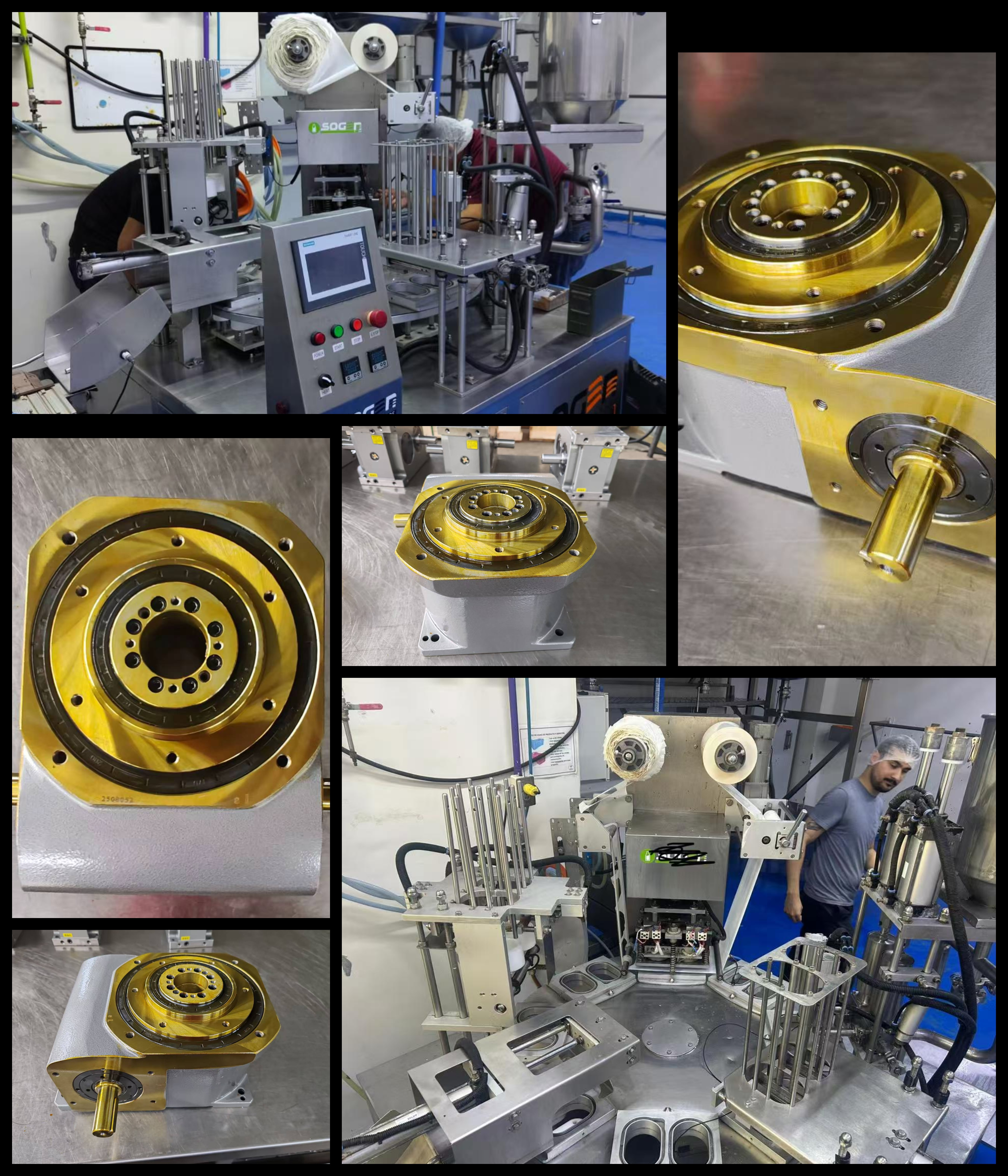
The flange interface removes the extra driven member. On a rotary filling or capping carousel, where the platform itself is the driven element and the indexer can be mounted concentrically underneath it, the flange face bolts straight to the table. HONEPAN lists the DF range for liquid, paste, powder, granule and sauce filling machines, beverage fillers, edible oil filling machines, bottled water production lines, automatic filling machines, high-speed filling lines, gravimetric fillers, aseptic filling systems, pharmaceutical liquid fillers, cosmetic tube filling machines and disinfectant filling equipment. The DF range also extends further in frame size: the largest DF frame is 350DF, while the largest DS frame is 200DS.
What Both Families Share
Both are roller gear cam indexers from the same product platform, which is exactly why an application list cannot decide the interface for you. Shared characteristics include:
- 2–196 stations, a 60–360° indexing angle range, and a ±30″ / ±15″ positioning accuracy specification;
- the same output material family, including 42CrMo/SCM440/4140/4142, 40Cr/SCR440/5140, 20CrMnTi/SNCM220/8620 and 18CrMoV alloy steels;
- HONEPAN’s stated product characteristics: high precision, high-speed performance, smooth and stable operation, large torque transmission, self-locking during positioning, compact structure and long service life;
- OEM/ODM production support, with customization of specifications, parameters, materials, appearance, craftsmanship and quality inspection reports;
- 100% testing, a monthly capacity of 5,000 units, a minimum order quantity of one unit and a typical production lead time of 4–15 days.
How Output Type Changes Four Design Decisions
1. Mounting orientation and the driven member
A shaft output imposes an axial projection: the driven member must accept a bore and keyway, or a coupling, pulley or sprocket must be mounted on the shaft. A flange output imposes a flat, perpendicular face with a bolt pattern and pilot. In practice this determines whether the indexer can sit inline with the platform or has to be offset to the side of the machine frame.
2. Torque transfer and the load path
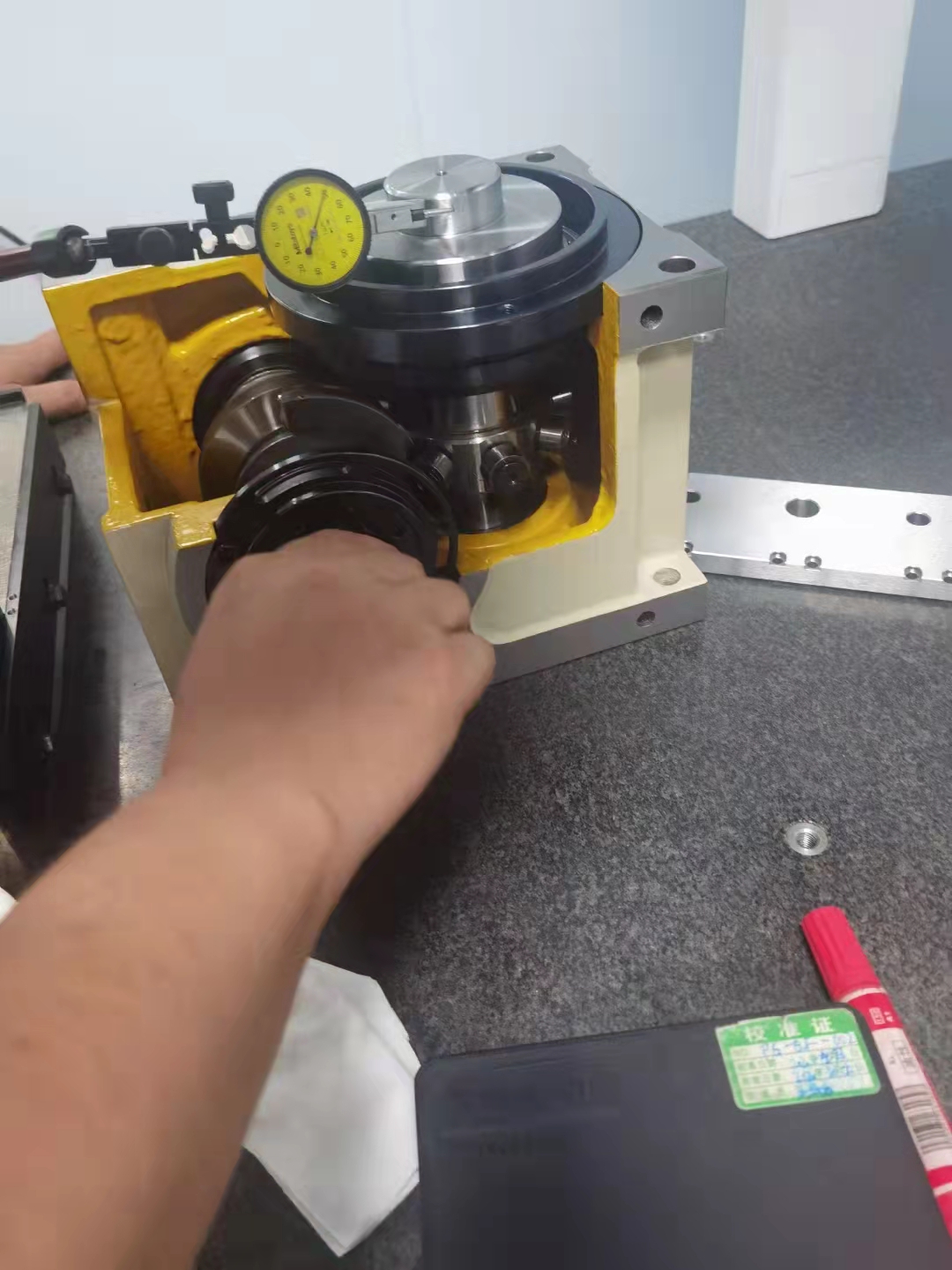
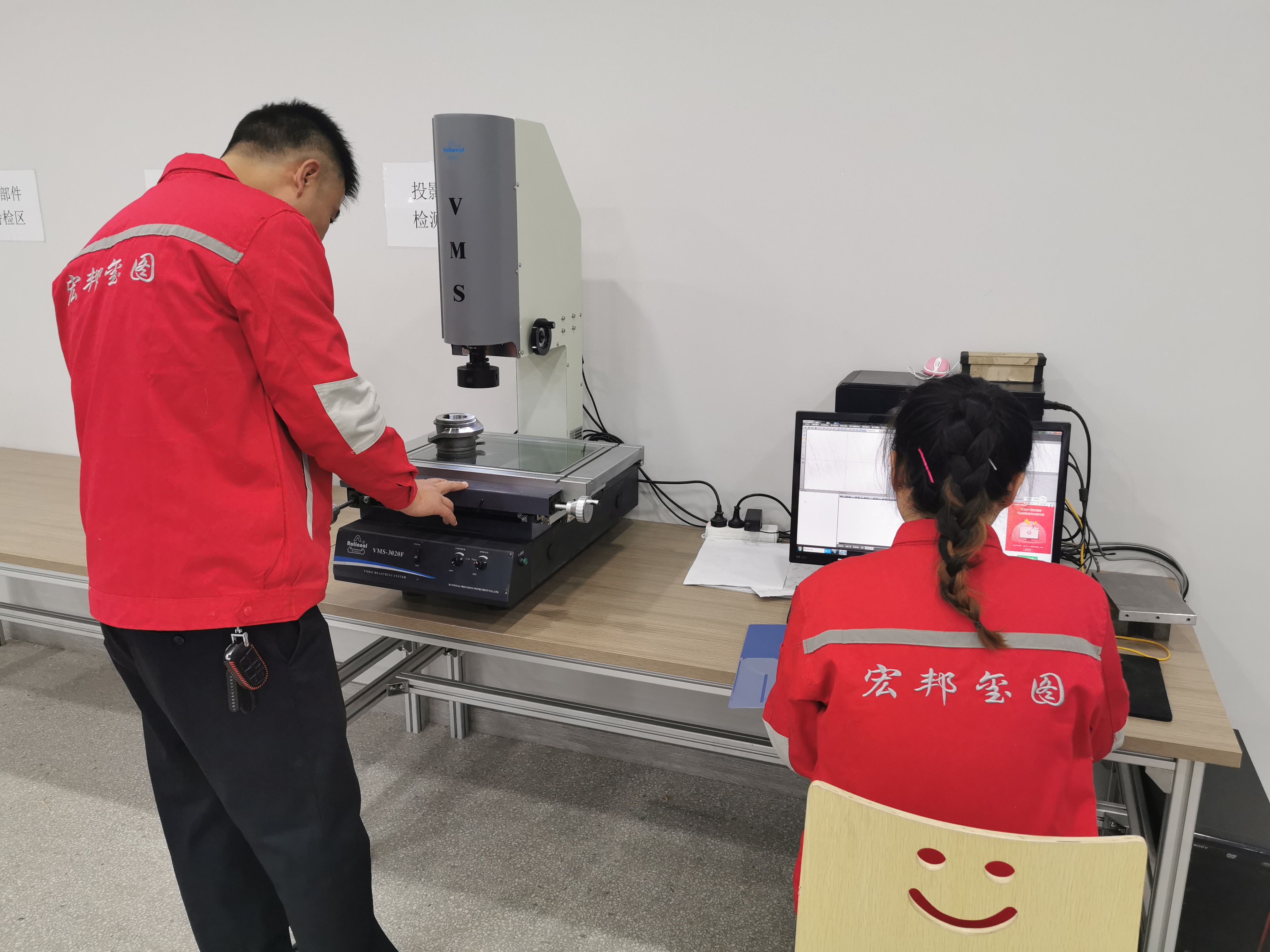
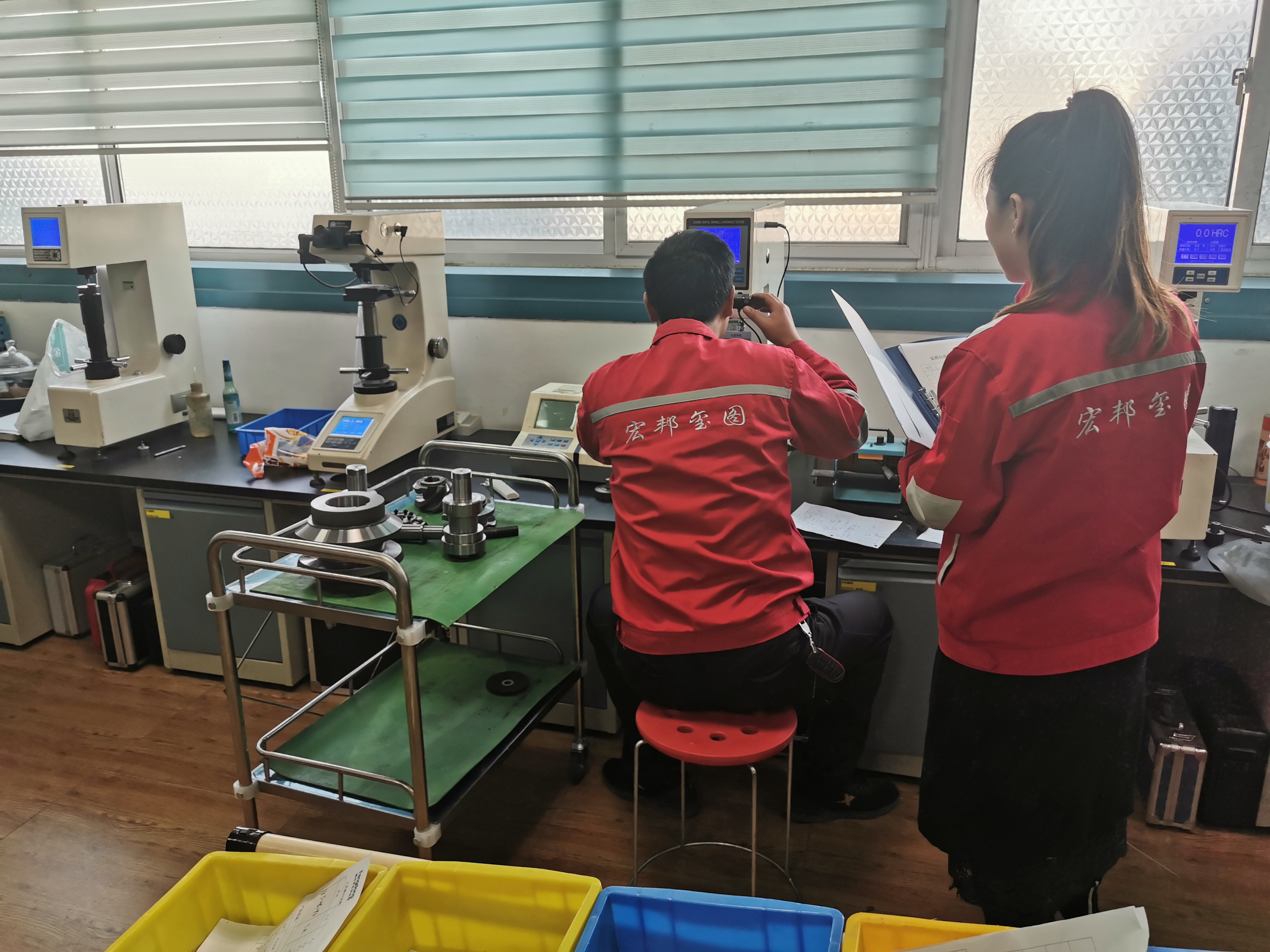
With a shaft output, drive torque and any overhung load from a pulley or sprocket are carried by the output shaft and its bearing, so keeping the driven member close to the housing and the radial load within the published limits is the first check. With a flange output, torque is transferred through the bolt circle and face contact, and the platform sits close to the housing, which typically reduces overhung load while making bolt torque, face flatness and pilot fit the tolerances that matter. The surfaces that carry that torque are inspected during production: HONEPAN’s quality control includes hardness testing, projection inspection of cam roughness, three-coordinate measurement of conjugate cams, shaft runout detection, and positioning and indexing accuracy detection.
3. Concentricity and the runout stack-up
A flange output locates the table directly on the indexer, so runout is largely a property of the indexer and the table mounting face. A shaft output adds one or more interfaces between shaft and tooling, and each interface adds runout. If the station tolerance is tight, knowing which measurement steps the manufacturer performs tells you more than the headline accuracy figure alone.
4. Service access and future rework
The output style is also a maintenance decision. A flange-mounted table can often be unbolted and lifted for service, while a shaft-coupled arrangement usually requires the driven member to be released first. Changing the output style after the frame is fabricated means re-machining the mounting plane, so the interface should be locked before the drawing is released, not after the first prototype runs.
A Seven-Step Selection Framework
- Identify the driven element. If it is a platform, dial or tooling plate that can be bolted directly to an output flange and driven concentrically, start with DF. If it is a coupling, pulley, sprocket, gear or a separate driven shaft, or if the driven axis cannot be placed on the indexer axis, start with DS.
- Check the axial envelope. A shaft output needs axial space for the shaft and its driver. A flange output needs a flat mounting plane perpendicular to the axis, sized to the bolt pattern and pilot.
- Estimate torque and overhung load. Calculate the tangential load at the driven radius and add any radial load imposed by pulleys, sprockets or an unbalanced table. Where the driven member overhangs the shaft, load reaches the output bearing through the shaft; where the platform is bolted flat to a flange, the mass stays closer to the housing.
- Fix the station count and indexing angle. Both families are published with 2–196 stations and 60–360° indexing angles, so this step rarely decides the output style, but it must be settled before the frame size is chosen.
- Match the frame size to the load and the layout. The DS range starts at 32DS and ends at 200DS; the DF range starts at 38DF and ends at 350DF. A very small station is more likely to fall inside the DS range, and a very large dial is more likely to fall inside the DF range.
- Confirm the accuracy class. Positioning accuracy is published at ±30″ / ±15″ for both families. Repeat positioning accuracy is published as ±10″ / ±2″ for DS and ±10″ / ±3″ for DF, so check the station’s repeatability requirement against the figure rather than against the family name.
- Lock the interface, then confirm the commercial terms. Once the interface is fixed, confirm customization scope, sample or acceptance method, lead time and payment terms before releasing the purchase order.
Use Cases: Matching the Output Style to the Station
High-speed rotary filling and capping carousel — flange output
The classic flange application. The platform is the driven member, the indexer mounts concentrically underneath it, and the flange face bolts directly to the table. The DF range is listed for automatic filling machines, high-speed filling lines, gravimetric fillers, aseptic filling systems, beverage fillers, edible oil filling machines and bottled water production lines, with station counts from 2 to 196 and indexing angles from 60° to 360°.
Stations with an offset driven member — shaft output
Whenever the platform cannot sit on the indexer axis, because the drive is routed through a pulley, sprocket or gear, because the station geometry requires a side-mounted drive, or because a separate driven shaft carries the motion, a shaft output is the practical choice. HONEPAN cam indexers are applied across automatic feeding mechanisms and electronic and electrical assembly and testing lines, which are typical examples of stations where the drive and the tooling are not on the same axis.
Small-frame stations — shaft output
The smallest published DS frame is 32DS; the smallest DF frame is 38DF. When the design is constrained by a small mounting footprint and a short axial envelope, the shaft family starts one frame size lower.
Large-dial packaging stations — flange output
The DF range extends to 350DF, while the DS range ends at 200DS. Where the driven platform is itself large, such as a wide dial or a multi-lane packaging table, the flange family covers the larger frame sizes.
Pharmaceutical and cosmetic filling machinery — both families, validated by installation
Both families list pharmaceutical liquid fillers, cosmetic tube filling machines and disinfectant filling equipment, so on these machines the interface decision returns to the mounting logic rather than the application name. HONEPAN reports a pharmaceutical and medical packaging machinery project in which 10 units were installed across multiple countries on different continents for motion indexing and control, power transmission and support. The installed indexers directly replaced damaged units, operated reliably for 7–12 years, and generated repeat orders.
DS vs DF: Comparison Table
| Parameter | DS — Cam Indexer Shaft Output | DF — Cam Indexer Flange Output |
|---|---|---|
| Output interface | Projecting output shaft; drives a coupling, pulley, sprocket or gear | Machined output flange face; drives a platform or tooling bolted directly to the flange |
| Published frame sizes | 32DS, 38DS, 45DS, 60DS, 63DS, 70DS, 80DS, 83DS, 100DS, 110DS, 125DS, 140DS, 150DS, 170DS, 180DS, 200DS (16 sizes) | 38DF, 45DF, 60DF, 63DF, 70DF, 80DF, 100DF, 110DF, 125DF, 140DF, 150DF, 180DF, 200DF, 250DF, 350DF (15 sizes) |
| Number of stations | 2–196 | 2–196 |
| Indexing angle | 60–360° | 60–360° |
| Positioning accuracy | ±30″ / ±15″ | ±30″ / ±15″ |
| Repeat positioning accuracy | ±10″ / ±2″ | ±10″ / ±3″ |
| Output materials | Carbon steel; 42CrMo/SCM440/4140/4142; 40Cr/SCR440/5140; 20CrMnTi/SNCM220/8620; 18CrMoV | Carbon steel; 42CrMo/SCM440/4140/4142; 40Cr/SCR440/5140; 20CrMnTi/SNCM220/8620; 18CrMoV |
| Listed applications | Liquid, paste, powder, granule and sauce filling machines; beverage fillers; edible oil filling machines; bottled water production lines; automatic filling machines; high-speed filling lines; gravimetric fillers; aseptic filling systems; pharmaceutical liquid fillers; cosmetic tube filling machines; disinfectant filling equipment; filling and capping machines; labeling and filling lines; sealing-filling combos; food processing and fruit/vegetable machinery | Liquid, paste, powder, granule and sauce filling machines; beverage fillers; edible oil filling machines; bottled water production lines; automatic filling machines; high-speed filling lines; gravimetric fillers; aseptic filling systems; pharmaceutical liquid fillers; cosmetic tube filling machines; disinfectant filling equipment |
| Mounting logic it fits | Driven member offset from the indexer axis; motion routed through a coupling, pulley, sprocket or gear | Platform, dial or tooling plate bolted directly to the output flange; driven axis concentric with the indexer |
Commercial terms are the same for both families: minimum order quantity one unit, monthly capacity 5,000 units, typical production lead time 4–15 days, delivery FOB / CIF / DAP, and payment 100% T/T.
FAQ
Do DS and DF cam indexers meet the same quality and compliance requirements?
Yes. Both output families come from the same manufacturer and the same quality system. Zhucheng HonePan Automation Machinery Plant was among the first in the industry to obtain ISO 9001 quality management system certification, holds more than 40 product patents, and tests 100% of production. Its ISO 9001 certificate (064-15-Q-1196-R0-M) was issued by the Beijing Standard Certification Centre against GB/T19001-2008 idt ISO9001:2008. More broadly, industrial cam indexers commonly follow ISO 9001 for quality management, while the safety of integrated manufacturing systems is addressed by ISO 11161.
Can the output interface be customized if my mounting does not match the standard range?
Yes. HONEPAN offers a wide range of standard products and also provides custom-made products according to specific requirements, with OEM and ODM production services. Customization covers specifications, parameters, materials, appearance, craftsmanship and quality inspection reports. Production capacity is 5,000 units per month with 100% testing, and the minimum order quantity is one unit.
Which output type costs more to specify?
No list price appears in the published specification data, so the accurate answer is that cost follows the configuration rather than the three letters. The variables that move cost are frame size (the DS range runs from 32DS to 200DS, the DF range from 38DF to 350DF), the output material selected from the carbon steel and alloy steel options, the geometry of the shaft or flange interface, and the scope of customization. On an installed-cost basis, a flange interface typically removes one driven component and its alignment work, while a shaft interface may add a machining and alignment step, and that difference can outweigh the unit price. Commercial terms are identical: MOQ 1 unit, production lead time 4–15 days, delivery FOB / CIF / DAP, payment 100% T/T.
How can I validate the specification before committing to a production order?
The minimum order quantity is one unit, so a single indexer can be used for validation. Acceptance can be arranged as picture acceptance, video acceptance, report acceptance or on-site acceptance, which lets you confirm the output interface, mounting dimensions and indexing accuracy before the unit is released into the machine build. Every unit is 100% tested before shipment.
What is the production lead time, and how do I start?
Typical production lead time is 4–15 days, against a monthly capacity of 5,000 units. To start, send the mounting drawing, the driven-member type (platform or shaft-driven), the required station count, indexing angle, load estimate and accuracy requirement to hp@cam-indexer.cn or WhatsApp +86 157-6300-0588. The team can confirm whether a standard DS or DF frame fits, or whether a customized configuration is required.
Conclusion: Specify the Interface Before the Indexer
The DS and DF families are not two different classes of indexer. They are two output interfaces on the same roller gear cam platform, with the same 2–196 station range and the same 60–360° indexing angle. The decision comes down to mechanics: if the platform can be bolted directly to the output and driven concentrically, the flange output usually produces the simpler design; if the driven member is offset or motion must pass through a coupling, pulley, sprocket or gear, the shaft output is the practical route. Confirm the repeat positioning figures (±10″ / ±2″ for DS, ±10″ / ±3″ for DF), confirm the frame size against the load, and lock the interface before the frame drawing is released.
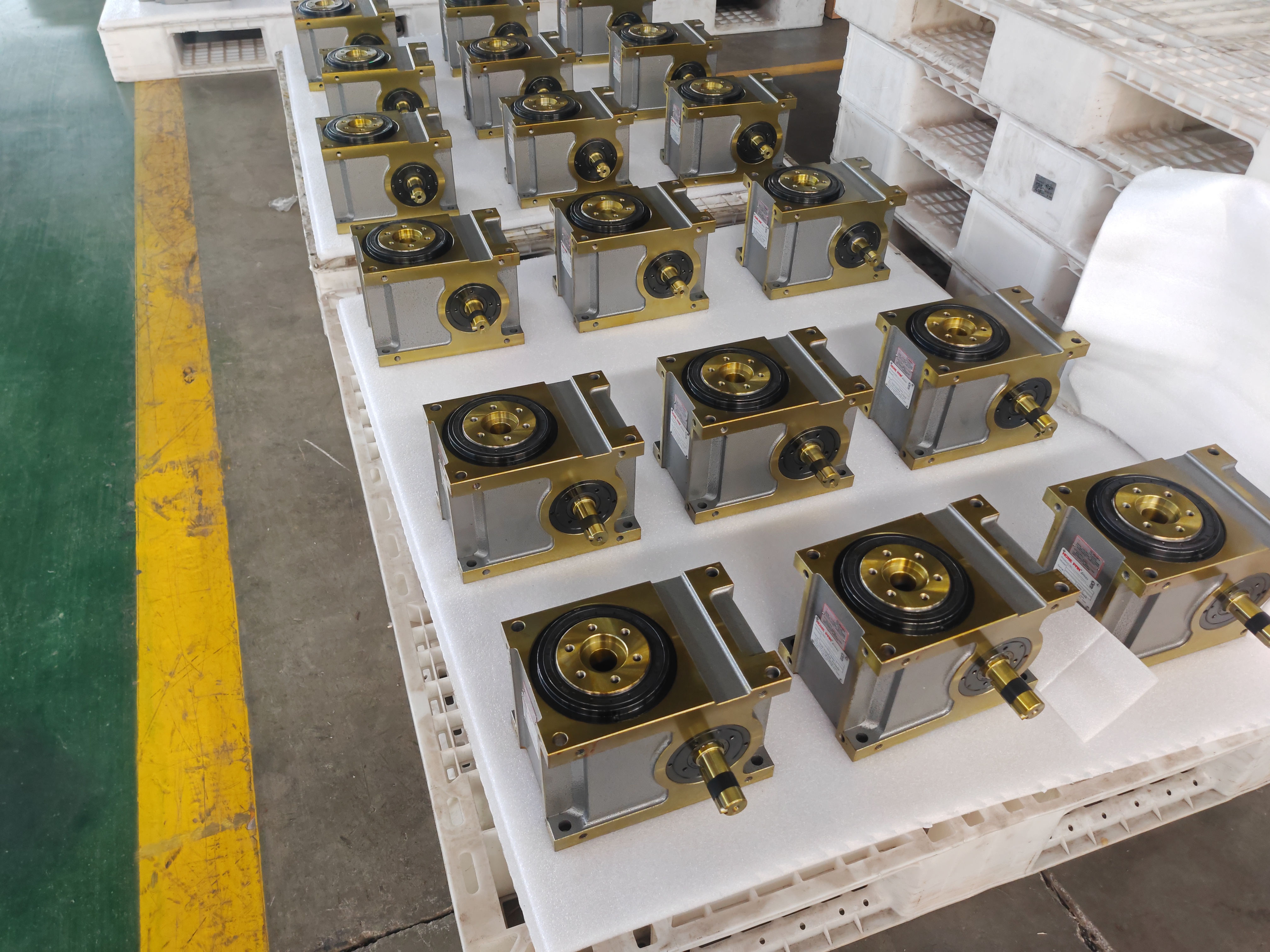
Next step: confirm your output configuration before quoting
Send your mounting drawing and station requirements to HONEPAN and the team will confirm whether a standard DS or DF frame fits your design, or define a customized configuration. Standard and customized units, 100% testing, MOQ 1 unit, production lead time 4–15 days.
Email: hp@cam-indexer.cn · WhatsApp: +86 157-6300-0588 · Website: www.camindexing.com
Product brochure (PDF, free download): HONEPAN cam indexer brochure
Zhucheng HonePan Automation Machinery Plant · No. 8 HonePan Road, Zhenxi Industrial Park, Huanghua Town, Zhucheng City, Shandong Province, China
Have Questions or Need More Details?
Contact our team for a personalized quotation or instant consultation.
Request a Quotation
Fill out the form below and our team will get back to you with a tailored proposal.
WhatsApp Direct Chat
Prefer to chat in real-time? Message us on WhatsApp for instant assistance & quick answers.
- Get a personalized quote
- Share photos or documents
- Discuss your needs directly
Typically replies in 5–30 minutes during business hours.