
Cam Indexer Technical Guide: Matching Shaft, Flange, and Table Outputs to Your Automation Line
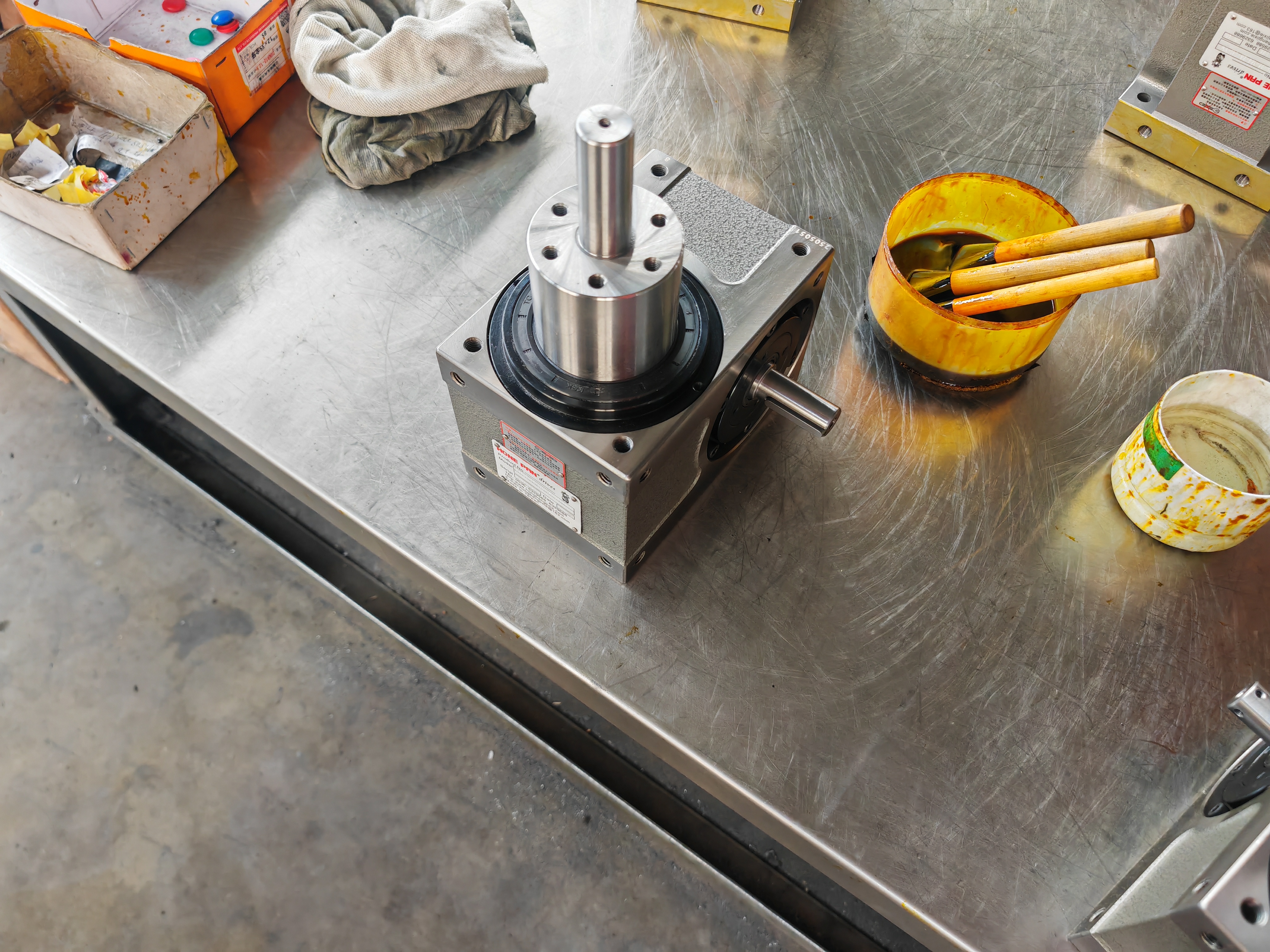
Cover: a shaft and flange output (DFS) cam indexer driving an automated assembly line. Image: HONEPAN.
The output of a cam indexer is not a cosmetic detail. It decides how the fixture physically attaches to the unit, how much machine structure the builder has to design around it, and — in HONEPAN's published specifications — how tight the repeatable positioning figure can realistically be. Across the five output families covered in this guide, the published repeat positioning accuracy runs from a ±2″ tight-grade figure on the shaft output (DS) to ±5″ on the shaft-and-flange (DFS) and table output (DT), all quoted inside a ±10″ base band.
This technical guide walks through the matching process in the order a machine project actually happens: load path first, station count and index angle second, accuracy budget third, frame size fourth, materials and documentation last. HONEPAN (Zhucheng HonePan Automation Machinery Plant) is a Chinese manufacturer of cam indexers and CNC rotary tables, founded in January 2007, based in Zhucheng, Shandong Province, and operating three facilities in Shandong and Jiangsu. Every specification quoted below is taken from HONEPAN's published catalogue data for the DS, DF, DFH, DFS and DT series, and each value names the series it belongs to.
Why Output Type Decides the Project More Than Any Other Specification
In most automation projects the indexer is selected after the fixture, the station layout and the cycle time are already fixed. By that point the output has stopped being a free choice and has become a constraint — and the cost of that constraint usually appears in three predictable places.
- Adapter plates and couplings. If the fixture was designed to bolt onto a flat face but the unit selected has a shaft output, the builder has to add a coupling, a hub or an adapter plate. Each of these adds a part, an interface to control, and stack-up between the cam and the tooling.
- An accuracy requirement the mounting cannot deliver. A drawing that calls for ±2″ repeatability while the fixture sits on a table output is internally inconsistent: the published family figure for DT is ±10″ / ±5″, so the finished machine is limited by the family selected, not by the number written on the drawing.
- A through-bore discovered late. Cables, a central spindle, a product feed pipe or a lower drive shaft sometimes has to pass through the axis of rotation. That requirement is structural, and it is the reason a hollow-flange family exists.
There is a second, quieter problem: overspecification. A larger frame, a tighter accuracy grade and an integral table all add material and machining to the unit. When none of them is needed by the process, they only add cost and lead time. The method below is designed to stop both failure modes — underspecifying the interface and overspecifying the hardware.
How to read HONEPAN's accuracy notation. Each series publishes two values, for example ±30″ / ±15″ positioning and ±10″ / ±2″ repeat positioning. The first value is the general figure for the family; the second is the tighter figure published for the same family. Confirm which grade applies to your specific quotation before you write it into a machine specification.
Industry Background: One Mechanism, Five Interfaces
A cam indexer converts continuous input rotation into intermittent motion: a roller gear cam drives a cam-follower turret through a fixed index period and then holds it still through a fixed dwell. That behaviour is why the component appears wherever a machine must move a workpiece to a station, stop it long enough to be filled, capped, welded, pressed, inspected or assembled, and then move it again. HONEPAN lists application across filling and capping machinery, food processing and packaging machinery, printing and stationery machinery, welding and spraying equipment, electronics and battery equipment, and automatic assembly lines.
Because the mechanism is the same across all five output families, the selection question is never "which unit is better." It is "which interface does this machine need, and what accuracy does that interface actually support." What changes between families is the output structure, the published accuracy, the station-count floor and, for the table family, the index-angle floor.
The category context is steady rather than dramatic. Straits Research valued the global cam indexer market at USD 1.00 billion in 2025, with Asia Pacific holding a 53.00% share that year — consistent with the concentration of packaging and filling machinery manufacturing in the region. For buyers, that means the practical decision is not availability but configuration fit.
The Five Output Families and What Each One Changes
All five families share the same selection parameters — model designation, station count, indexing angle, positioning accuracy, repeat positioning accuracy and material options. What differs is the mechanical interface between the indexer and the tooling, and the published repeat accuracy that comes with it.
DS — Shaft Output
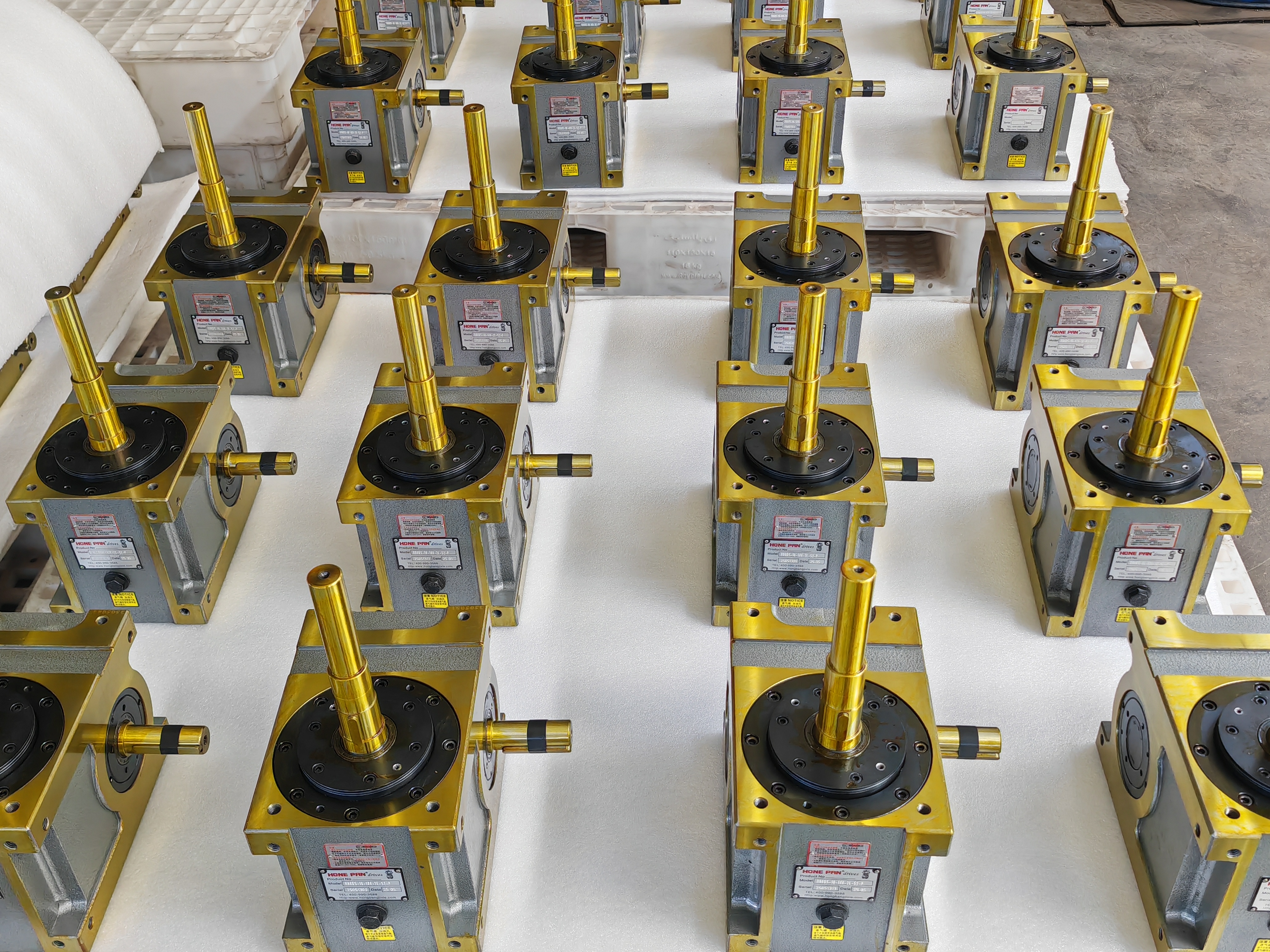
DS shaft output cam indexer: the machine builder couples the output shaft to the driven member. Image: HONEPAN.
The DS series delivers motion through a rotating output shaft. The load is not carried on a flange or a table; instead the machine builder couples the shaft to the driven member — a pulley, sprocket, gear, chain wheel or coupling — and the driven member carries the fixture. The series spans 16 model designations from 32DS to 200DS, with 2–196 stations, an indexing angle range of 60–360°, positioning accuracy of ±30″ / ±15″ and repeat positioning accuracy of ±10″ / ±2″ — the tightest repeat figure published across the five families.
DS suits machines where a driven shaft already exists in the design, such as a reworked line where a gearbox or index drive is being replaced, or a layout in which the rotating member must sit away from the indexer body. The trade-off is symmetrical: the interface is a shaft, not a mounting face, so shaft alignment and support become part of the machine design rather than part of the indexer.
DF — Flange Output
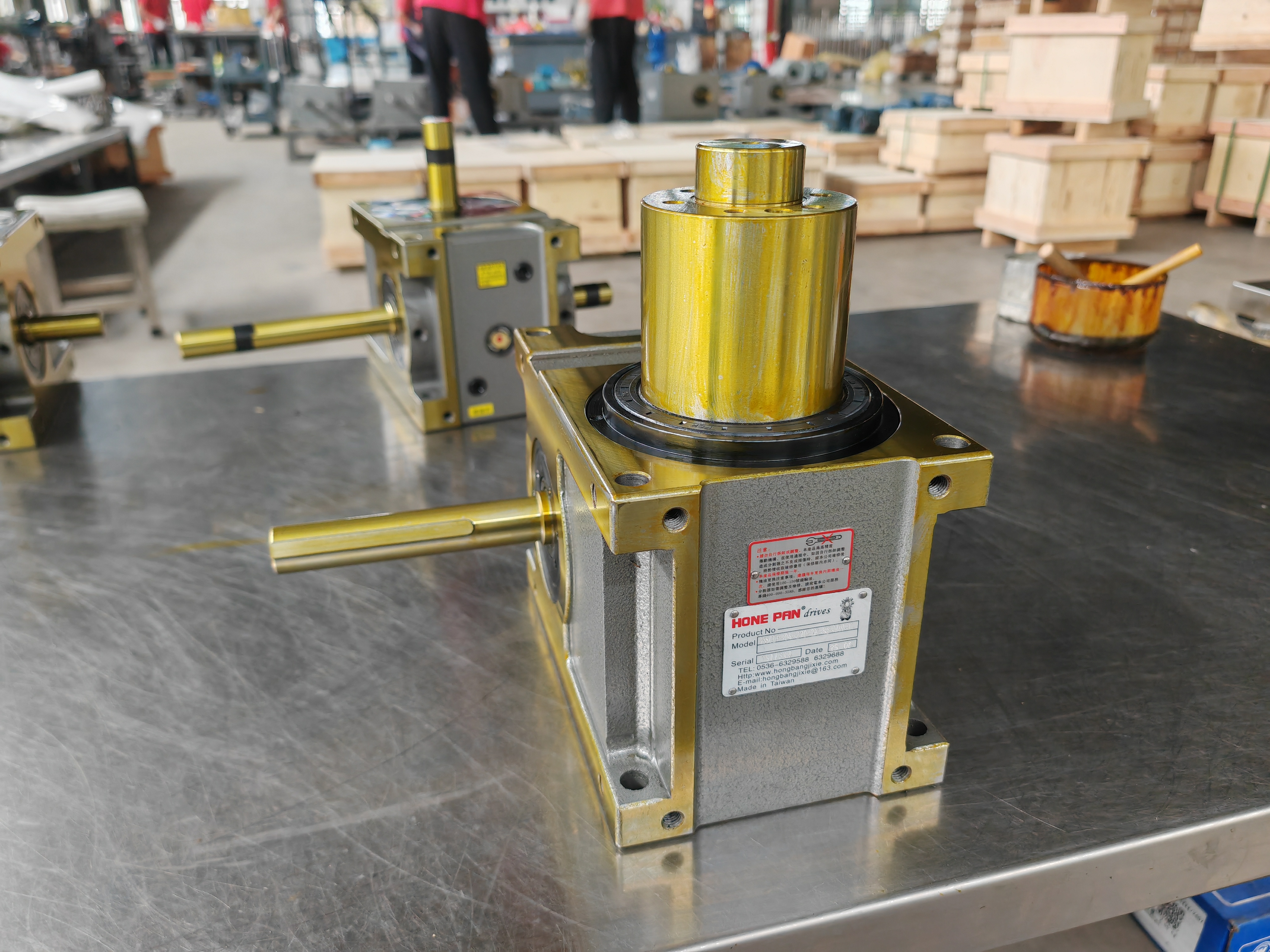
DF flange output cam indexer: the fixture bolts directly to the output flange. Image: HONEPAN.
The DF series replaces the shaft with a bolted output flange. The fixture mounts onto a flat face with a bolt pattern, so the joint between indexer and tooling is a single bolted interface rather than a coupling. The family runs from 38DF to 350DF across 15 model designations and reaches the largest frame class in the range, with 2–196 stations, a 60–360° indexing angle, ±30″ / ±15″ positioning accuracy and ±10″ / ±3″ repeat positioning accuracy.
DF is the natural answer for fixtures that already have a bolt circle — a star wheel, a plate, an arm carrier — and for machines where the builder wants to avoid designing a bearing-supported shaft. Its published repeat figure sits one step behind DS, which is exactly the trade a bolted flange makes.
DFH — Hollow Flange
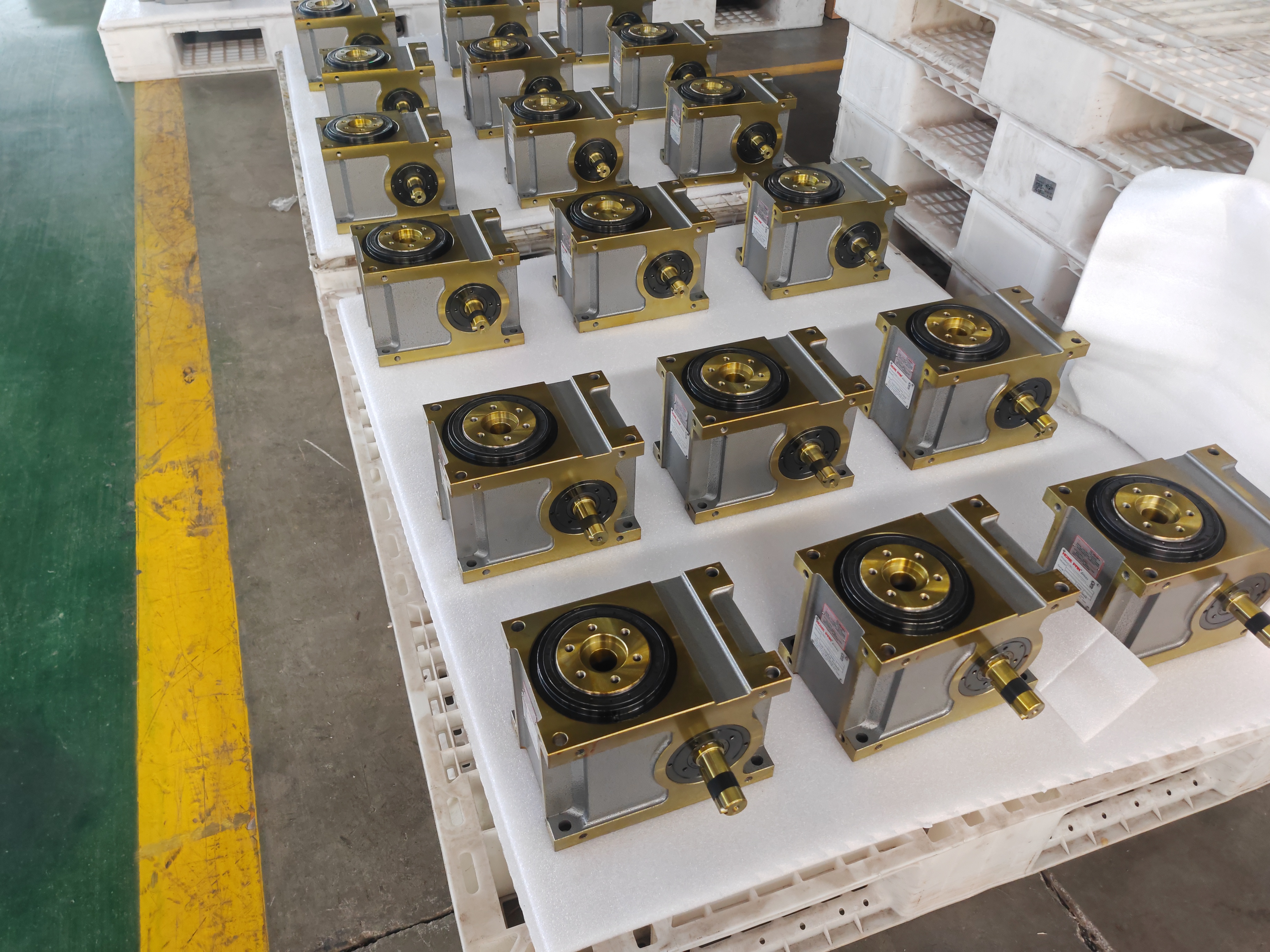
DFH hollow flange cam indexer: a central through-opening allows a shaft, pipe or cable set to pass through the axis. Image: HONEPAN.
The DFH series keeps the bolted flange interface but adds a central through-opening, so a shaft, spindle, product pipe or a bundle of cables can pass straight through the axis of rotation. The range covers 11 model designations from 45DFH to 250DFH, with 2–196 stations, 60–360° indexing angle, ±30″ / ±15″ positioning accuracy and ±10″ / ±4″ repeat positioning accuracy.
This is the family to specify when the machine layout requires something to occupy the centreline: a capping head spindle, a bottom-up fill valve, an inspection light path, or wiring to a rotating sensor package. If the through-bore requirement is not identified during concept design, it usually forces a redesign of the whole rotary station.
DFS — Shaft and Flange Output
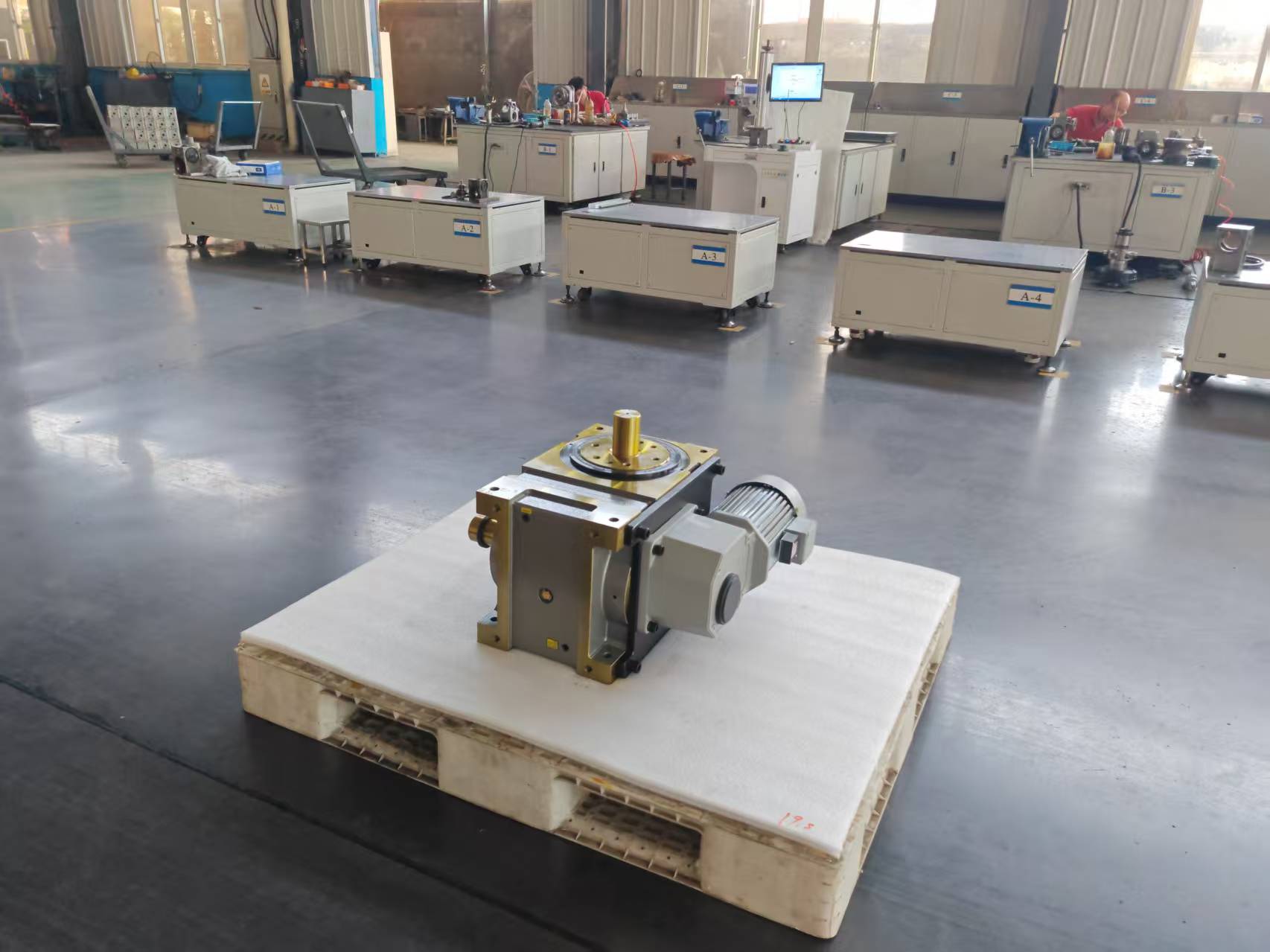
DFS shaft and flange output: both a shaft and a flange interface on one unit. Image: HONEPAN.
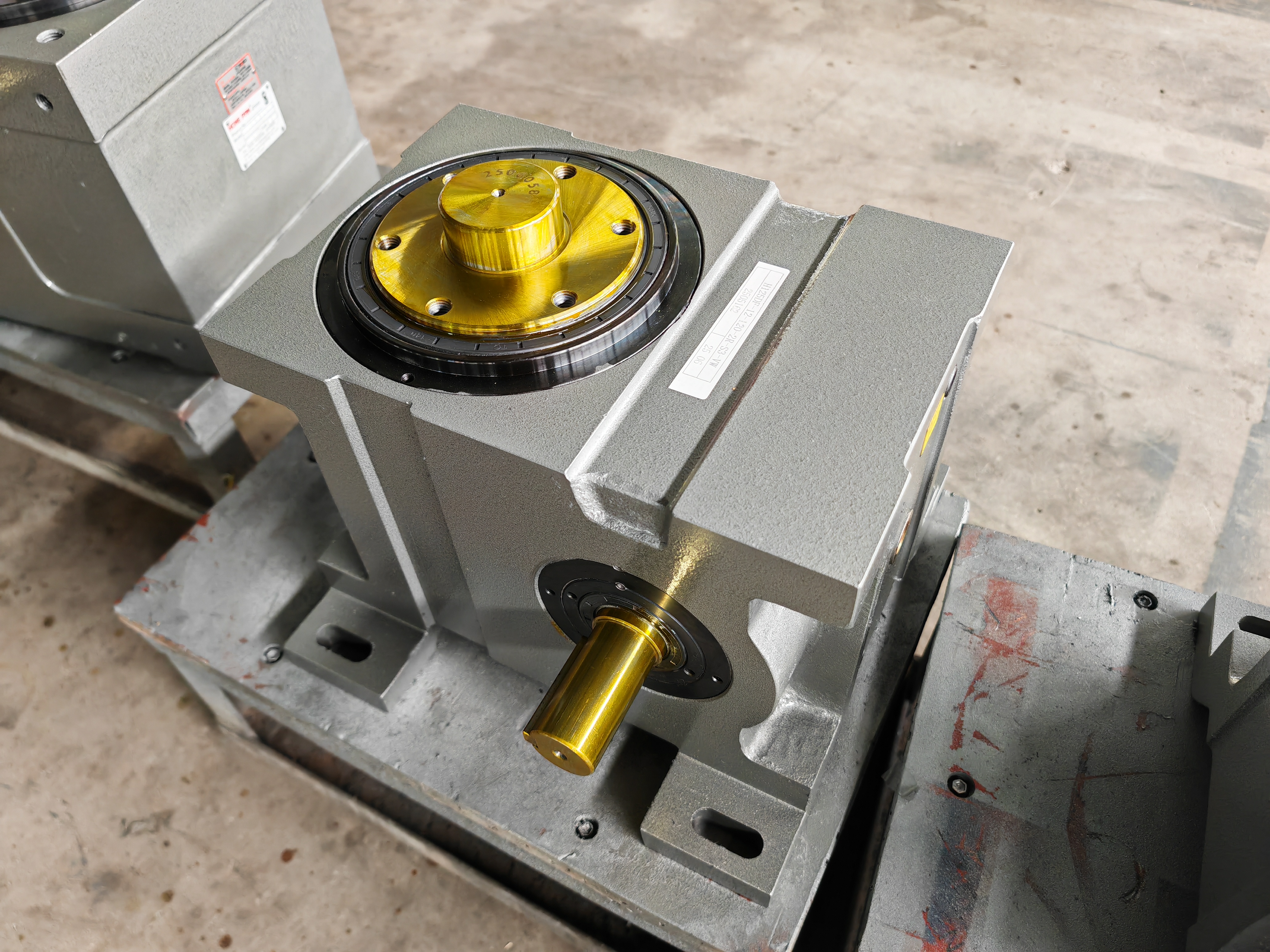
The DFS series carries both interfaces on one unit, so the machine builder can drive from the shaft or bolt to the flange without changing the indexer model. Eleven model designations run from 45DFS to 250DFS, with 2–196 stations, 60–360° indexing angle, ±30″ / ±15″ positioning accuracy and ±10″ / ±5″ repeat positioning accuracy.
DFS is useful in two situations: when the machine design is not yet frozen and the interface decision may still change, and when one indexer platform is reused across a product family whose fixtures mount in different ways. The flexibility is published, not free — the repeat figure is ±5″ against ±2″ on DS.
DT — Table Output
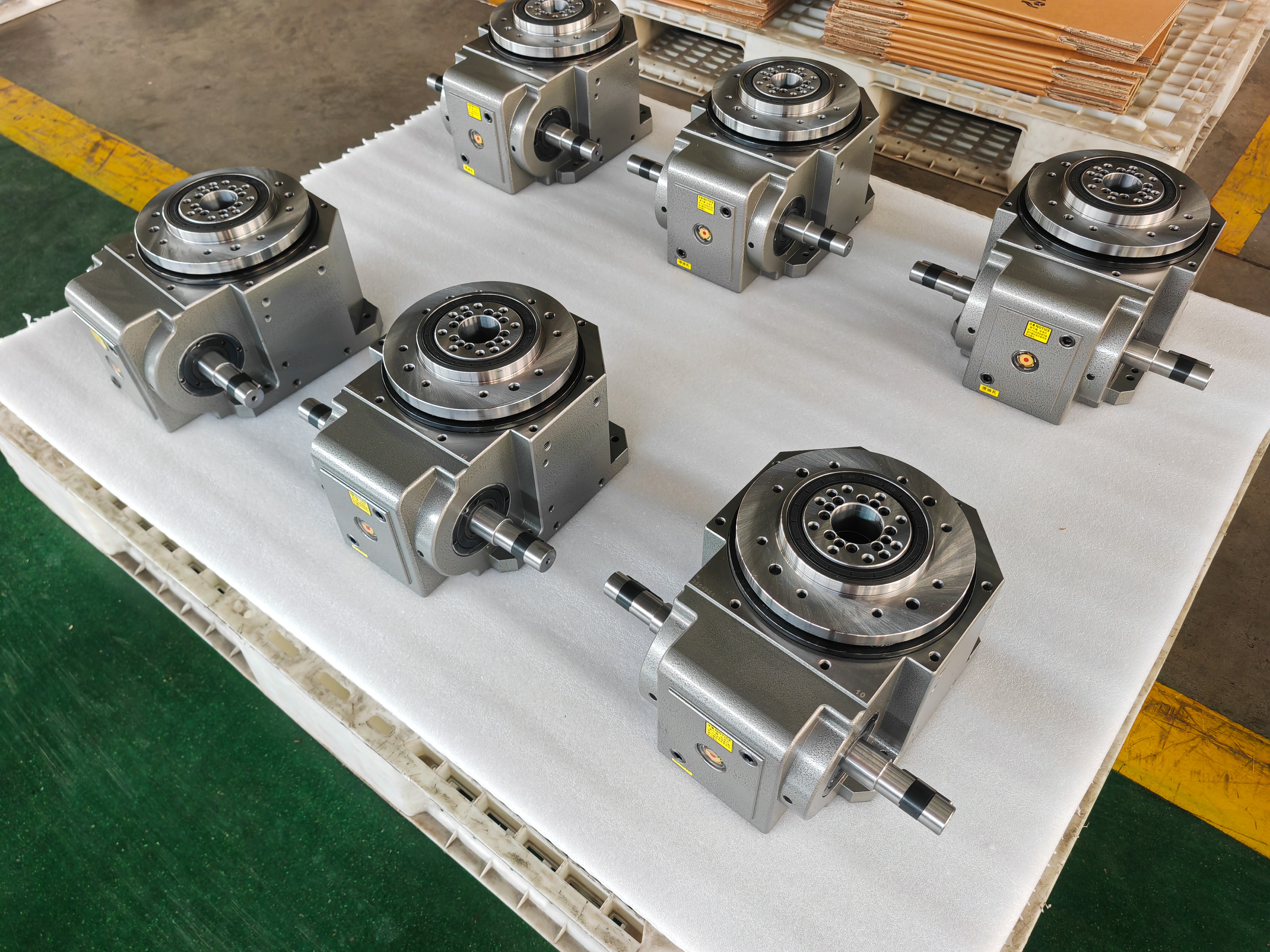
DT table output cam indexer: an integral rotary table carries the fixture directly. Image: HONEPAN.
The DT series integrates the rotating table into the unit. Fixtures clamp directly onto the table surface, which removes one interface from the stack and makes the rotary station a single purchased assembly. Eight model designations run from 80DT to 350DT, with 4–196 stations, a 90–360° indexing angle, ±30″ / ±15″ positioning accuracy and ±10″ / ±5″ repeat positioning accuracy.
DT differs from the shaft and flange families in two structural ways that matter during selection: the station count starts at 4 rather than 2, and the indexing angle range starts at 90° rather than 60°. Both differences come from the integral table construction, and both affect how the line behaves at speed.
Where the five families genuinely differ. Frame classes 80, 110, 140, 180 and 200 appear in all five families, so an engineer comparing mounting options can hold frame size constant — for example 110DF against 110DT — and compare only the interface and accuracy. Above that, DF and DT reach the 350 frame class, DS stops at 200, and DFH and DFS stop at 250. Repeat positioning accuracy follows a fixed order: ±2″ (DS), ±3″ (DF), ±4″ (DFH), ±5″ (DFS and DT).
Six Steps From Machine Drawing to a Confirmed Model Number
Step 1 — Trace the load path from the fixture back to the indexer
Start at the tooling, not the catalogue. Ask three questions: does the fixture rotate on a shaft the machine already supports, does it bolt to a flat face, or does it sit on a table that the unit itself must provide? Does anything have to pass through the centre of rotation? The answers map directly onto DS, DF, DFS, DFH or DT, and they must be settled before accuracy is discussed, because the interface determines which accuracy band is even available.
Step 2 — Fix the station count from the process, then derive the indexing angle
The station count is the number of operations performed per revolution — fill stations, cap stations, inspection stations, idle stations. Once it is known, an equal-division index resolves to 360° divided by the station count: 8 stations give 45° per index, 16 stations give 22.5°, 24 stations give 15°. Check the result against the family limits: DS, DF, DFH and DFS cover 2–196 stations and an indexing angle of 60–360°, while DT covers 4–196 stations and 90–360°.
Step 3 — Split the cycle into index time and dwell time
Total cycle time is index time plus dwell time. Dwell is whatever the process needs — filling, welding, curing, screw driving, inspection — and index time is what is left. Because the indexing angle describes the portion of input camshaft rotation used for the transfer, a family whose range reaches down to 60° allows the transfer to be compressed further against the dwell than one whose range starts at 90°. On a line with a long process dwell and a short transfer window, that difference decides whether the target rate is reachable without changing the drive. This is the single most common reason a 90°-floor table unit is rejected late in a project.
Step 4 — Set the accuracy budget from the process tolerance
Work backwards from the operation. If a capping head needs the neck centred within a defined window, the allowable positional error at the tooling — not at the indexer — sets the requirement. Then choose the family whose published repeat figure sits inside that allowance with margin, and only then consider the tighter grade. A ±2″ requirement placed on a table-mounted fixture is not a stricter specification; it is a specification the chosen interface cannot meet, and the correct response is to change the interface rather than to repeat the number.
Step 5 — Lock the frame class inside the model designation
HONEPAN model designations combine a numeric frame class with the output letters: 110DF and 110DT are the same frame class with different outputs, and 80DS, 80DF, 80DFH, 80DFS and 80DT all exist. Read the designation in two parts — number for size, letters for interface — and confirm the frame class against the actual load and torque of the fixture, not against the size of the previous unit. Where the load case sits near a boundary, request the dimensional drawing and rating data for both neighbouring frame classes before committing.
Step 6 — Confirm materials, documentation and delivery
HONEPAN publishes the same material options across the DS, DF, DFH, DFS and DT families: carbon steel, 42CrMo / SCM440 / 4140 / 4142, 40Cr / SCR440 / 5140, 20CrMnTi / SNCM220 / 8620, and 18CrMoV. Quality control is 100% testing, and a quality inspection report is listed among the customization options. Minimum order quantity is 1 unit, production lead time is 4–15 days, and monthly capacity is 5,000 units.
Pre-quotation checklist
- Station count, derived index angle, and dwell time per station
- Fixture mounting method and whether a through-bore is required
- Process tolerance at the tooling, translated into a repeat positioning requirement
- Frame class and the load case that justifies it
- Material grade and required documentation (inspection report, drawing pack)
- Input drive arrangement — HONEPAN's application records typically pair a unit with a motor, reducer, induction cam and proximity switch
Matching the Output to Common Automation Lines
HONEPAN cam indexers are suitable for liquid filling machines, paste filling machines, powder filling machines and a wide range of packaging and processing machinery. Within that scope, the output choice follows the line type closely.
Filling lines
On a rotary filler, containers sit on a rotating platform and stop under nozzles. Where the containers are carried on a platform the unit provides, DT is the direct answer; where a central fill valve or product pipe has to reach the nozzle hub through the axis, DFH provides the through-opening. Where an existing conveyor or gear reducer drives the carousel from a shaft, DS keeps the interface unchanged. Paste and powder filling place the same demands with heavier containers, which pushes the frame class up rather than changing the family.
Packaging lines
Carton forming, filling and sealing stations require the carton to advance and then hold still for each operation. DF flange output is a practical fit because carton carriers usually already have a bolt pattern, and the bolted interface removes a coupling from the design.
Assembly turntables
Nests carried through fixed operations benefit from DT, because the nest clamps directly to the integral table and the rotary station becomes one assembly. Where the same platform serves several product variants with different nest designs, DFS keeps both the shaft and flange route open.
Welding and printing equipment
Welding cells index a fixture cycle by cycle and hold position while the weld is made; printing machinery advances parts between print stations. Both are selective about position hold, so the tighter repeat figures published for DS and DF are relevant, and the dwell requirement usually dominates the cycle calculation.
Case reference: pharmaceutical and medical packaging machinery
HONEPAN's application records include a pharmaceutical and medical packaging machinery customer that ordered 10 cam indexer units for motion indexing and transmission support. The units have been in service for 7–12 years, perform as direct replacements for damaged indexers, and have generated repeat orders. The recorded working conditions for this application class are heavy load with food-grade requirements at high speed, a 270/90 operating cycle, a special requirement for explosion-proof and leak-proof construction, and a matched drive train of motor, reducer, induction cam and induction switch.
Output Comparison Table
| Output family | Model designations | Stations | Indexing angle | Positioning accuracy | Repeat positioning accuracy | How the load attaches |
|---|---|---|---|---|---|---|
| DS — Shaft Output | 32DS to 200DS (16 frame classes) | 2–196 | 60–360° | ±30″ / ±15″ | ±10″ / ±2″ | Rotating output shaft, coupled to a pulley, sprocket, gear or coupling |
| DF — Flange Output | 38DF to 350DF (15 frame classes) | 2–196 | 60–360° | ±30″ / ±15″ | ±10″ / ±3″ | Fixture bolts to the output flange face |
| DFH — Hollow Flange | 45DFH to 250DFH (11 frame classes) | 2–196 | 60–360° | ±30″ / ±15″ | ±10″ / ±4″ | Flange mounting with a central through-opening on the axis |
| DFS — Shaft and Flange | 45DFS to 250DFS (11 frame classes) | 2–196 | 60–360° | ±30″ / ±15″ | ±10″ / ±5″ | Either shaft drive or bolted flange on the same unit |
| DT — Table Output | 80DT to 350DT (8 frame classes) | 4–196 | 90–360° | ±30″ / ±15″ | ±10″ / ±5″ | Fixture clamps directly to the integral rotary table |
Source: HONEPAN catalogue specifications for the DS, DF, DFH, DFS and DT series. Accuracy is shown as the family's general value followed by its published tight value; confirm the applicable grade on the quotation.
FAQ
Does the output type change the quality documentation I receive?
The document pack is set by the supplier's quality system, not by the output shape. HONEPAN's quality management system is ISO 9001 certified, every unit is 100% tested before shipment, and a quality inspection report is listed among the available customization items. Machine-level conformity marks belong to the complete machine, so the machine builder should confirm which documents it needs from the indexer supplier and request them at quotation stage — the output family does not change that list.
Can HONEPAN build a station count or indexing angle outside the standard ranges?
The standard ranges are broad: DS, DF, DFH and DFS cover 2–196 stations with an indexing angle of 60–360°, while DT covers 4–196 stations with 90–360°. Beyond those ranges, HONEPAN operates an OEM/ODM model with customization of specifications, parameters, materials, appearance, craftsmanship and quality inspection reports, supported by a 15-person R&D team, more than 40 product patents and more than 90 CNC machining centres. A non-standard request should be described by function — station count, required index and dwell, load and interface — rather than by an existing part number.
Which output configuration costs more, and what benchmark should a buyer use?
Within HONEPAN's range, minimum order quantity is 1 unit, so the entry point does not depend on volume. Cost differences between families come from construction and size: an integral table, a hollow bore or a dual shaft-and-flange output carries more machining than a plain shaft, and the largest frame classes (350DF and 350DT) sit well above the smallest. For an external reference point, QYResearch reported a global rotary indexer average selling price of USD 2,589 per unit in 2024 — a market benchmark for category comparison, not a quotation for any specific configuration. Request a quotation against a defined frame class, output and accuracy grade rather than against a family name alone.
Can I validate a configuration with a single unit before committing to a line order?
Yes. Minimum order quantity is 1 unit and production lead time is 4–15 days, which allows a trial unit to be built into a station and run before a line-level decision. HONEPAN supports customers remotely after delivery, and the product brochure with the series overview is available for download at the HONEPAN brochure.
What lead time and capacity should be planned into the project schedule?
HONEPAN publishes a production lead time of 4–15 days, a monthly capacity of 5,000 units and an annual output of 36,000 units, produced across a 101,000 m² operating footprint with 130 employees; roughly 30% of output is exported to markets including India, the USA, Southeast Asia, Latin America and the EU. For customized specifications, confirm the specific window at quotation stage. To start a configuration review, send the station count, index and dwell requirement and fixture mounting method to HONEPAN or email hp@cam-indexer.cn.
Conclusion: Match the Load Path First, Then the Accuracy
The five output families are not competing products — they are five answers to five different structural questions. If the fixture needs a shaft, DS gives the tightest published repeat figure at ±2″. If it needs a bolted face, DF delivers ±3″ with a single joint. If something must pass through the axis, DFH is the only family that provides the opening. If the design is not frozen, DFS keeps both routes available at ±5″. If the rotary table itself should be part of the purchased assembly, DT removes an interface entirely, at ±5″ and with a 90° index-angle floor.
Read the model designation in two parts, hold the frame class constant while comparing interfaces, and write the accuracy requirement from the process tolerance rather than from the tightest number in the catalogue. That sequence — load path, station count and index angle, accuracy budget, frame class, then materials and documentation — keeps a project out of both traps: an interface that cannot be mounted and a specification that cannot be met.
Send your station data, get a matched configuration
Share the station count, required index and dwell time, fixture mounting method and accuracy target, and HONEPAN will confirm the output family, frame class and accuracy grade — with a sample unit available from a minimum order quantity of 1 and a 4–15 day production lead time.
Website: www.camindexing.com | Email: hp@cam-indexer.cn | Tel / WhatsApp: +86 157-6300-0588 | Download the product brochure
Have Questions or Need More Details?
Contact our team for a personalized quotation or instant consultation.
Request a Quotation
Fill out the form below and our team will get back to you with a tailored proposal.
WhatsApp Direct Chat
Prefer to chat in real-time? Message us on WhatsApp for instant assistance & quick answers.
- Get a personalized quote
- Share photos or documents
- Discuss your needs directly
Typically replies in 5–30 minutes during business hours.