Cam Indexer Long-Term Supply FAQ: Output Types, Materials, Accuracy, and Repeat Orders
A cam indexer — supplied in industrial automation as a roller gear cam index unit — converts continuous motor rotation into precise intermittent motion, stepping a turntable, fixture, or conveyor between fixed workstations. Because the machine platform around it usually stays in production for many years, the questions that actually decide a purchase are rarely about a single unit. They are about whether the fifth order will match the first.
This FAQ is written for procurement and engineering teams evaluating a long-term cam indexer partner. It answers the questions that come up when a buyer moves from a first accepted order into repeat supply: which output type belongs in the purchasing record, which material callout is specific enough to survive a batch or supplier change, which accuracy grade is actually being quoted, and how acceptance and commercial terms protect continuity. The reference point throughout is HONEPAN (Zhucheng HonePan Automation Machinery Plant), a China-based manufacturer of cam indexers and CNC rotary tables founded in January 2007, with manufacturing facilities in Shandong and Jiangsu provinces.
Short answers to the questions in this article
- Output configurations in HONEPAN's cam indexer range include DS (shaft), DF (flange), DFH (hollow flange), DFS, and DT (table).
- Cam and roller material callouts include 42CrMo/SCM440 and 20CrMnTi/SNCM220.
- Published accuracy grades are ±30 or ±15 arcseconds positioning accuracy, with ±10 or ±2 arcseconds repeat positioning accuracy, depending on the model.
- HONEPAN states a monthly production capacity of 5,000 units, a minimum order quantity of 1 unit, and a lead time of 4–15 days.
Why Long-Term Cam Indexer Supply Fails Between Orders
Repeat-order failures in cam indexer supply are usually specification-control failures, not manufacturing failures. A buyer accepts a first unit, the unit performs on the line, and the second order is placed against a model name or an old invoice line. Months later the machine builder finds that the output interface is not identical, the cam material is a different grade, or the accuracy figure under discussion is repeat positioning rather than positioning accuracy.
Four gaps account for most of these cases.
- Interface drift. The order names a series but not the interface the output presents to the machine — shaft diameter and keyway, flange bolt pattern and pilot, hollow bore, or table mounting pattern.
- Loose material wording. "Alloy steel" on a purchase document cannot distinguish 42CrMo/SCM440 from 20CrMnTi/SNCM220, so a substitution passes without review.
- Accuracy quoted without its definition. ±30 or ±15 arcseconds positioning accuracy and ±10 or ±2 arcseconds repeat positioning accuracy describe two different behaviours.
- Undefined acceptance. Without an agreed acceptance mode, conformity becomes a matter of opinion at goods-in inspection.
The remedy is procedural and inexpensive: define a specification record for the part once, require it with every order, and decide in advance how conformity will be checked.
What Long-Term Buyers Are Really Buying
The commercial context explains why supplier continuity has become a procurement topic rather than a rounding item. Straits Research values the global cam indexer market at USD 1.00 billion in 2025, with Asia Pacific holding a 53.00% share in the same year. QYResearch reported global rotary indexer sales of 190,500 units in 2024 at an average selling price of USD 2,589 per unit. These are commercial research figures using different product definitions — cam indexer and rotary indexer scopes are not identical — so they are useful as scale indicators rather than as one reconciled market estimate.
For an individual buyer the implication is narrower. A cam indexer is a functional core component: when it stops indexing accurately, the line stops, and the replacement has to fit an interface that was drawn years earlier. That is why the durable question is not "who sells the cheapest unit today" but "who can still deliver the same unit, documented the same way, in three or five years".
HONEPAN reports annual output of 36,000 units from a stated operating footprint of 101,232 m², with 130 employees and a 15-person R&D team, more than 90 CNC machining centers, and ISO 9001 quality management system certification obtained early in its history. The company also reports over 40 product patents and states that it serves as chairman unit of the Cam Indexer Association. These are first-party figures and should be read as manufacturer-reported capability, which is the correct weight to give them when writing a supplier qualification file.
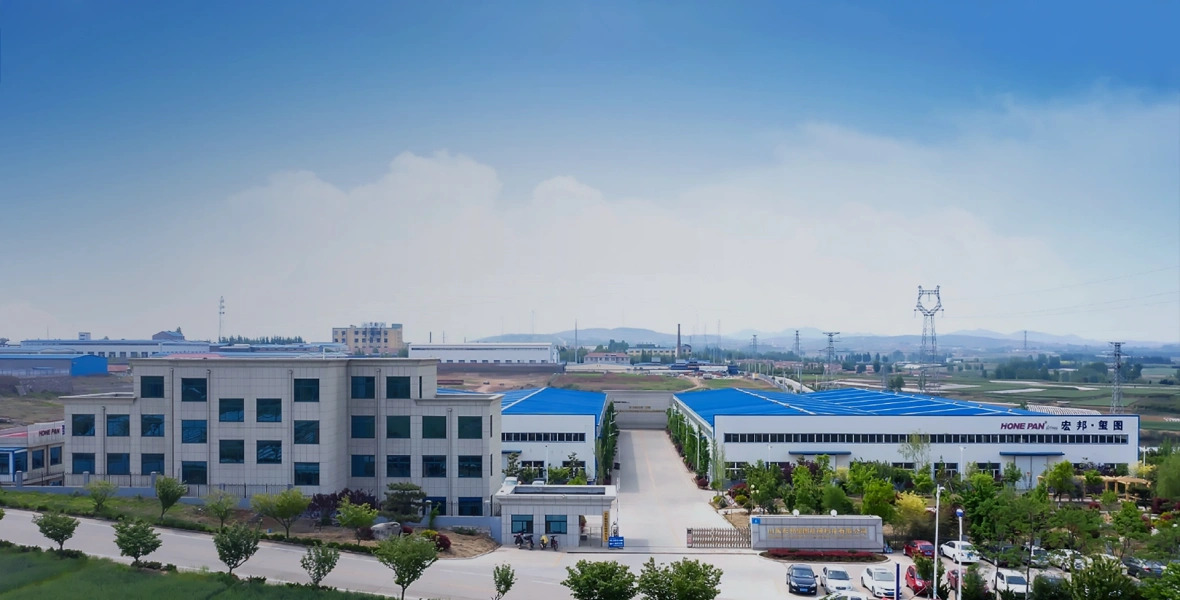
Aerial view of the HONEPAN cam indexer manufacturing site in Zhucheng, Shandong — the production base that a repeat-order specification record is written against.
The Specification Record: Answers by Topic
Output types DS, DF, DFH, DFS, and DT — which one gets locked?
Output type is an interface decision, and it is fixed by the machine drawing rather than by preference. HONEPAN's cam indexer range names DS (shaft output), DF (flange output), DFH (hollow flange output), DFS, and DT (table output); the wider portfolio also lists parallel, ultra-thin table, and heavy-duty barrel-cam series. For a long-term supply record, the output type alone is not sufficient. The record also has to carry the dimensions the output presents to the machine: shaft diameter and keyway for DS, bolt pattern and pilot diameter for DF, centre bore for DFH, and table diameter and mounting hole pattern for DT. DFS should be confirmed against the supplier's model drawing before it is written into a repeat-order document, because series naming does not map one-to-one across manufacturers.
The reason this matters is substitution. Two indexers carrying the same nominal type can share a housing and still differ at the output, so an order placed by model name alone can be fulfilled with a correct-variant part that does not mount. Writing the interface dimensions into the record converts a naming question into a drawing question, which is the only form a second batch can be checked against.
Materials: 42CrMo/SCM440 and 20CrMnTi/SNCM220
Material choice governs how a cam and roller set behaves over the years a machine stays in service. HONEPAN's specification discussion references two callouts: 42CrMo/SCM440 and 20CrMnTi/SNCM220. In general metallurgical terms, 42CrMo (SCM440) is a chromium-molybdenum alloy steel used where through-section strength and toughness matter, while 20CrMnTi (SNCM220) is a case-hardening steel that pairs a hard wear surface with a tougher core. Either callout should be written into the record as a grade pair — Chinese designation plus the equivalent — because a single regional designation can be read differently by a second supplier or a second production batch.
HONEPAN lists alloy material cams among its wear-control measures, alongside high-precision cam grinding, an automatic lubrication device, temperature sensing, and dynamic-balance testing. Those are stated manufacturing practices, not a substitute for batch documentation. A buyer who needs traceability should request material and hardness documentation for the specific batch and confirm that the grade matches the record before acceptance — HONEPAN documents cam working-face hardness testing and three-coordinate inspection as part of its quality routine.
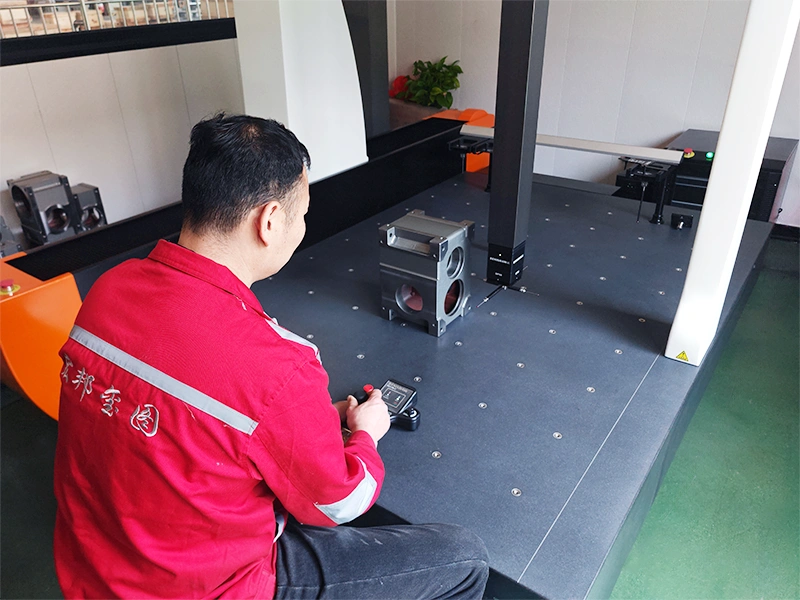
Three-coordinate inspection of cam indexer geometry — the check that ties a delivered batch back to the dimensions written in the specification record.
Accuracy: ±30 or ±15 arcseconds positioning, ±10 or ±2 arcseconds repeat positioning
Two different numbers are usually in play, and they are not interchangeable. Positioning accuracy describes how close the indexed position lands to nominal. Repeat positioning accuracy describes how consistently the table returns to that same position over many cycles. The second figure is normally the tighter one, and a specification that quotes only one of them is incomplete.
HONEPAN publishes positioning accuracy grades of ±30 or ±15 arcseconds and repeat positioning accuracy of ±10 or ±2 arcseconds, depending on model. The DS series is stated to reach repeat positioning accuracy as tight as ±2 arcseconds. A repeat-order record should therefore state both figures, name the grade being ordered, and record how the grade will be verified — HONEPAN documents positioning accuracy detection and repeat positioning accuracy measurement as part of its inspection process.
The buying logic is straightforward: an accuracy grade tighter than the station tooling can use adds cost without adding capability, while a grade looser than the tooling requires appears later as position drift on the line. Matching the grade to the station, then locking it, is what makes a repeat order predictable.
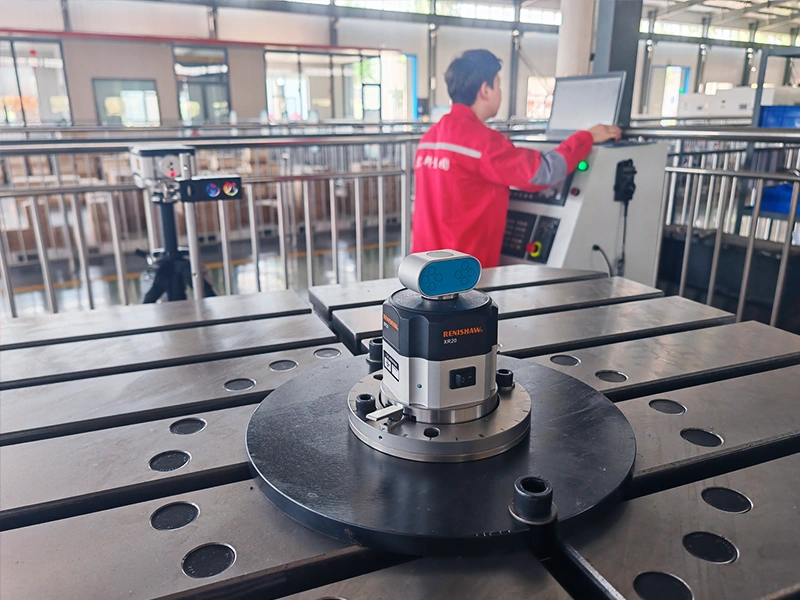
Positioning accuracy and repeat positioning accuracy are measured as two separate values — both belong in the specification record.
Station counts and indexing angles: the order-specific fields
Station count and indexing angle are order-specific parameters, and the same series at a different station count is effectively a different part, because the cam curve and the table division change together. For repeat supply, both values — number of stations and the indexing angle per step — belong in the record beside the model name. A change to either should trigger a drawing review rather than an email confirmation, since the change affects tooling position, cycle timing, and the accuracy budget of the whole station.
Repeat orders and after-sales continuity
What makes repeat orders realistic is stable throughput plus a quality gate that does not move between batches. HONEPAN states a monthly production capacity of 5,000 units and a quality control system based on 100% testing, with a minimum order quantity of 1 unit and a stated lead time of 4–15 days. A pilot unit and a repeat unit therefore travel the same production route, which is the condition under which a specification record stays meaningful rather than becoming a document that describes only the first delivery.
On service life, HONEPAN reports a 12–14 year service life for its cam indexers and compares this with a typically shorter 3–4 year life for other domestic cam indexers at a similar price level; the company also cites an Indian customer's field comparison of the two. These are manufacturer-reported figures and should be weighted accordingly — useful context when calculating cost across a machine's life, not a contractual warranty term. The warranty wording, spare-part availability, and service response time belong in the supply agreement and should be read there.
After-sales continuity is easier to plan where the supplier's risk controls match the buyer's maintenance reality. HONEPAN lists thermal protection through temperature sensors, precision control through high-precision cam grinding, an automatic lubrication device, alloy material cams, and dynamic balance testing as measures against overheating, backlash deviation, lubrication failure, wear damage, and running noise. A buyer can convert those into a maintenance checklist; the indexer itself is described as maintenance-free, but the lubrication and thermal environment of the surrounding machine still determine how the unit ages.
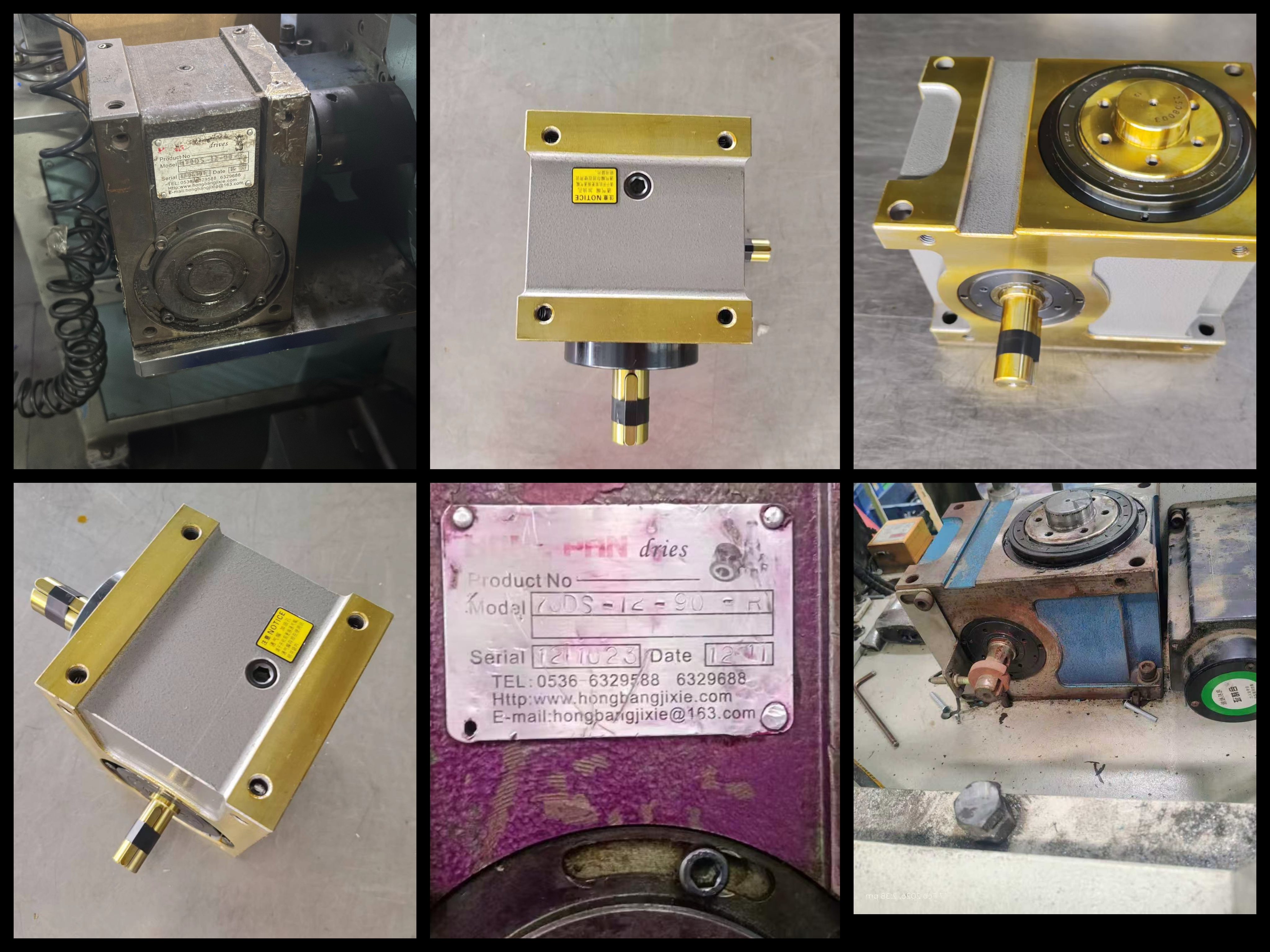
A field comparison cited by HONEPAN: an Indian customer's reported service life against peer cam indexers at a similar price level. Manufacturer-reported, and best read alongside the contract terms.
Step by Step: Assembling a Repeat-Order Record
- Fix the output interface against the machine drawing. Record DS, DF, DFH, DFS, or DT, then add the dimensions that interface presents: shaft diameter and keyway, flange bolt pattern and pilot, hollow bore, or table diameter and hole pattern.
- Write the material as a grade pair. 42CrMo/SCM440 or 20CrMnTi/SNCM220, stated explicitly rather than as "alloy steel", with the documentation required at delivery.
- Separate the two accuracy figures. State positioning accuracy (±30 or ±15 arcseconds) and repeat positioning accuracy (±10 or ±2 arcseconds) as distinct fields, and name the grade being ordered for the model.
- Record station count and indexing angle. Both are order-specific; any change should reopen the drawing review rather than being handled as a note on the purchase order.
- Choose the acceptance mode in advance. HONEPAN offers picture acceptance, video acceptance, report acceptance, and on-site acceptance — selecting the mode before production is what makes the check objective.
- Fix commercial terms and the re-order route. Minimum order quantity 1 unit, delivery terms FOB / CIF / DAP, payment 100% T/T, stated lead time 4–15 days against a monthly capacity of 5,000 units.
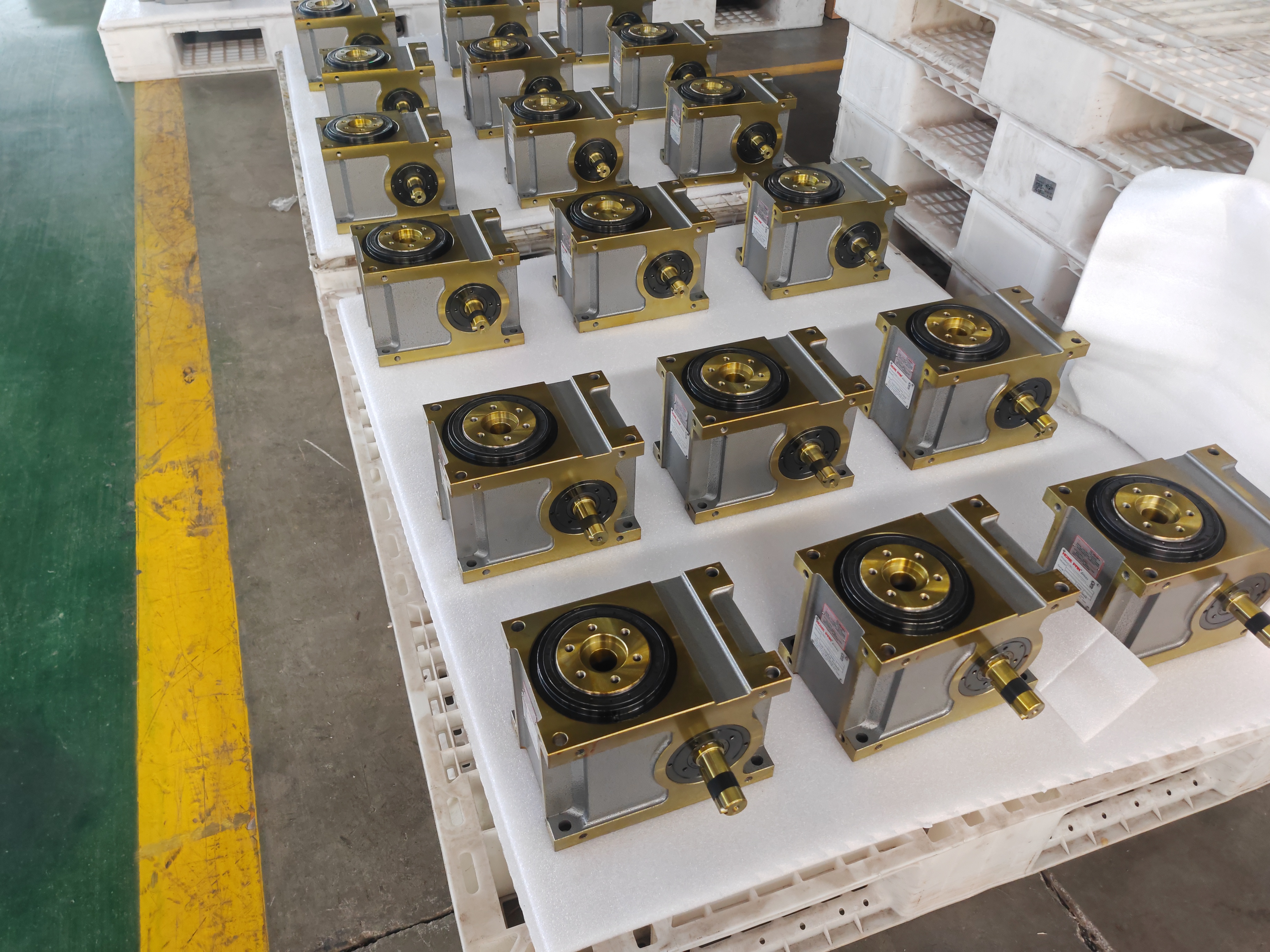
Final acceptance before shipment. When the acceptance mode is fixed at order stage, the check becomes a recorded step rather than a judgement call.
Where a Locked Specification Earns Its Keep
A cam indexer's job in every application is the same functionally: hold a fixed workstation position, index, and hold again. What changes is which field of the record carries the risk.
- Filling machines. The indexer positions containers under filling nozzles. Station-to-station position consistency is what keeps the nozzle centred, so repeat positioning accuracy is the field to lock and verify.
- Packaging lines. The indexer advances cartons between forming, filling, and sealing stations. Station count and indexing angle dominate, because the carton pitch is set by the table division.
- Pharmaceutical machinery. The functional requirement is the same as filling — the container or nest must arrive at each station in the same place every cycle — so accuracy grade plus acceptance method carry the risk.
- Assembly automation. The indexer carries nests through fixed operations. Repeat positioning accuracy governs whether a pick-and-place step still lands after thousands of cycles.
- Welding cells. The indexer indexes positioners cycle by cycle. Backlash behaviour and the wear controls around the cam and roller set matter more than headline accuracy alone.
HONEPAN lists additional application areas including printing machinery, food machinery, conveying systems, and general automatic production lines. In each case the purchasing logic is identical: the machine drawing fixes the interface, the process tolerance fixes the accuracy grade, and the production volume fixes the station count — and all three then stay fixed for the life of the platform.
Output Types and Specification Fields Compared
The first table maps the output configurations named in HONEPAN's cam indexer range to what has to be captured in the record. It is a documentation table, not a performance ranking — no output type is inherently better than another; the machine drawing decides.
| Output configuration | Interface presented to the machine | What must be written into the record |
|---|---|---|
| DS — shaft output | The driven element mounts onto a shaft | Shaft diameter, keyway, orientation; accuracy grade (±30 or ±15 arcseconds positioning; ±10 or ±2 arcseconds repeat, model-dependent) |
| DF — flange output | The driven element bolts to a flange face | Flange bolt pattern, pilot diameter, face position; station count and indexing angle |
| DFH — hollow flange output | Flange output with a hollow centre rather than a solid hub | Bore diameter, bolt pattern, and the routing that passes through the centre |
| DFS | Variant within the shaft/flange output family | Supplier model drawing must be confirmed and attached before the part number is used in a repeat order |
| DT — table output | The fixture or workpiece platform sits on a rotating table | Table diameter, mounting hole pattern, station layout |
The second table lists the fields that make a repeat order auditable, together with the values HONEPAN publishes for them.
| Record field | Value to record |
|---|---|
| Output configuration | DS / DF / DFH / DFS / DT, plus interface dimensions from the machine drawing |
| Cam and roller material | 42CrMo/SCM440 or 20CrMnTi/SNCM220 |
| Positioning accuracy | ±30 or ±15 arcseconds, model-dependent |
| Repeat positioning accuracy | ±10 or ±2 arcseconds, model-dependent (DS series stated to reach ±2 arcseconds) |
| Station count and indexing angle | Project-specific; both stated explicitly, changes trigger drawing review |
| Acceptance mode | Picture, video, report, or on-site acceptance |
| Commercial terms | MOQ 1 unit; FOB / CIF / DAP; 100% T/T |
| Capacity and lead time | Monthly capacity 5,000 units; lead time 4–15 days |
FAQ: Long-Term Cam Indexer Supply
What acceptance criteria and payment terms apply to a repeat cam indexer order?
HONEPAN states a minimum order quantity of 1 unit, delivery terms of FOB / CIF / DAP, and payment terms of 100% T/T. Acceptance can be handled in four ways — picture acceptance, video acceptance, report acceptance, or on-site acceptance — and the mode should be chosen at order stage so that the check is agreed before production rather than negotiated after delivery.
Can the same output type, material, and accuracy grade be held across repeat orders?
They can be held if they are written down as separate fields rather than implied by a model name. The record should name the output configuration (DS, DF, DFH, DFS, or DT) with its interface dimensions, the material grade pair (42CrMo/SCM440 or 20CrMnTi/SNCM220), and both accuracy values (±30 or ±15 arcseconds positioning; ±10 or ±2 arcseconds repeat, model-dependent). HONEPAN operates a quality control system based on 100% testing with a stated monthly capacity of 5,000 units, so a pilot unit and a repeat unit pass through the same production route.
How do output type and material choice affect long-term cost?
Cost over the life of a machine is driven mainly by how often the indexer has to be replaced or re-shimmed, not by the unit price alone. HONEPAN reports a 12–14 year service life for its cam indexers and compares this with a typically shorter life for other domestic cam indexers at a similar price level; it also publishes a price-position comparison against other supply regions, at roughly 70% below German-quality equivalents, 65% below American and Italian, 60% below Japanese, and 45% below Taiwanese, with a similar price level to Indian supply. These are company-reported comparisons. The procurement conclusion is to compare cost per year in service against the accuracy grade actually needed, since a tighter grade than the station tooling requires adds cost without adding output.
Can we validate a sample before committing to a long-term supply agreement?
Yes. The minimum order quantity is 1 unit, which allows a single indexer to be ordered as a validation unit against the specification record rather than as a full production batch. The useful test is to run the unit at the station it will serve, then compare measured repeat positioning accuracy and cycle behaviour with the recorded grade — and to use one of the four acceptance modes to document the result, so that the same criteria are applied to later orders.
What lead time applies to repeat orders, and how is continuity maintained?
HONEPAN states a lead time of 4–15 days against a monthly production capacity of 5,000 units. Continuity in practice comes from two things: a specification record that travels with every order so the second delivery matches the first, and a documented acceptance step so that any deviation is caught at dispatch rather than at the machine. Buyers planning a multi-year platform should also confirm warranty wording and spare-part availability in the agreement itself. To start that process, send the machine drawing together with the required output configuration, material grade, and accuracy grade to HONEPAN for a quotation against the record.
Conclusion
A long-term cam indexer supply relationship is not secured by a price list. It is secured by a specification record that names the output interface, the material grade pair, both accuracy values, the station count and indexing angle, and the acceptance mode — and that is applied to every order after the first. Buyers who build that record once find that repeat orders become a documentation exercise rather than a re-engineering project, and that after-sales conversations start from a shared set of numbers instead of a memory of what was delivered.

Next step: quote against your specification record
Send the machine drawing, the required output configuration (DS, DF, DFH, DFS, or DT), the material grade, and the accuracy grade. HONEPAN will respond with a quotation, the relevant model drawing, and the acceptance options for the order.
- Contact: Sean — hp@cam-indexer.cn
- Tel / WhatsApp: +86 157-6300-0588
- Address: No. 8 HonePan Road, Zhenxi Industrial Park, Huanghua Town, Zhucheng City, Shandong Province, China
- Website: www.camindexing.com
Product catalogue (PDF, public download): HONEPAN cam indexer catalogue
Have Questions or Need More Details?
Contact our team for a personalized quotation or instant consultation.
Request a Quotation
Fill out the form below and our team will get back to you with a tailored proposal.
WhatsApp Direct Chat
Prefer to chat in real-time? Message us on WhatsApp for instant assistance & quick answers.
- Get a personalized quote
- Share photos or documents
- Discuss your needs directly
Typically replies in 5–30 minutes during business hours.