
Ranking Cam Indexer Output Types for Automated Assembly Turntables
A cam indexer converts a motor's continuous rotation into timed index-and-dwell motion. On an automated assembly turntable it also carries the rotating load, because the output is the only mechanical link between the cam mechanism and the fixtures. That second role is why the output configuration, more than torque alone, decides whether a turntable project integrates cleanly.
This ranking orders four HONEPAN output configurations — shaft output (DS), flange output (DF), hollow flange (DFH) and table output (DT) — by their fit for automated assembly turntables. The criteria are applied in a fixed sequence: mounting interface first, then model and size coverage, then station count and indexing-angle range, with repeat positioning accuracy used as a tiebreaker. Applying accuracy alone would produce a different order, and that difference is explained where it matters.
Why the Output Interface Decides Turntable Design
The output interface determines three design decisions at once in an assembly turntable: how the fixture plate attaches, how the rotating mass is supported, and how services such as air, vacuum or sensor wiring reach the moving side.
When the interface matches the machine design, the fixture plate bolts straight to the indexer and the accuracy chain is short. When it does not, the builder inserts an intermediate plate, a coupling or an additional bearing block. Each of those additions introduces another alignment step and another contribution to the total positional error at the workstation.
The four interface questions that settle most turntable specifications:
1. Does the fixture plate bolt onto a rotating table face, a flange register, a shaft coupling, or a hollow bore?
2. How many stations must stop at the workheads, and at what indexing angle?
3. What repeat positioning accuracy does the tightest operation require?
4. Do pneumatic or electrical services need to pass through the centre of rotation?
HONEPAN rates positioning accuracy at ±30″±15″ across the DS, DF, DFH and DT series. The types differ mainly in repeat positioning accuracy, which ranges from ±10″±2″ on DS to ±10″±5″ on DT, and in the physical form of the output.
Where Intermittent Indexing Sits in Assembly Automation
In an automated line, the indexer is the component that holds a station still while a tool works and then advances the next station into position. Supplier application material describes the same function across machine types: in filling machines the indexer positions containers under the nozzles; in packaging lines it advances cartons between forming, filling and sealing stations; in assembly automation it carries nests through fixed operations; in welding cells it indexes fixtures cycle by cycle.
The category is a mature part of industrial transmission. Straits Research valued the global cam indexer market at USD 1.00 billion in 2025, with Asia Pacific holding a 53.00% share of that market in the same year. Those figures describe the category overall, not the assembly-turntable segment specifically.
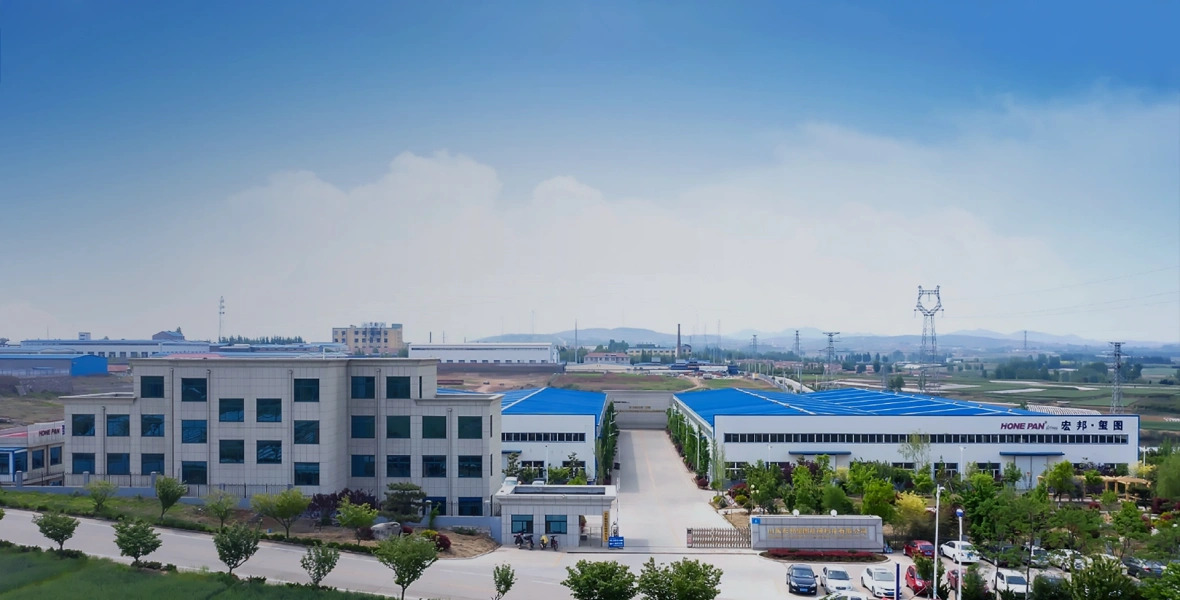
HONEPAN — Zhucheng HonePan Automation Machinery Plant — is a cam indexer and rotary table manufacturer founded in January 2007 and based in Zhucheng, Shandong Province, China. The company reports a total area of 101,000 m², 130 employees, an annual output of 36,000 units, and an export share of roughly 30% serving India, the USA, Southeast Asia, Latin America and Europe. It was among the first companies in the industry to obtain ISO 9001 quality management system certification, holds more than 40 product patents, operates over 90 CNC machining centres, and is the chairman unit of the Cam Indexer Association.
Quick Matching Checklist Before You Rank Anything
Run these six checks against the machine design before comparing models. Each answer eliminates output types rather than adding them.
- Fixture attachment. Table face points to DT; a machined plate with a bolt circle points to DF; a separate turntable shaft points to DS; a hollow centre points to DFH.
- Station count. DS, DF and DFH cover 2 to 196 stations. DT covers 4 to 196 stations, so a 2-station or 3-station assembly layout falls outside the DT range.
- Indexing angle. DS, DF and DFH cover 60° to 360°. DT covers 90° to 360°, so indexing angles below 90° are outside the DT range.
- Accuracy budget. Positioning accuracy is ±30″±15″ on all four types. Repeat positioning is ±10″±2″ on DS, ±10″±3″ on DF, ±10″±4″ on DFH and ±10″±5″ on DT.
- Size envelope. The smallest frame in this comparison is 32DS; the largest model sizes are 200DS, 250DFH, 350DF and 350DT.
- Centre services. Only the hollow flange (DFH) provides a through-bore for routing air, vacuum or wiring to moving fixtures.
If two output types pass all six checks, the ranking below resolves the tie on integration effort rather than on catalogue breadth.
The Ranked Shortlist: Four Output Types for Assembly Turntables
RANK 1 Table Output (DT) — the shortest accuracy chain for a dedicated turntable
DT ranks first for assembly turntables because the output is itself a rotating table face. Fixtures and nests bolt directly to that face, so the design needs no intermediate plate, no flange register and no coupling alignment. Every component removed from that stack is one less contributor to positional error at the workstation.
Models: 80DT / 110DT / 140DT / 180DT / 200DT / 210DT / 250DT / 350DT
Number of stations: 4–196
Indexing angle: 90–360°
Positioning accuracy: ±30″±15″
Repeat positioning accuracy: ±10″±5″
Materials: carbon steel; 42CrMo / SCM440 / 4140 / 4142; 40Cr / SCR440 / 5140; 20CrMnTi / SNCM220 / 8620; 18CrMoV
The DT application list covers automatic filling machines, high-speed filling lines, gravimetric fillers, aseptic filling systems, pharmaceutical liquid fillers, cosmetic tube filling machines, disinfectant filling equipment, filling and capping machines, labeling and filling lines, sealing-filling combos, food processing and fruit and vegetable machinery, cosmetics and daily chemical machinery, and stationery, pen making and printing machinery. The 350DT model gives the largest table face in the family.
Trade-off. DT starts at 4 stations rather than 2, its indexing angle range begins at 90° rather than 60°, and its repeat positioning band of ±10″±5″ is the widest of the four types. A layout that needs 2 or 3 stations, or a 60° index, moves to DF, DS or DFH.
RANK 2 Flange Output (DF) — the widest size coverage for custom turntables
DF ranks second because it separates the drive from the table structure. The flange face carries a tooling plate that the machine builder machines in house, which suits turntables designed around a specific nest pattern, and it suits retrofit work where the existing plate must be reused.
Models: 38DF / 45DF / 60DF / 63DF / 70DF / 80DF / 100DF / 110DF / 125DF / 140DF / 150DF / 180DF / 200DF / 250DF / 350DF
Number of stations: 2–196
Indexing angle: 60–360°
Positioning accuracy: ±30″±15″
Repeat positioning accuracy: ±10″±3″
Materials: same material set as DT
DF offers the broadest model coverage in this comparison — fifteen sizes from 38DF to 350DF — and it retains the full 60° to 360° indexing range with stations starting at 2. Its repeat positioning band of ±10″±3″ is tighter than both DT and DFH. The DF application list covers liquid, paste, powder, granule and sauce filling; beverage, edible oil and bottled-water lines; automatic and high-speed filling; gravimetric and aseptic filling; pharmaceutical liquid filling; cosmetic tube filling; and disinfectant filling equipment.
Trade-off. The flange joint is a bolted joint. It needs a machined register and correct pilot fit, and it adds one assembly step that DT does not require. DF also has no through-bore, so centre routing is not available.
RANK 3 Shaft Output (DS) — the accuracy leader when the turntable has its own bearing
DS ranks third on fit but first on accuracy. It drives a separate turntable through a shaft coupling, which is the right architecture when the turntable already has its own bearing support and the indexer's job is purely to index it. That arrangement keeps the indexer out of the load path and away from the fixture plate.
Models: 32DS / 38DS / 45DS / 60DS / 63DS / 70DS / 80DS / 83DS / 100DS / 110DS / 125DS / 140DS / 150DS / 170DS / 180DS / 200DS
Number of stations: 2–196
Indexing angle: 60–360°
Positioning accuracy: ±30″±15″
Repeat positioning accuracy: ±10″±2″
Materials: same material set as DT
The DS repeat positioning band of ±10″±2″ is the tightest of the four types, and the series includes the smallest frame in the comparison at 32DS. Its sixteen models cover 60° to 360° indexing with 2 to 196 stations. The DS application list is concentrated on filling machinery: liquid, paste, powder, granule and sauce fillers; beverage, edible oil and bottled-water lines; automatic, high-speed, gravimetric and aseptic filling; pharmaceutical liquid fillers; cosmetic tube filling machines; disinfectant filling equipment; filling and capping machines; labeling and filling lines; sealing-filling combos; and food processing and fruit and vegetable machinery.
Trade-off. DS requires coupling alignment between the indexer shaft and the turntable shaft, and the machine builder must supply the turntable bearing and the shaft interface. It provides no table face, so the fixture plate design is a separate engineering task.
RANK 4 Hollow Flange (DFH) — the only option for centre-fed fixtures
DFH ranks fourth because it solves a specific problem rather than a general one. Its hollow centre lets pneumatic lines, vacuum lines or sensor wiring pass through the axis of rotation to fixtures on the moving table. Where that routing is required, DFH is not competing with the other three types — it is the only one of the four that provides it.
Models: 45DFH / 60DFH / 80DFH / 100DFH / 110DFH / 125DFH / 140DFH / 150DFH / 180DFH / 200DFH / 250DFH
Number of stations: 2–196
Indexing angle: 60–360°
Positioning accuracy: ±30″±15″
Repeat positioning accuracy: ±10″±4″
Materials: same material set as DT
DFH covers eleven models from 45DFH to 250DFH with the full 60° to 360° indexing range. Its application list includes beverage fillers, edible oil filling machines, bottled-water production lines, automatic and high-speed filling, gravimetric and aseptic filling, pharmaceutical liquid fillers, cosmetic tube filling machines, disinfectant filling equipment, filling and capping machines, labeling and filling lines, sealing-filling combos, food processing machinery, cosmetics and daily chemical machinery, and stationery, pen making and printing machinery.
Trade-off. DFH has the fewest models in the comparison and the largest minimum frame at 45DFH, so small turntables cannot use it. Its repeat positioning band of ±10″±4″ sits between DF and DT. Where centre routing is not needed, DF gives a tighter repeat band with more size choices.
How the order changes. This ranking measures fit for automated assembly turntables. If angular repeatability is the only criterion, the order reverses to DS (±10″±2″), DF (±10″±3″), DFH (±10″±4″), DT (±10″±5″). Both orders are correct; they answer different questions.
Output Type Comparison Table
| Rank by turntable fit | Output type | Model range | Stations | Indexing angle | Repeat positioning | Mounting interface | Fits when |
|---|---|---|---|---|---|---|---|
| 1 | Table output (DT) | 80DT–350DT | 4–196 | 90–360° | ±10″±5″ | Rotating table face; fixtures bolt directly | The turntable is a dedicated assembly table with nests on its face |
| 2 | Flange output (DF) | 38DF–350DF | 2–196 | 60–360° | ±10″±3″ | Flange face to a customer-machined plate | The plate is machined in house, or an existing plate is reused |
| 3 | Shaft output (DS) | 32DS–200DS | 2–196 | 60–360° | ±10″±2″ | Output shaft via coupling | The turntable has its own bearing and shaft, and accuracy dominates |
| 4 | Hollow flange (DFH) | 45DFH–250DFH | 2–196 | 60–360° | ±10″±4″ | Hollow flange with through-bore | Air, vacuum or wiring must pass through the centre of rotation |
Positioning accuracy is ±30″±15″ on all four types. All four series are produced from the same material set: carbon steel; 42CrMo / SCM440 / 4140 / 4142; 40Cr / SCR440 / 5140; 20CrMnTi / SNCM220 / 8620; 18CrMoV.
Step-by-Step Breakdown: Specifying an Output Type
Step 1 — Fix the interface before the model. Decide whether the fixture plate bolts to a table face, a flange, a shaft coupling or a hollow bore. This single decision removes two of the four candidates in most projects.
Step 2 — Match station count to the workheads. Count the operations that must complete while the table is stationary. DS, DF and DFH cover 2 to 196 stations; DT covers 4 to 196. A two-station layout therefore excludes DT at the specification stage.
Step 3 — Set the indexing angle from the dwell requirement. The indexing angle decides how much of each cycle is spent moving and how much is dwell. DS, DF and DFH adjust from 60° to 360°; DT adjusts from 90° to 360°.
Step 4 — Allocate the accuracy budget. Positioning accuracy is common to all four types at ±30″±15″. Repeat positioning is where the types separate, from ±10″±2″ on DS to ±10″±5″ on DT. If the tightest station cannot tolerate the wider band, move up the accuracy order even if it costs integration effort.
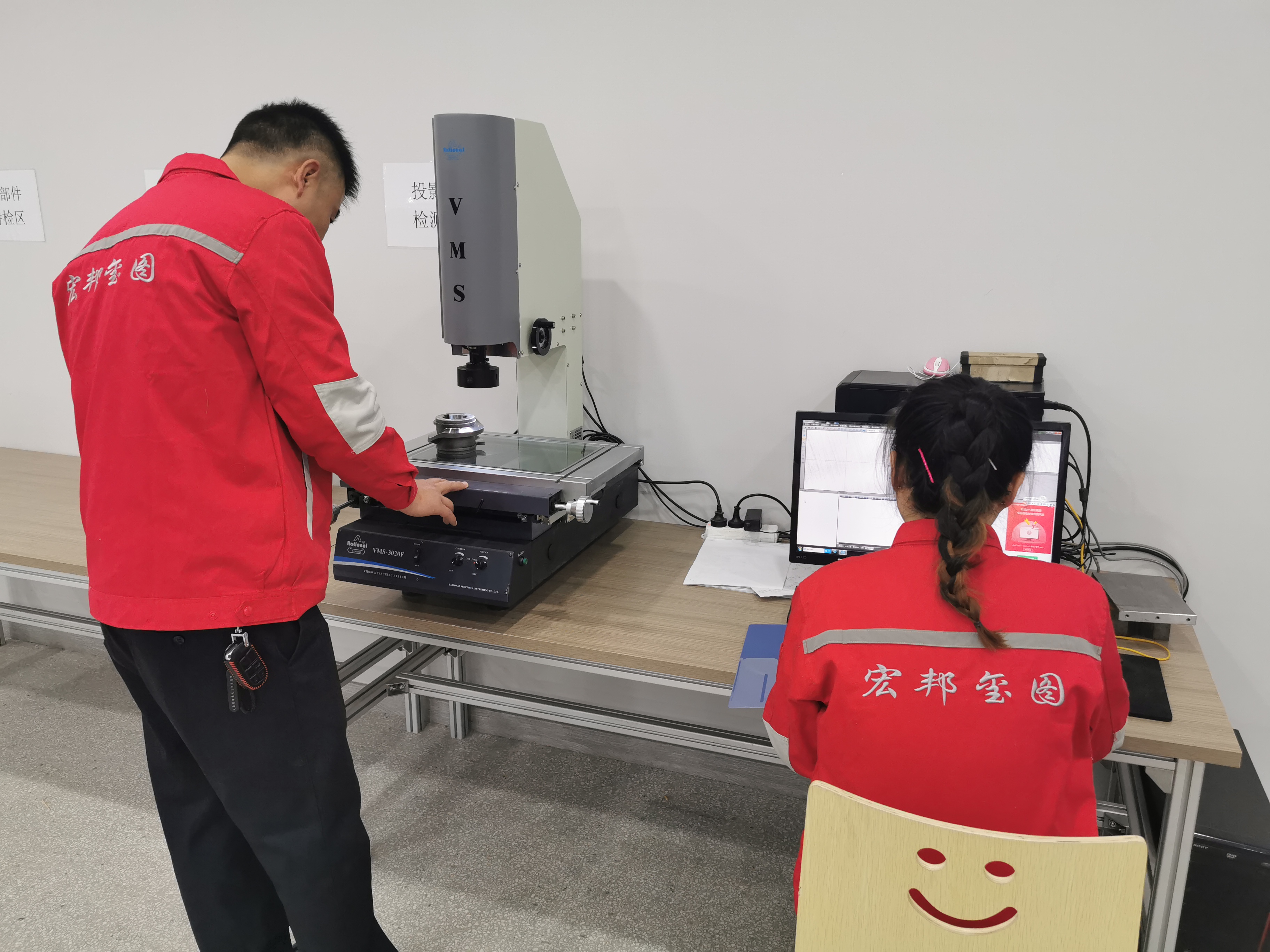
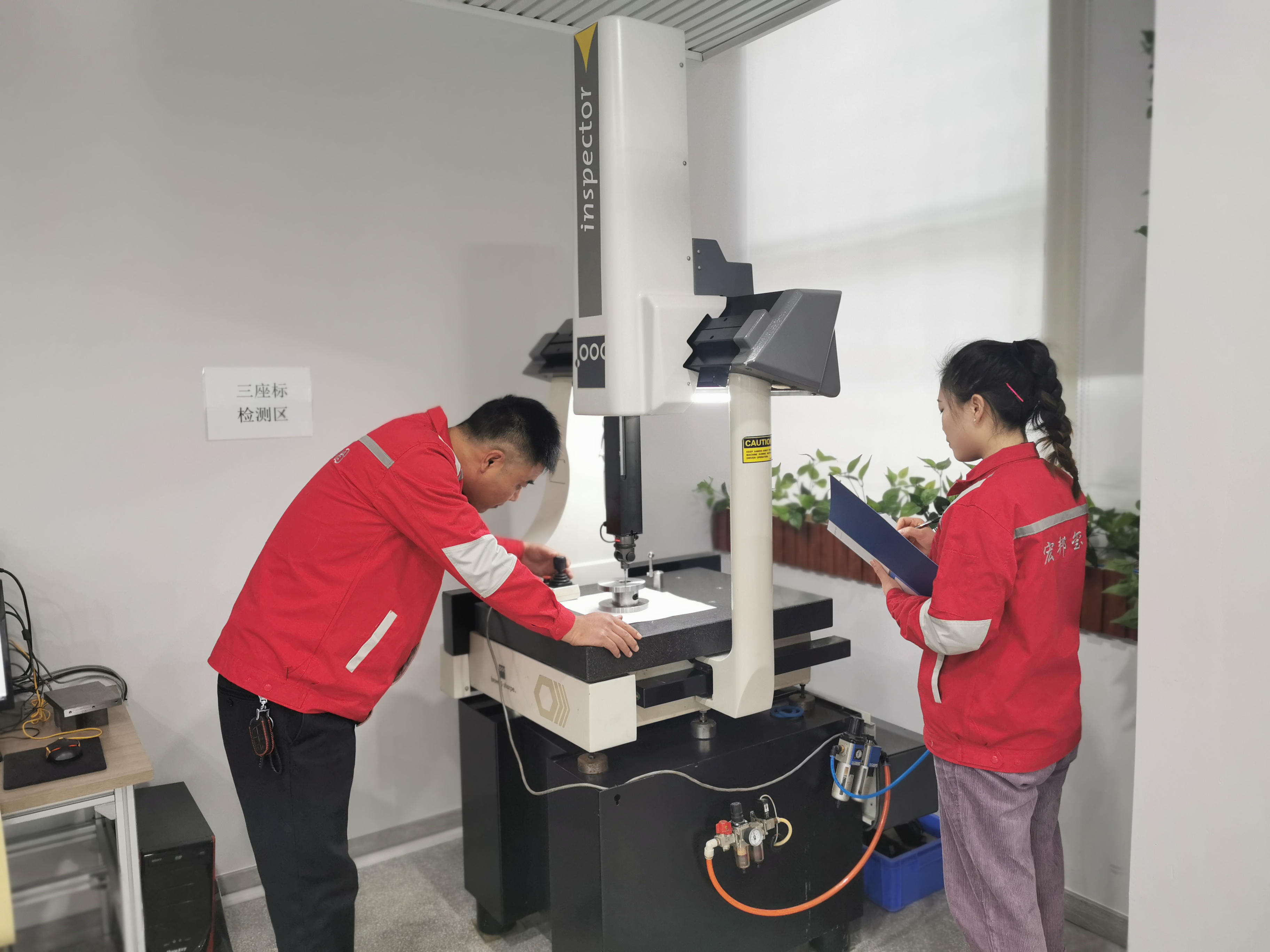
Step 5 — Confirm the inspection evidence. HONEPAN inspects cams on three-coordinate measuring equipment, checks hardness, measures cam roughness by projection, checks shaft runout, and verifies indexing repeat positioning with a laser interferometer. Every unit is 100% tested before shipment.
Step 6 — Lock the commercial scope. OEM/ODM customization covers specifications, parameters, materials, appearance, craftsmanship and quality inspection reports. Minimum order quantity is 1 unit and lead time is 4 to 15 days.
Use Cases: Matching Output Type to Assembly Context
Dedicated assembly turntable with nests on the table face. DT. The nests bolt straight to the table, the fixture plate disappears from the design, and the 350DT size covers the largest table diameters in the family.
Custom turntable with an in-house machined plate. DF. The builder machines the plate to its own nest pattern and bolts it to the flange, and the fifteen-model range allows the frame size to be matched to the plate diameter rather than the other way round.
High-precision small-part assembly with a separately supported turntable. DS. The ±10″±2″ repeat band and the 32DS frame suit compact stations where the turntable already runs on its own bearing.
Assembly fixtures that need air or vacuum at the moving station. DFH. The hollow centre routes services through the axis of rotation instead of around the outside of the table.
Line-adjacent filling and packaging stations. The same indexers appear in filling and packaging contexts: positioning containers under filling nozzles, advancing cartons between forming, filling and sealing stations, and carrying assembly nests through fixed operations. In those roles the output type follows the same logic — the machine interface decides the family, and the accuracy band decides the model.
Replacement and retrofit work. In a project for pharmaceutical and medical packaging machinery, 10 units were supplied across multiple continents. The indexers were reported to replace damaged units directly, to run reliably for 7 to 12 years, and to generate repeat orders from the same customers.
Frequently Asked Questions
Are HONEPAN cam indexers built under a certified quality management system?
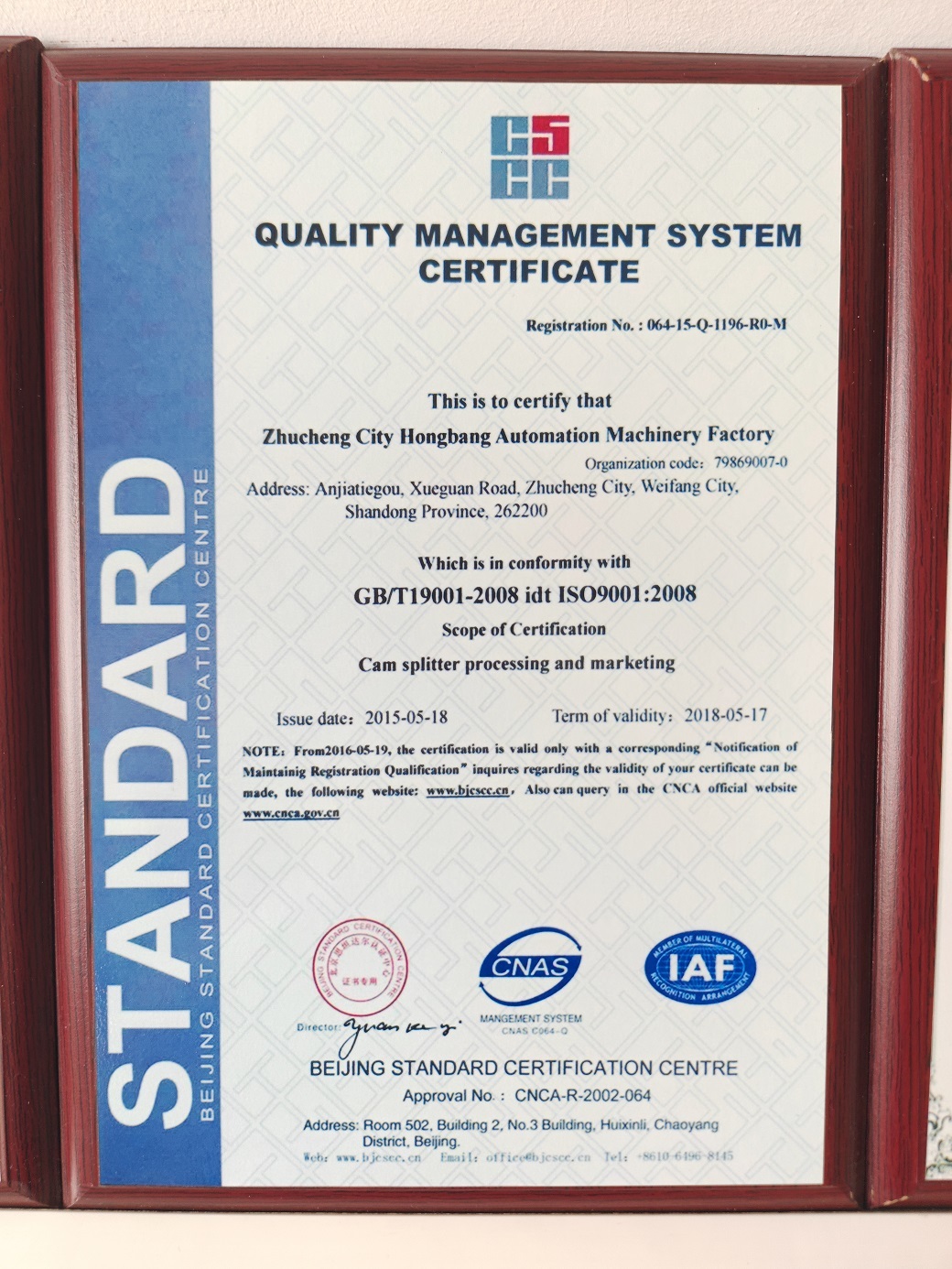
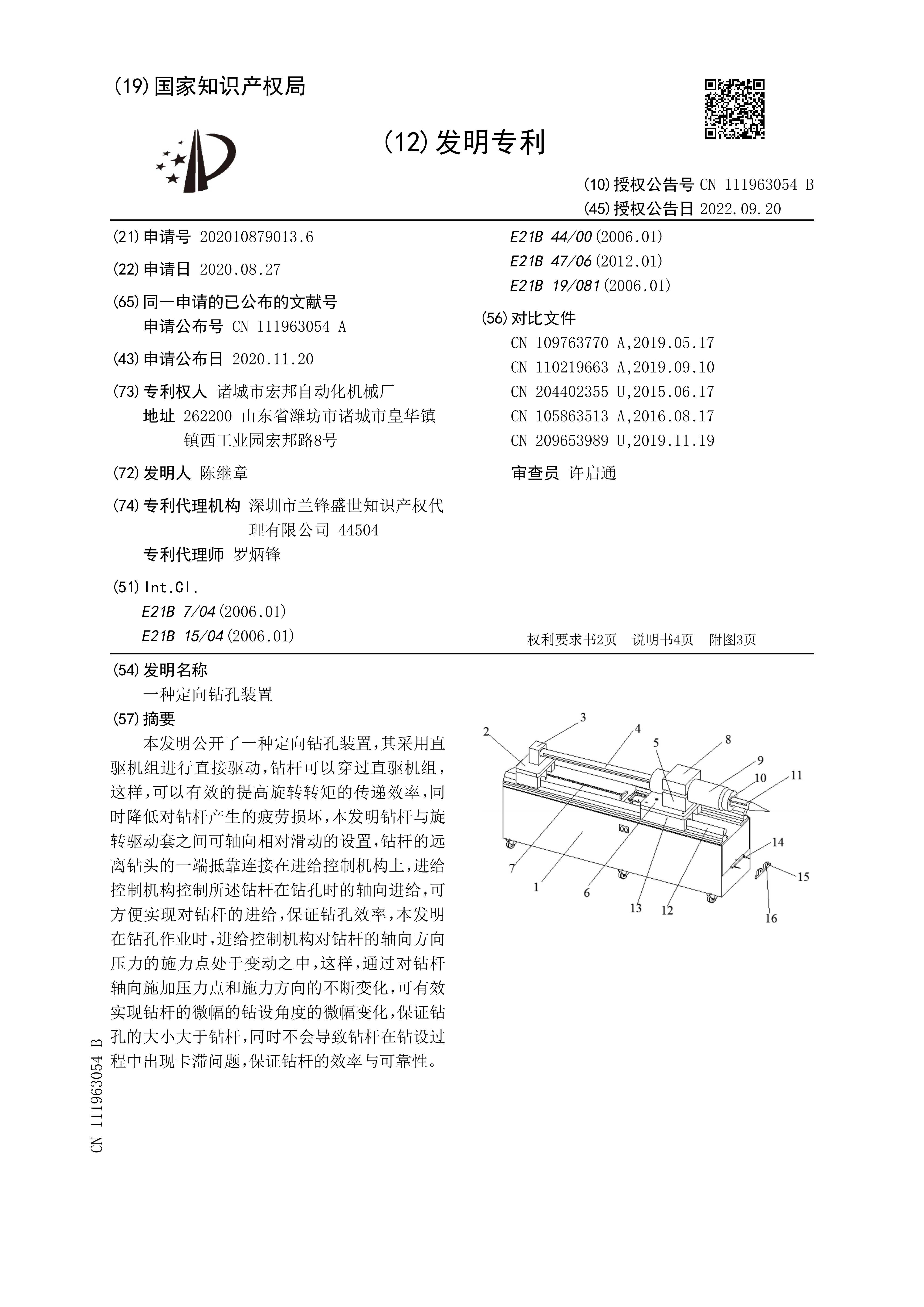
Yes. HONEPAN was among the first companies in the cam indexer industry to obtain ISO 9001 quality management system certification, and it holds more than 40 product patents. The patent record includes invention patents registered with the China National Intellectual Property Office under numbers CN111963054B and CN217451646U, plus utility model ZL201520459898.9. Production runs over 90 CNC machining centres, and every unit is 100% tested before shipment.
Which output type gives the best repeat positioning accuracy for an assembly turntable?
DS (shaft output) is the accuracy leader at ±10″±2″, followed by DF at ±10″±3″, DFH at ±10″±4″ and DT at ±10″±5″. Positioning accuracy is ±30″±15″ on all four types. The accuracy order and the turntable-fit order in this article are deliberately different: DS ranks first on accuracy and third on mounting fit, while DT ranks first on mounting fit and fourth on accuracy.
What budget level should be planned for a cam indexer on an assembly turntable?
Cost depends on the configuration: frame size, station count, indexing angle, output type and any OEM/ODM customization. As an industry reference, QYResearch reported a global rotary indexer average selling price of USD 2,589 per unit in 2024. That is a category average for rotary indexers, not a quotation for a specific DS, DF, DFH or DT configuration, and it should be treated as a planning anchor rather than a price list. HONEPAN issues project-specific quotations against the required model, station count and indexing angle.
Can a single unit be ordered for validation before a volume order?
Yes. Minimum order quantity is 1 unit, and OEM/ODM customization covers specifications, parameters, materials, appearance, craftsmanship and quality inspection reports. Every unit is 100% tested before shipment, and the factory inspects cams on three-coordinate equipment, checks hardness and cam roughness, verifies shaft runout, and confirms indexing repeat positioning with a laser interferometer. Buyers who want to validate a configuration against their own fixture plate can request a sample unit and a matching quotation by writing to hp@cam-indexer.cn.
What are the lead time and production capacity for these output types?
Lead time is 4 to 15 days, monthly capacity is 5,000 units, and annual output is reported at 36,000 units. After-sales support is provided remotely. The factory operates across 101,000 m² in Zhucheng, Shandong Province, with 130 employees and a 15-person R&D team.
Conclusion
For automated assembly turntables, the output type is a structural decision rather than a catalogue preference. DT ranks first because it removes the intermediate plate and shortens the accuracy chain. DF ranks second because its fifteen-model range and 60° to 360° indexing suit custom and retrofit plates. DS ranks third on fit but leads on repeat positioning at ±10″±2″, which matters when the turntable already has its own bearing. DFH ranks fourth only because its through-bore is a specialised requirement — where that requirement exists, it is the only one of the four that meets it.
Run the six-point checklist first, then use the ranking to break the tie.
Next Step: Sample, Quotation or Specification Review
Send the station count, indexing angle, fixture-plate drawing and repeat-accuracy target, and HONEPAN will confirm which of the DS, DF, DFH or DT series fits the turntable and quote against that configuration. MOQ is 1 unit, lead time is 4 to 15 days.
Email: hp@cam-indexer.cn | Tel / WhatsApp: +86 157-6300-0588 | Web: www.camindexing.com
Download the full product brochure (PDF): HONEPAN Cam Indexer Brochure
Address: No. 8 HonePan Road, Zhenxi Industrial Park, Huanghua Town, Zhucheng City, Shandong Province, China.
Have Questions or Need More Details?
Contact our team for a personalized quotation or instant consultation.
Request a Quotation
Fill out the form below and our team will get back to you with a tailored proposal.
WhatsApp Direct Chat
Prefer to chat in real-time? Message us on WhatsApp for instant assistance & quick answers.
- Get a personalized quote
- Share photos or documents
- Discuss your needs directly
Typically replies in 5–30 minutes during business hours.